01
Ancient horizonLixus and the Loukkos
Long before modern Larache, the surrounding landscape was already important through the ancient site of Lixus, set above the Loukkos and tied to Mediterranean trade and settlement.
Atlantic Morocco
Larache unfolds between river, ocean and layered memory. Its quiet appeal lies in the meeting of Atlantic light, a lived-in medina, Spanish-era urban elegance and the nearby archaeological landscape of Lixus.
Why Larache matters
Larache is often approached as a calm coastal stop, yet its real richness lies in the way several worlds meet here. The city faces the Atlantic while remaining deeply shaped by the Loukkos River, by the long memory of Lixus and by the urban mark of the Spanish Protectorate.
Larache is not a place of spectacle alone. It is a place of atmosphere, continuity and layered belonging: a river city, a port city, a medina city and an Atlantic city at once.
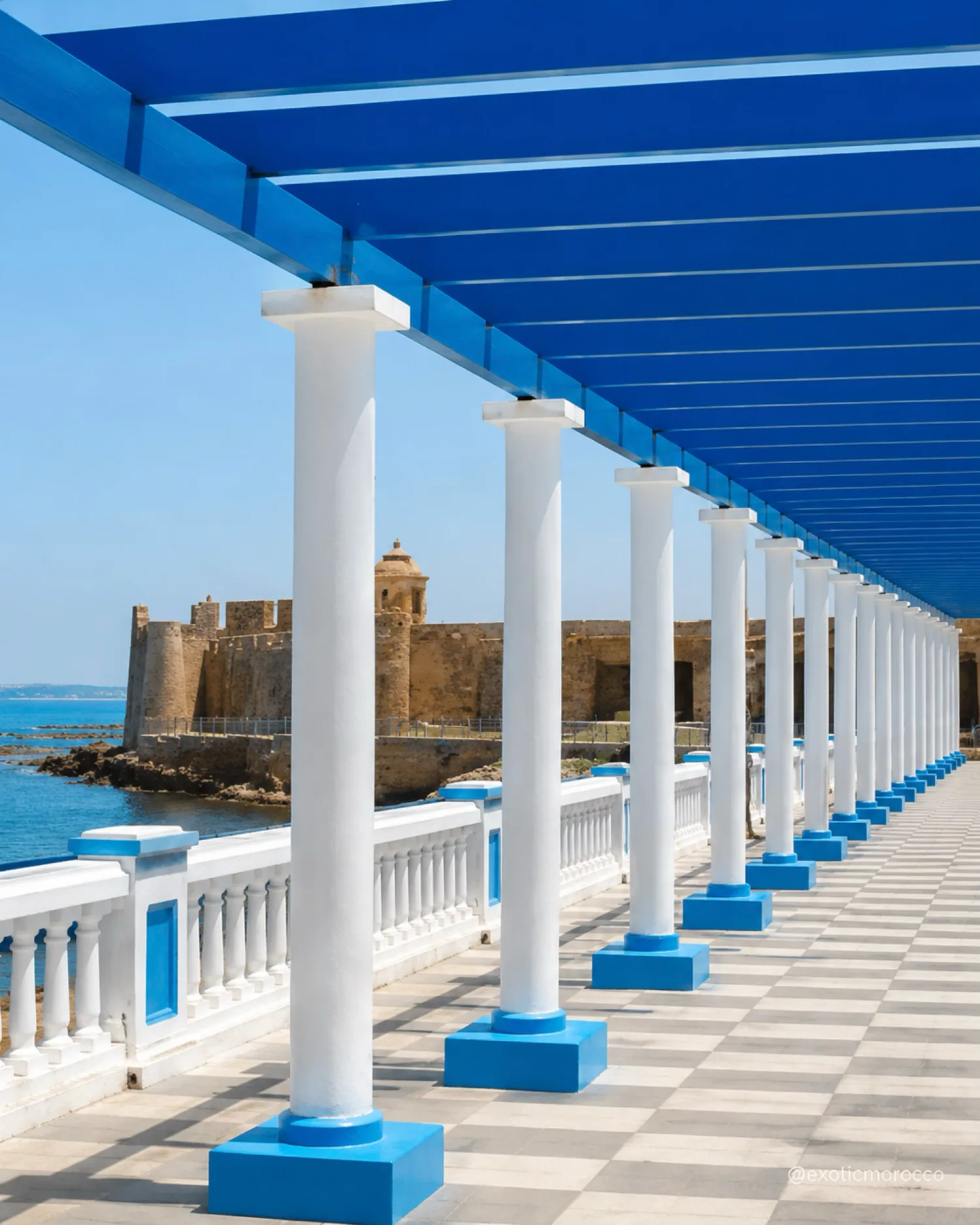
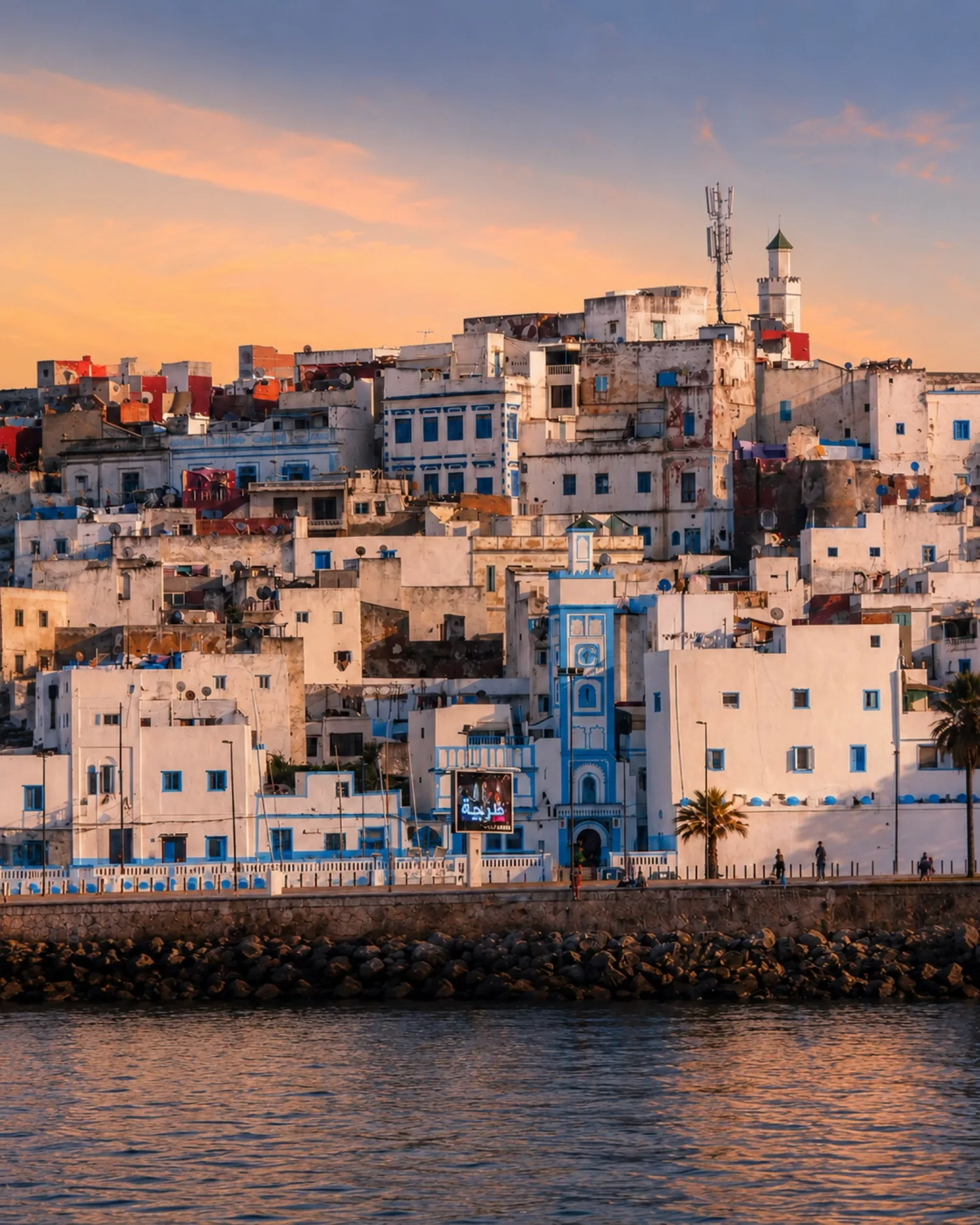
White facades, blue accents, old walls, promenades, medina lanes and civic architecture all contribute to a city that feels both understated and historically resonant.
Historical orientation
Larache is best read in layers: the ancient landscape of Lixus, the fortified town above the Atlantic, the Spanish-era civic expansion and the quieter contemporary city that holds them together.
Long before modern Larache, the surrounding landscape was already important through the ancient site of Lixus, set above the Loukkos and tied to Mediterranean trade and settlement.
Larache later developed as a fortified town whose position above the Atlantic and near the river mouth gave it strategic significance.
The modern urban image of Larache was strongly shaped during the Spanish Protectorate period, especially through civic buildings, squares, avenues and public spaces.
Today Larache remains one of northern Morocco’s quieter but most characterful cities, where archaeology, seafront atmosphere, civic heritage and everyday life sit close together.
Three glimpses of Larache
Larache can be approached through three essential images: the ancient landscape of Lixus, the civic rhythm of Place de la Libération and the Atlantic opening of Bab Al Bahr.
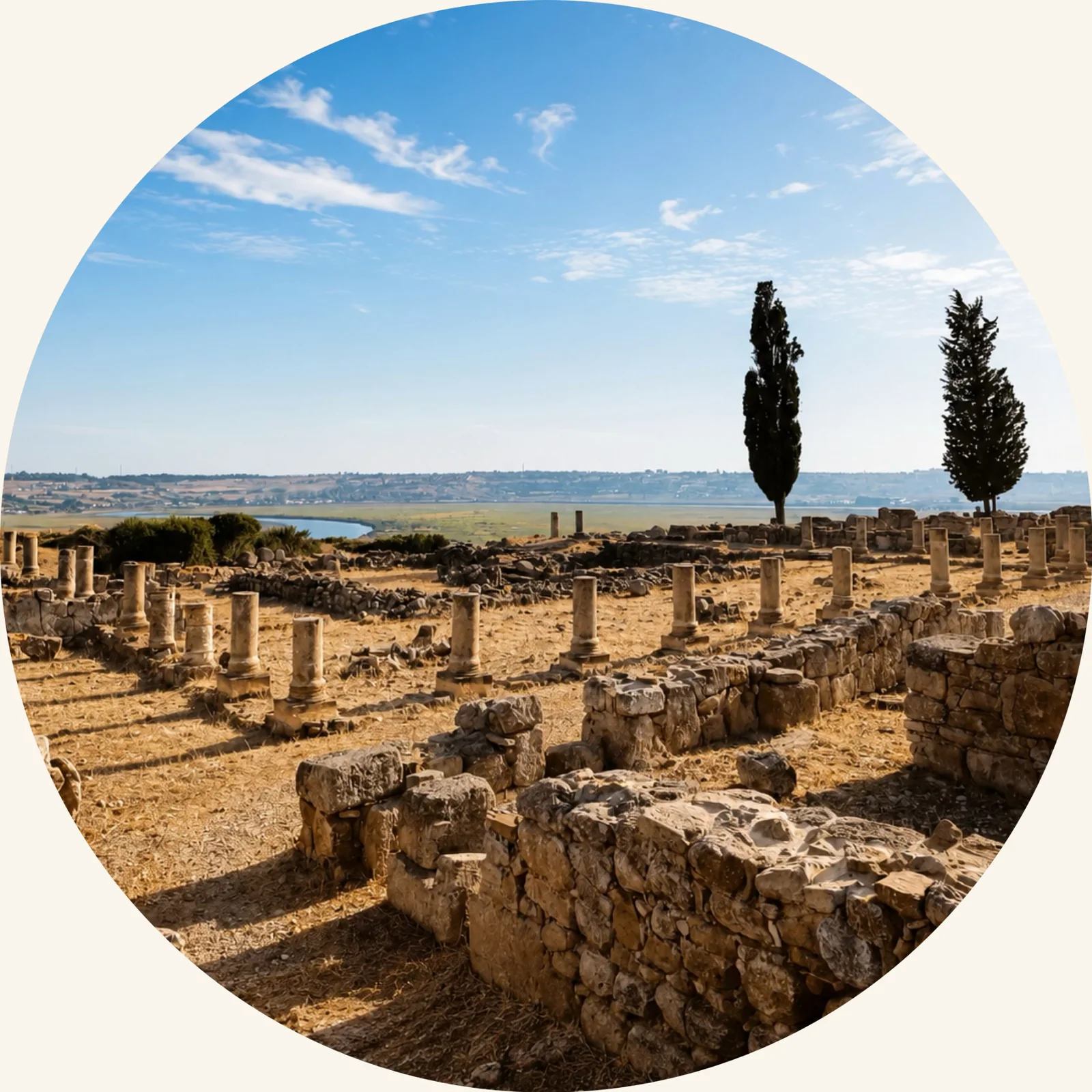
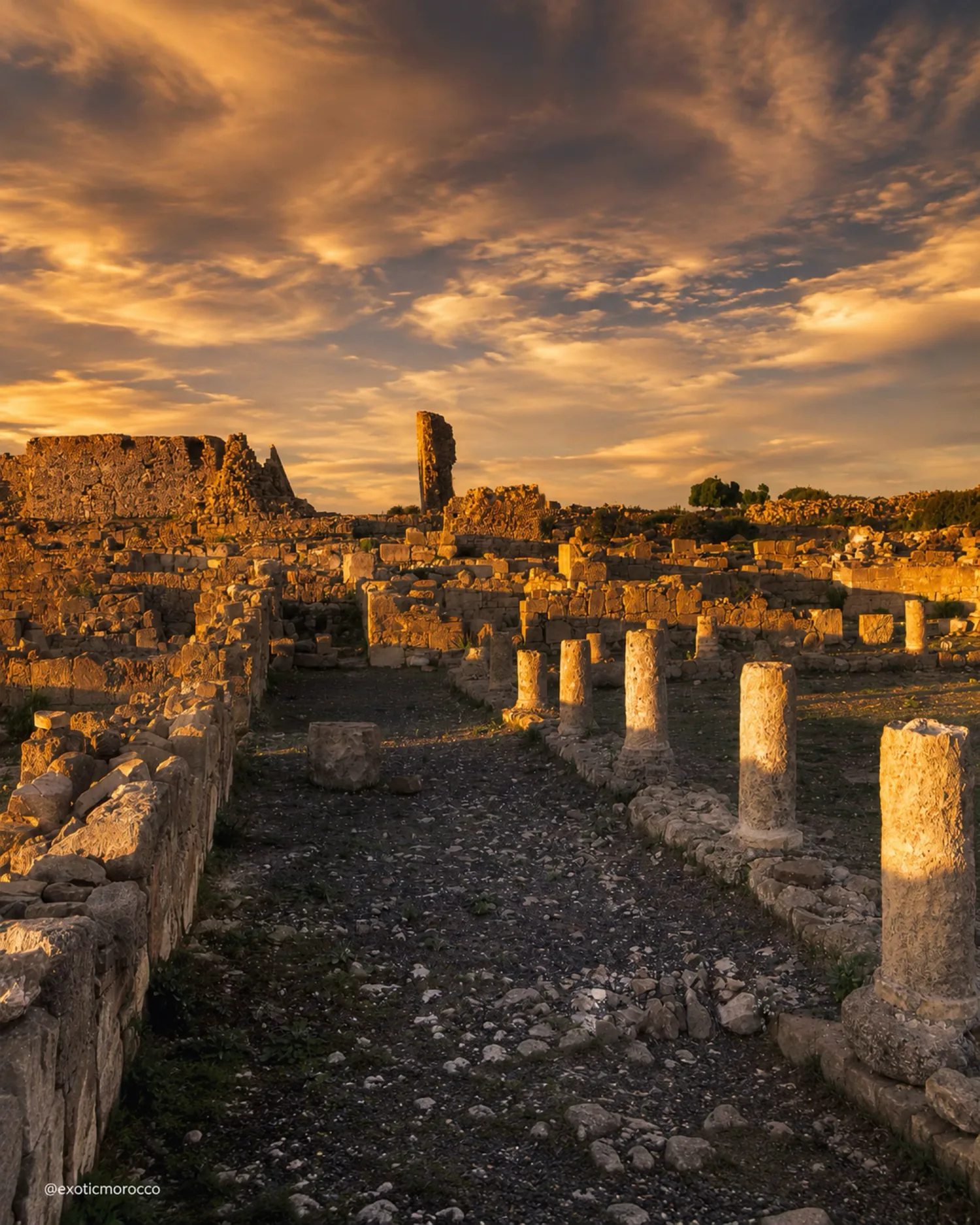
The archaeological site of Lixus gives Larache one of its deepest historical dimensions, connecting the city to an older river-based world of settlement and trade.
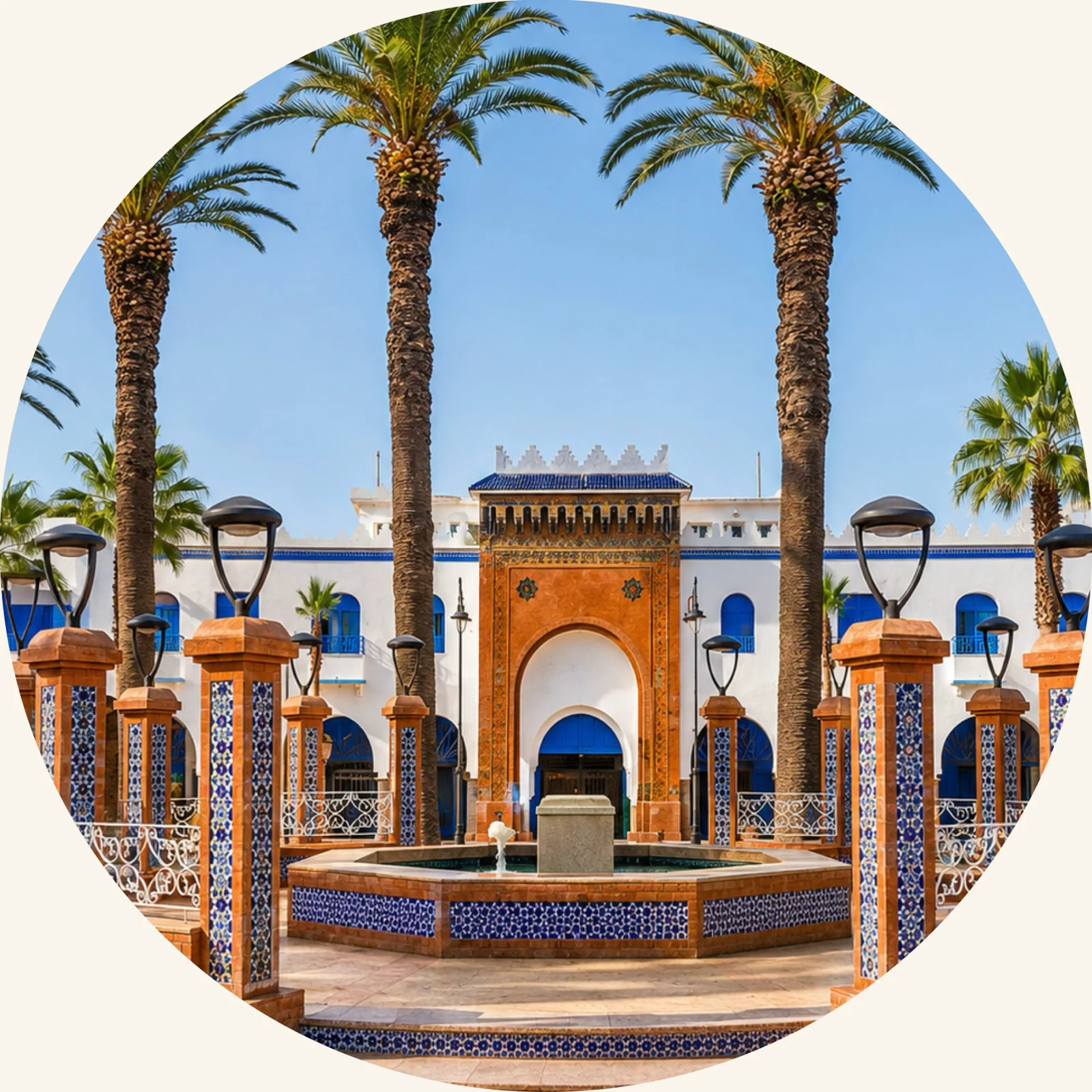
Palm-lined and elegant, this urban layer reflects Larache’s civic and Spanish-era character, where public space, symmetry and atmosphere shape the city’s identity.
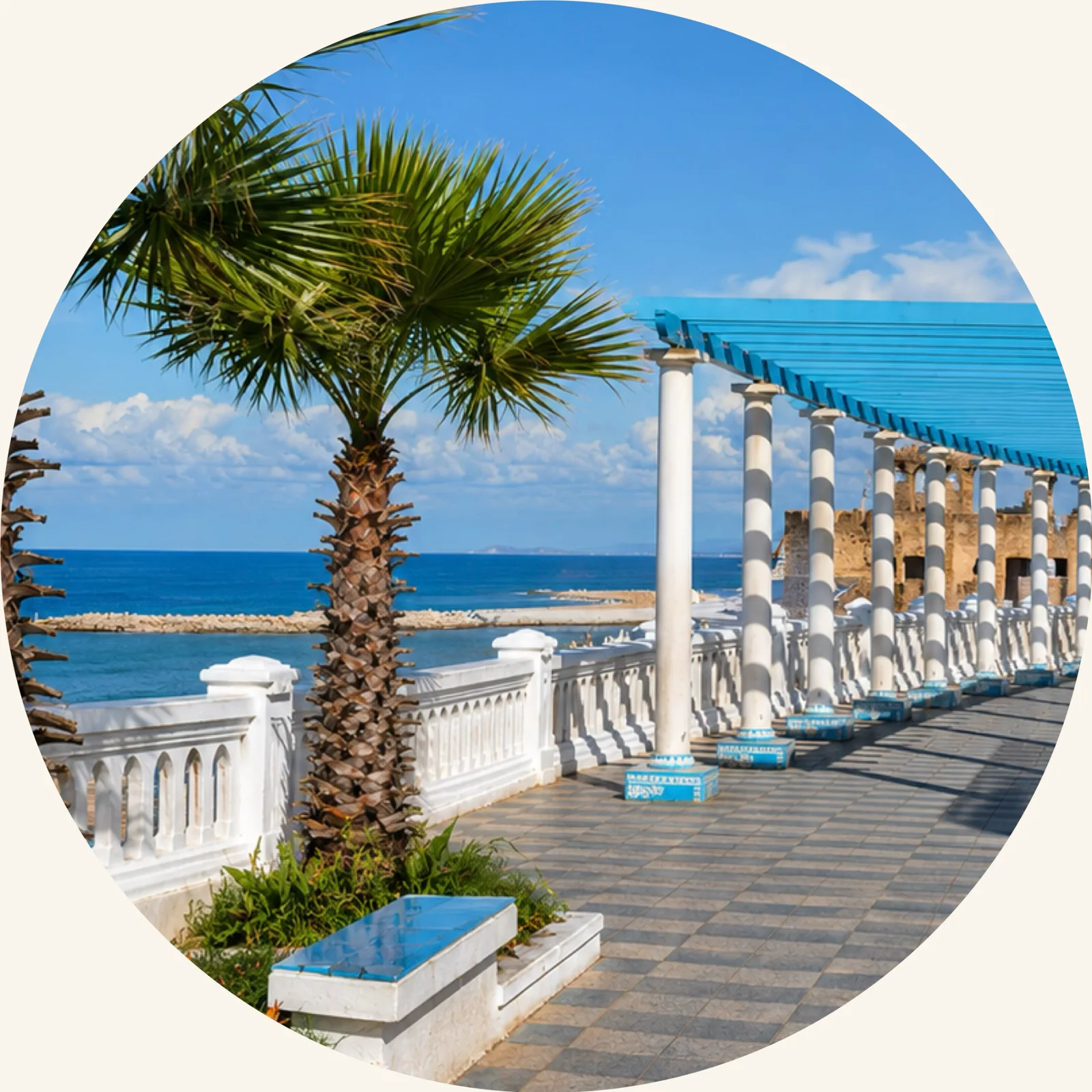
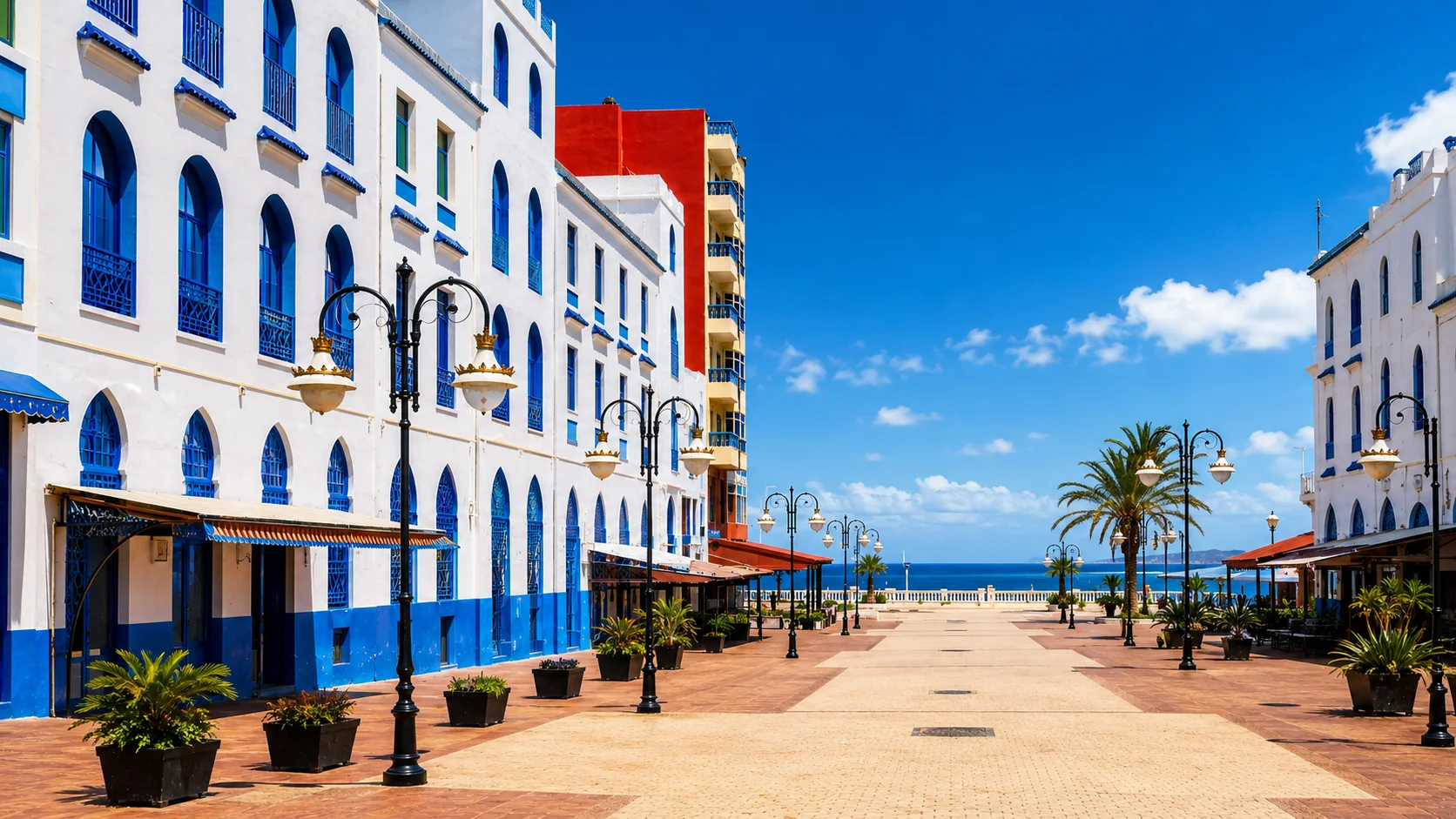
Bab Al Bahr opens Larache toward the sea. Here the city’s promenade, ocean light and coastal horizon come together in one of its most recognisable views.
Larache at a glance
Larache is inseparable from the Loukkos and from the ancient presence of Lixus, which gives the city unusual historical depth.
Its medina remains lived-in, practical and rooted in ordinary rhythm rather than theatrical display.
Spanish-era buildings and urban spaces give Larache a distinctive public face and a different identity from many Atlantic towns.
Promenades, sea views and open horizons make the city feel airy, calm and expansive.
Reading Larache more clearly
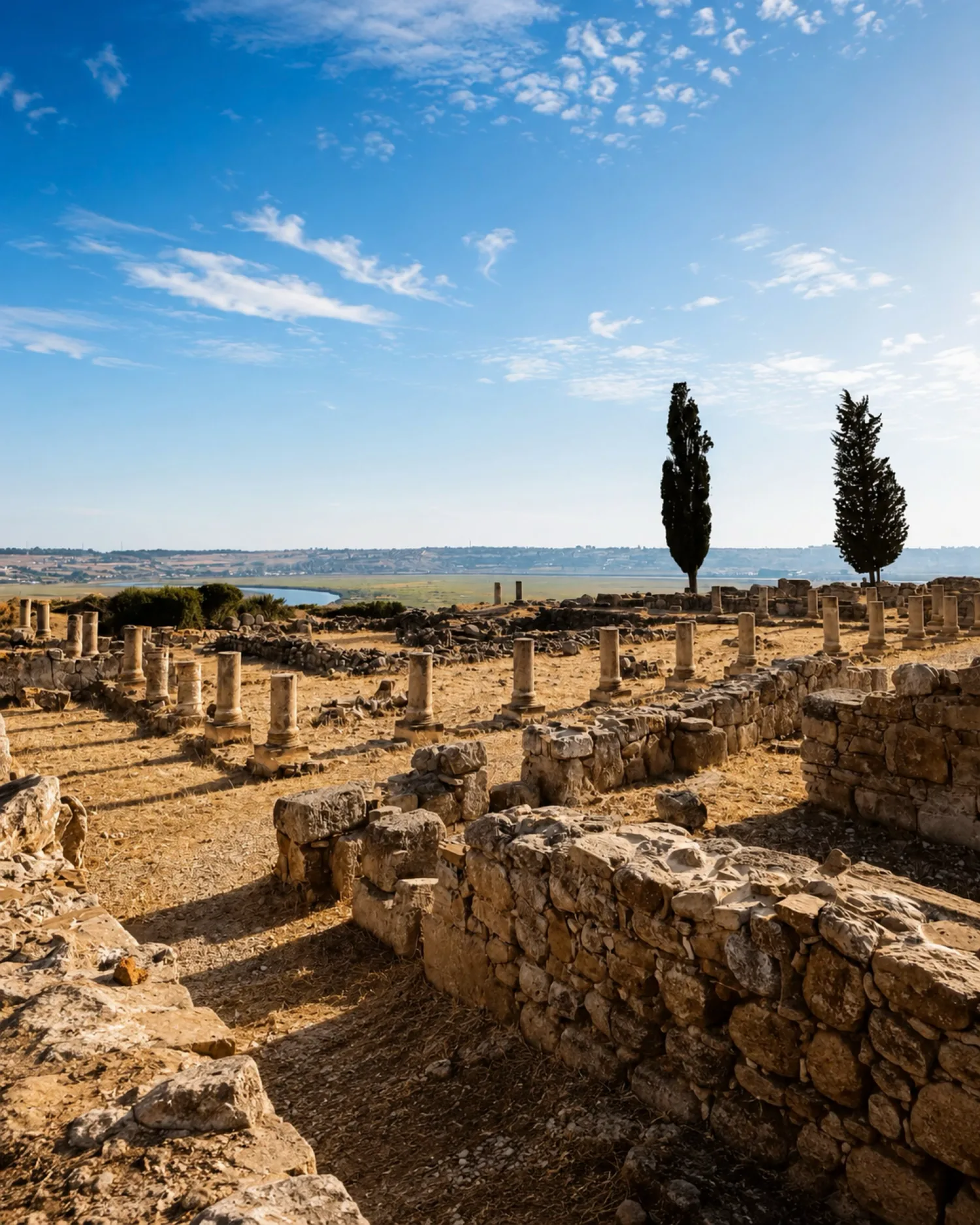
The ruins of Lixus overlook a broad landscape shaped by memory, geography and the Loukkos basin. They give Larache a rare depth: the city is not only coastal, but also civilisational.
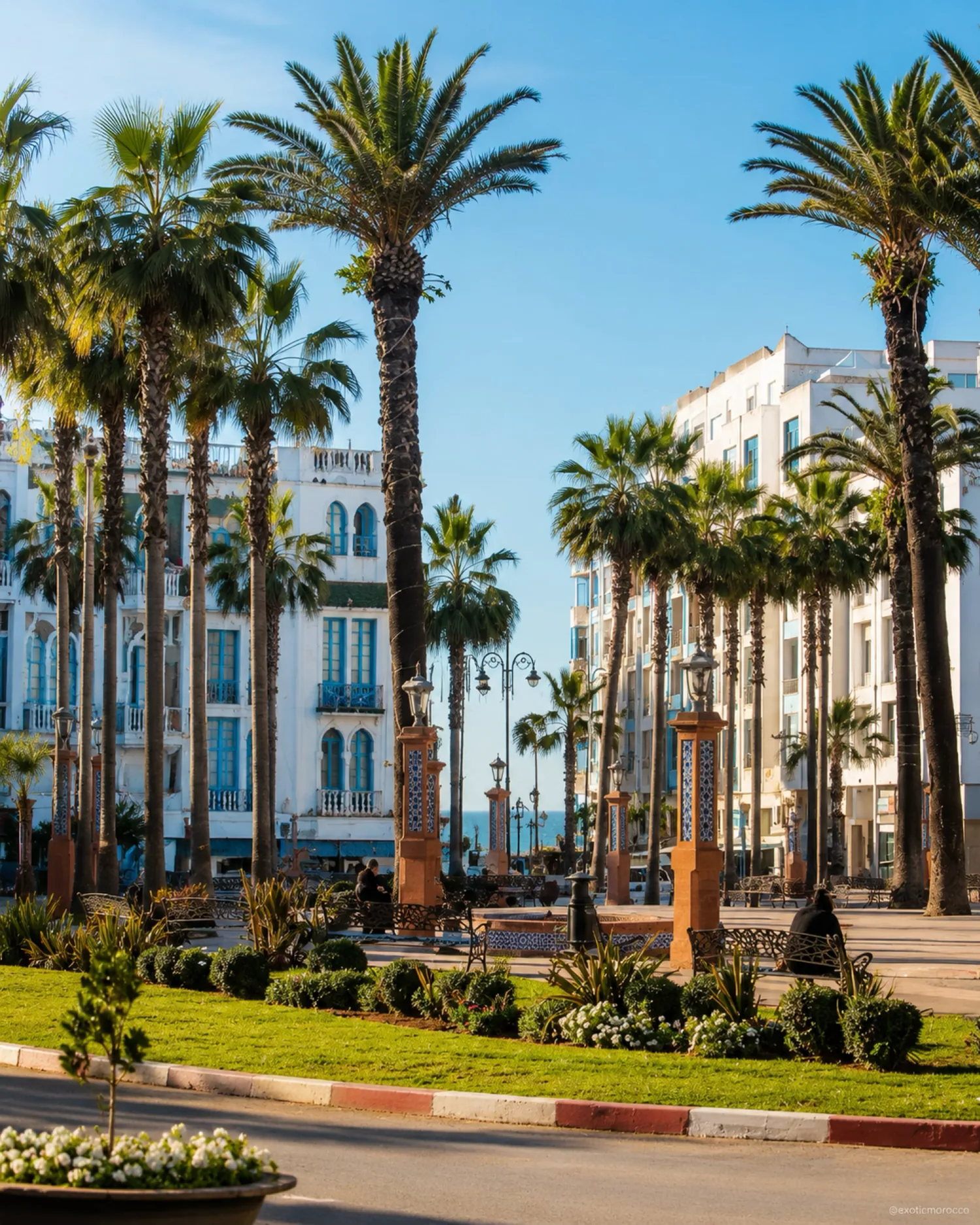
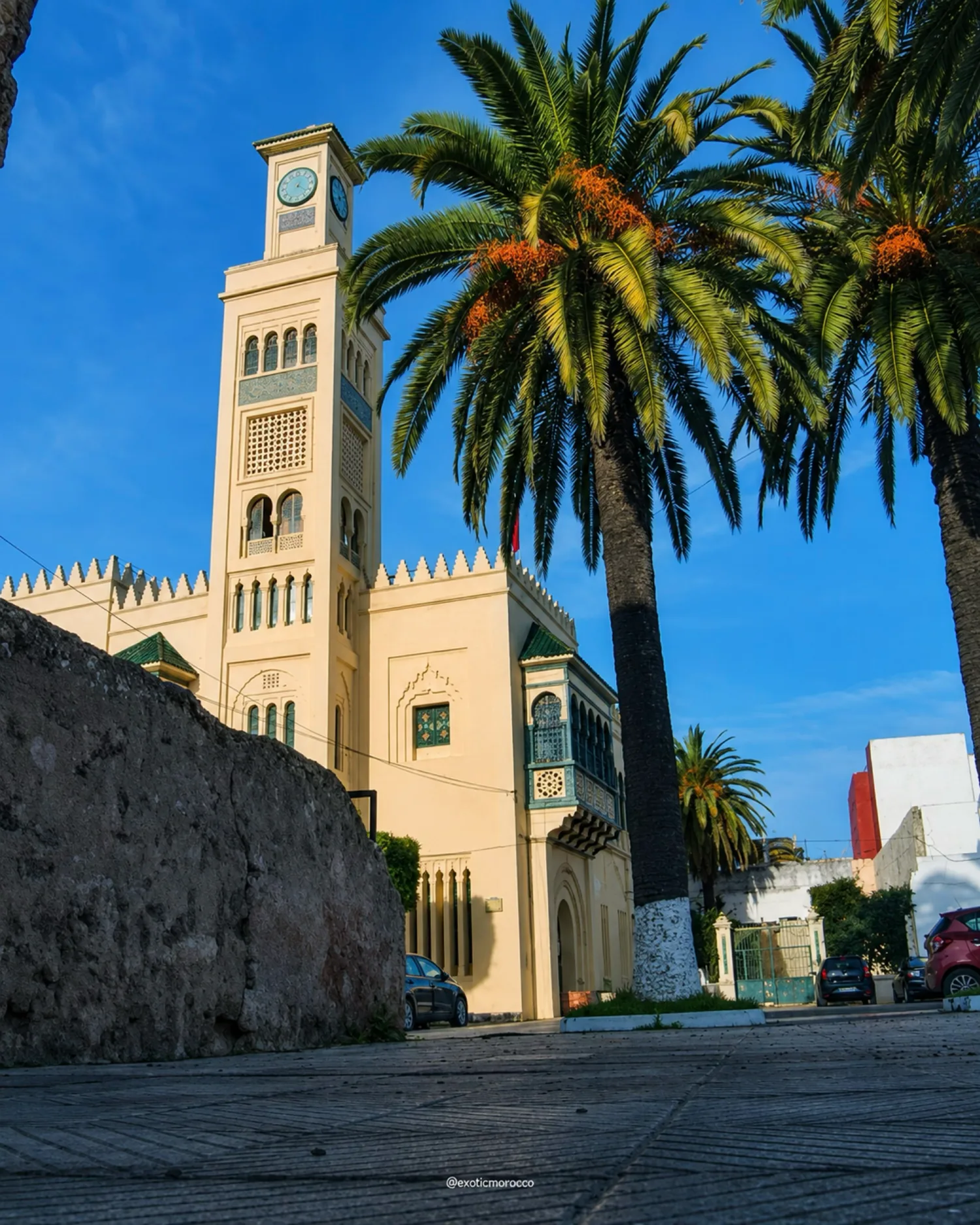
Palm-lined avenues, tiled details and open public space point to Larache’s civic layer — a quieter but highly important part of its identity.
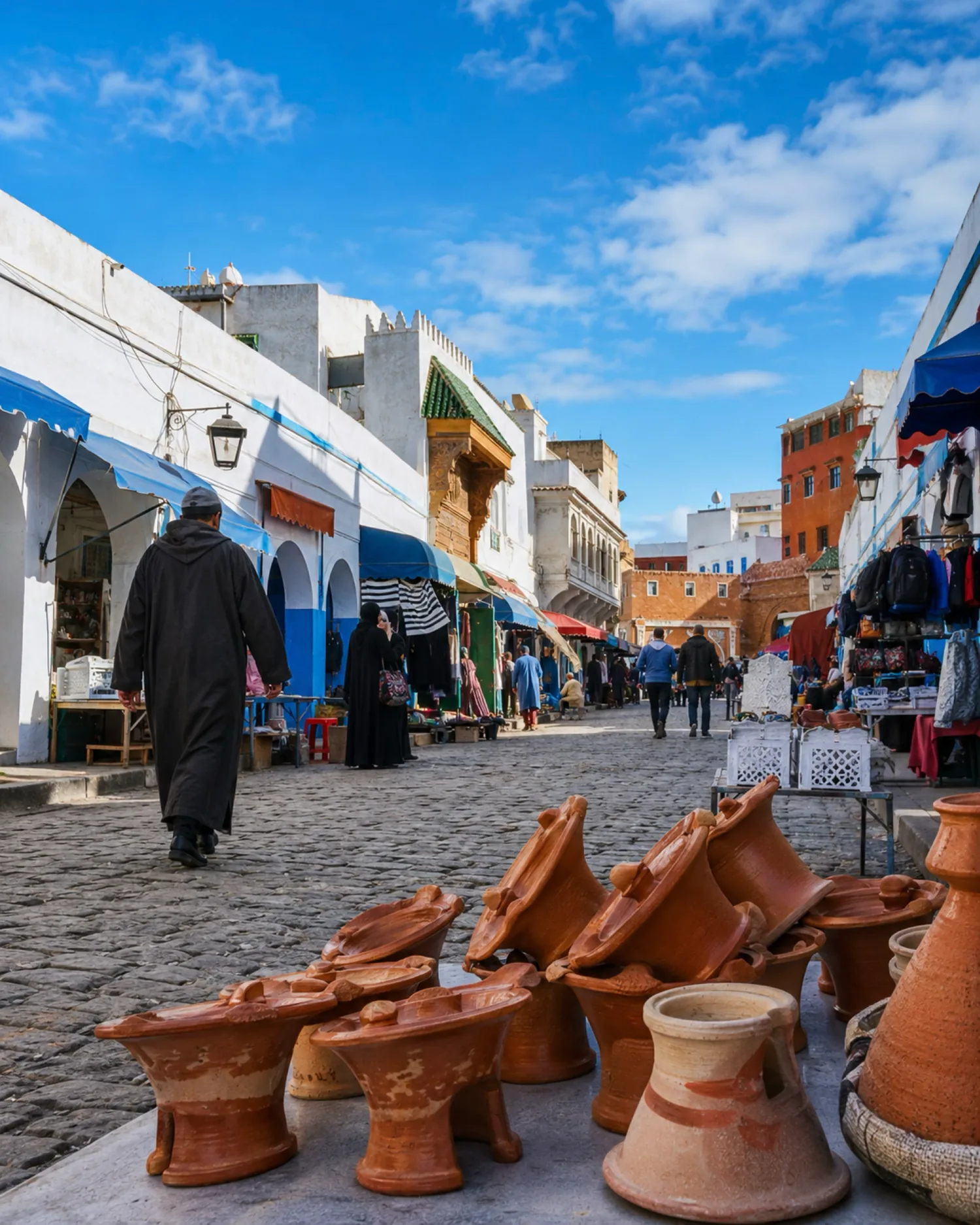
Within the medina, Larache reveals another tempo: traders, pottery, arcades, blue-and-white facades and streets shaped by everyday movement rather than monumentality.
Landmarks & orientation
No single viewpoint explains Larache. These six places bring together the Atlantic edge, civic buildings, medina texture, Spanish-era memory and the larger silhouette of the city.
The seafront edge where Larache opens to the Atlantic through blue-and-white promenades and ocean light.
A strong visual marker in the white-and-blue cityscape, visible within Larache’s waterfront profile.
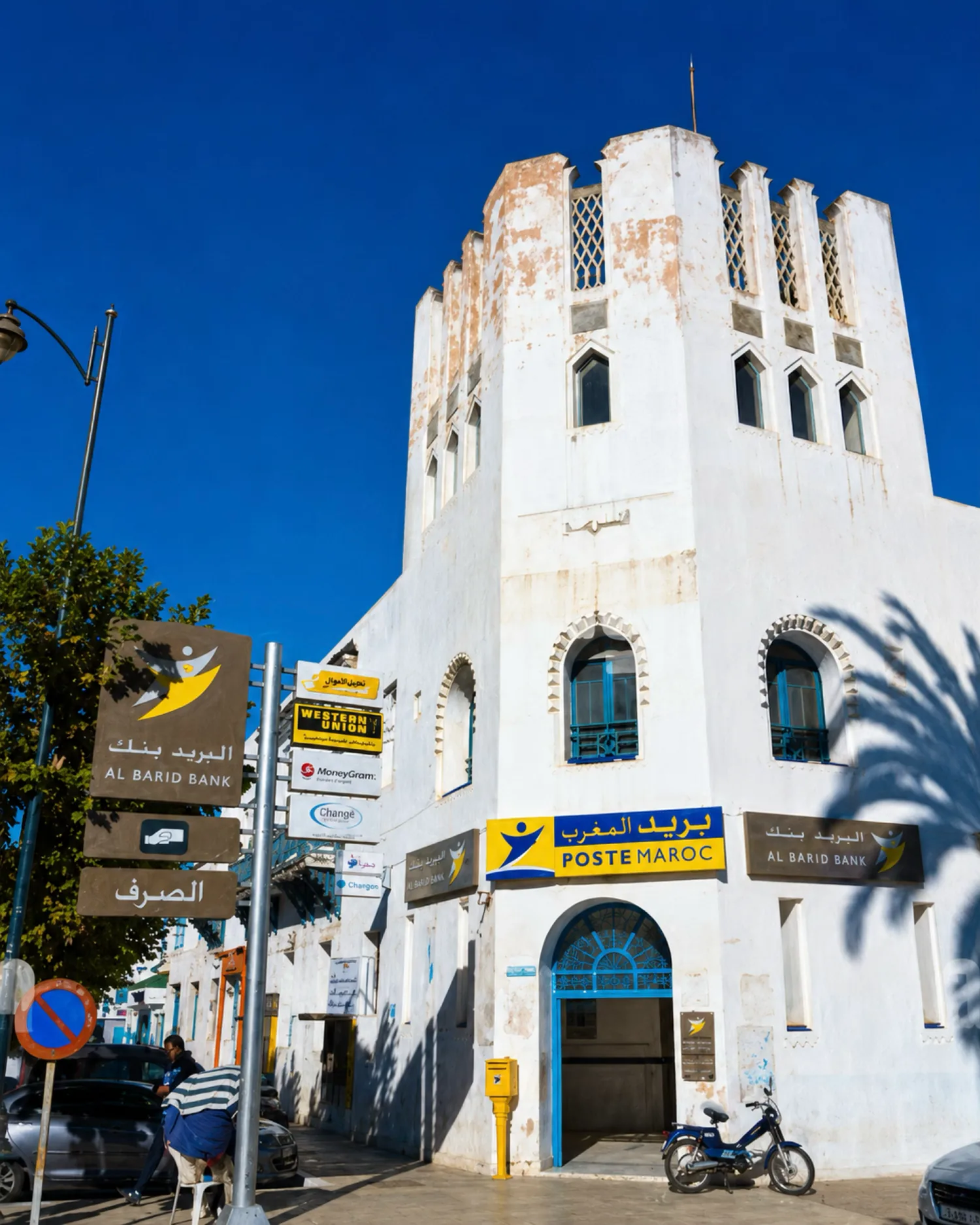
A civic building that reflects Larache’s administrative and Spanish-era architectural heritage.
A landmark connected to Larache’s layered religious and civic landscape.
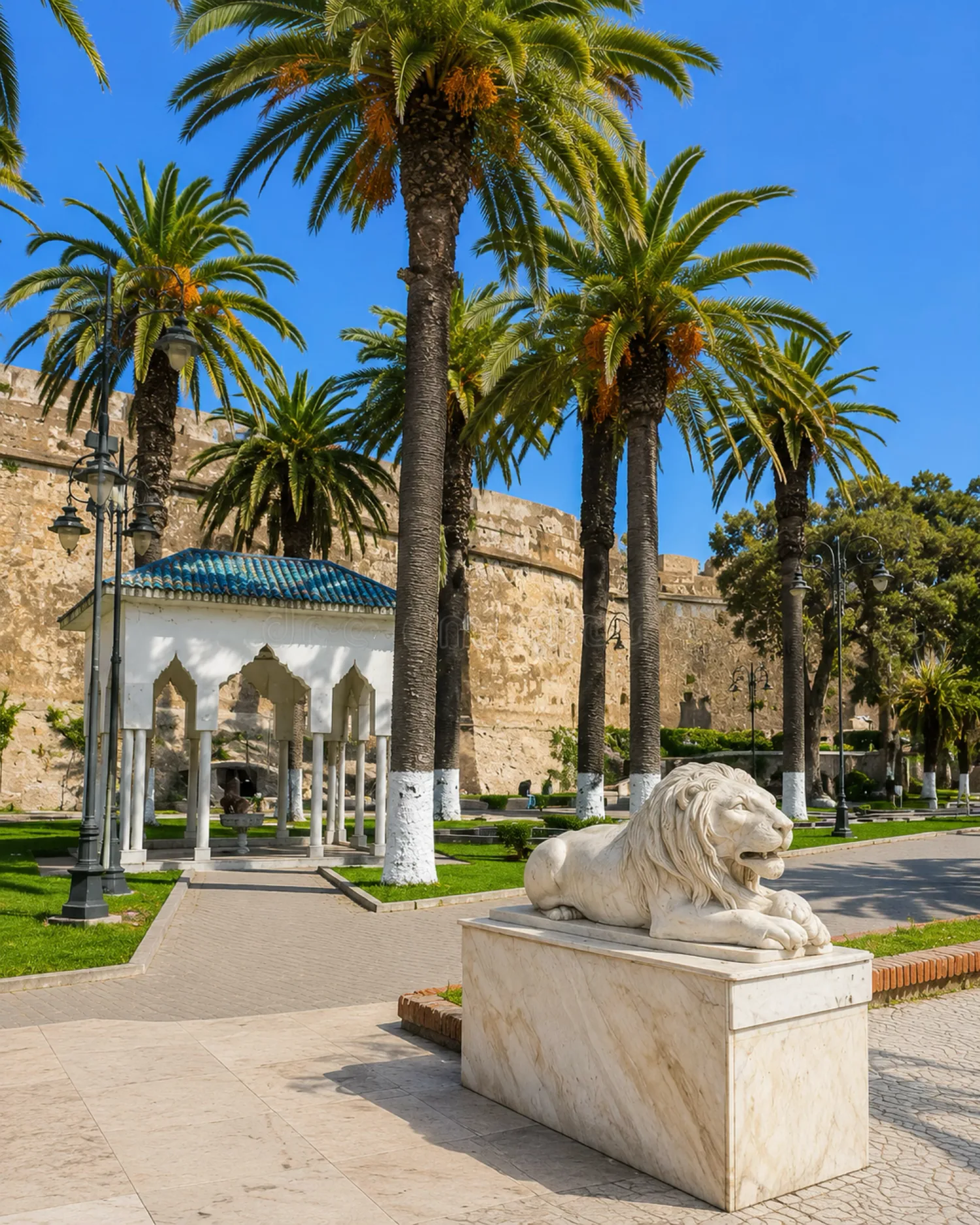
A green public space where palms, walls, garden structures and memory meet.
Seen from the water, Larache reveals its stacked white facades, blue accents and Atlantic orientation.
Featured heritage focus
No reading of Larache is complete without Lixus. Set near the Loukkos, the archaeological site gives the city one of its strongest historical anchors. Its ruins are not only important for the past they represent, but also for the way they shape Larache’s wider landscape identity.
Larache therefore stands apart from many coastal towns: its atmosphere is not formed by the Atlantic alone, but also by a nearby ancient terrain that still speaks through silence, ruins and earth.
Texture, trade and daily rhythm
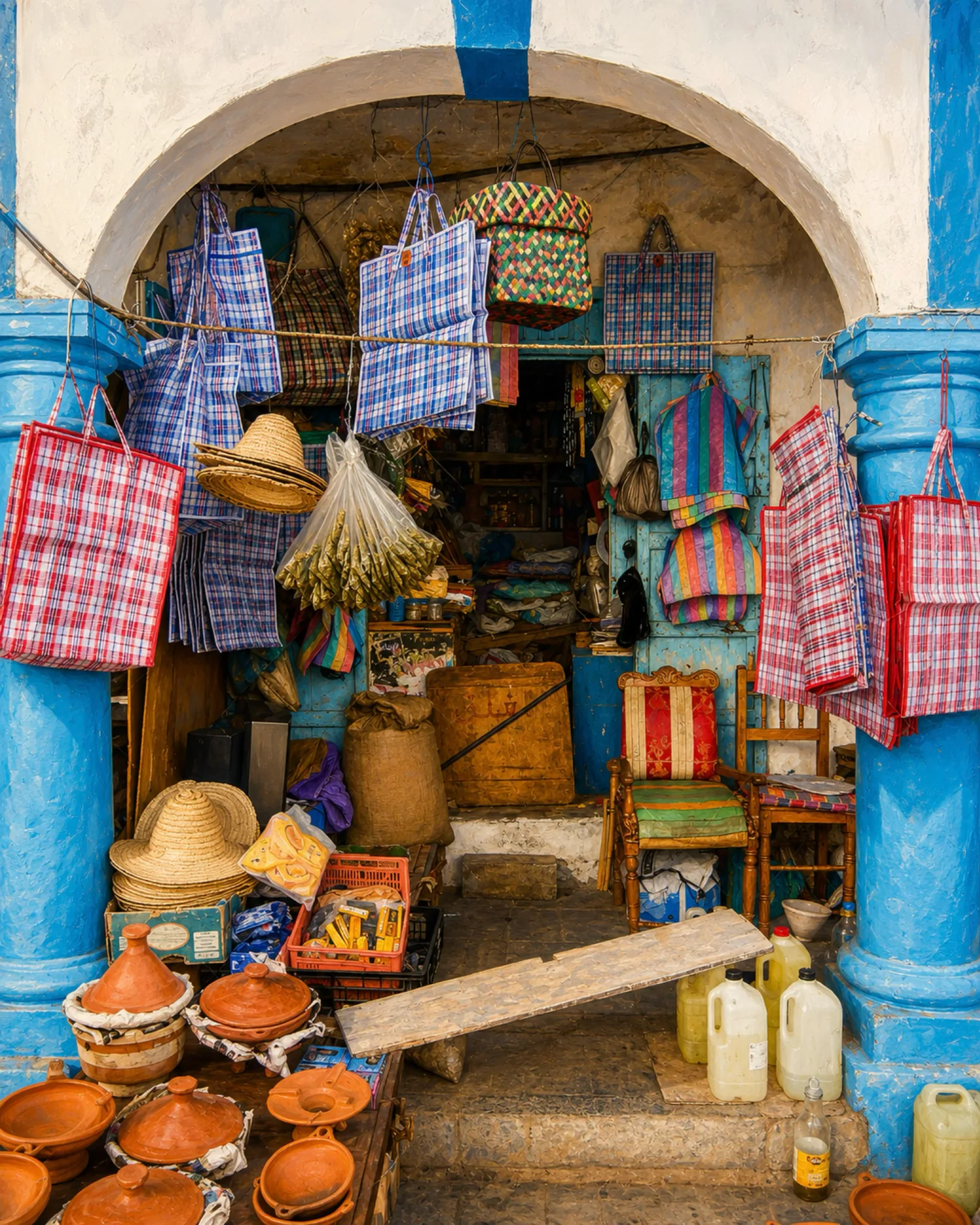
Arcades, baskets, household goods and pottery speak to Larache’s practical, human scale. The city’s appeal often lies in these smaller visual encounters.
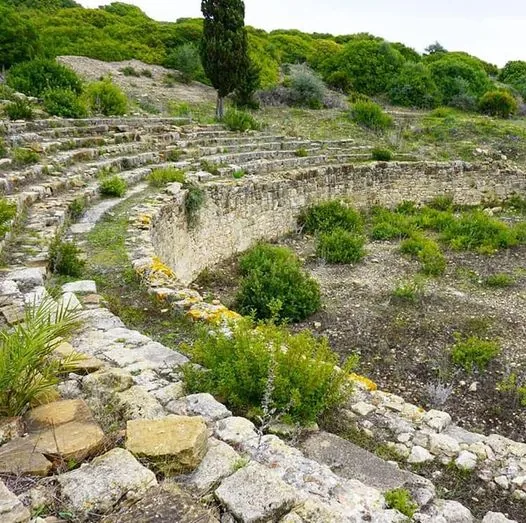
These curved stone remains show how Lixus was once structured as an inhabited and organised settlement rather than an isolated ruin field.
Larache’s medina is not frozen in time. It remains active, commercial and social, with a pace that feels grounded and real.
Public buildings, walls and urban character
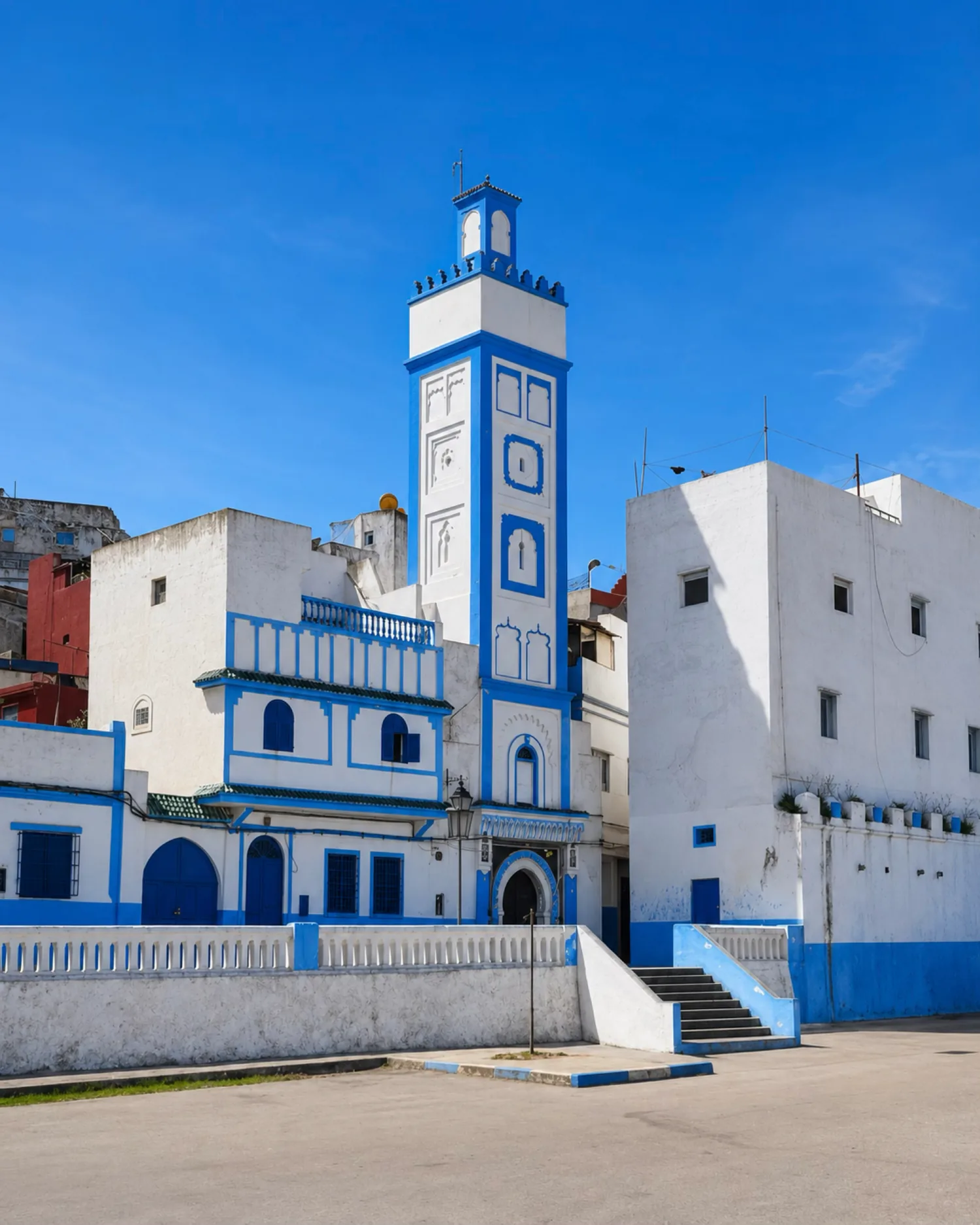
Larache’s architecture should be read broadly. Its public buildings, religious landmarks, gardens, waterfront outlooks and Spanish-era structures together create a varied but coherent identity of white facades, blue openings, palms, walls and carefully composed civic moments.
Nearby highlights
The Larache region opens toward inland history, lagoon landscapes and the wider Atlantic route. These three extensions keep the journey coherent while showing how varied northern Morocco becomes around the city.
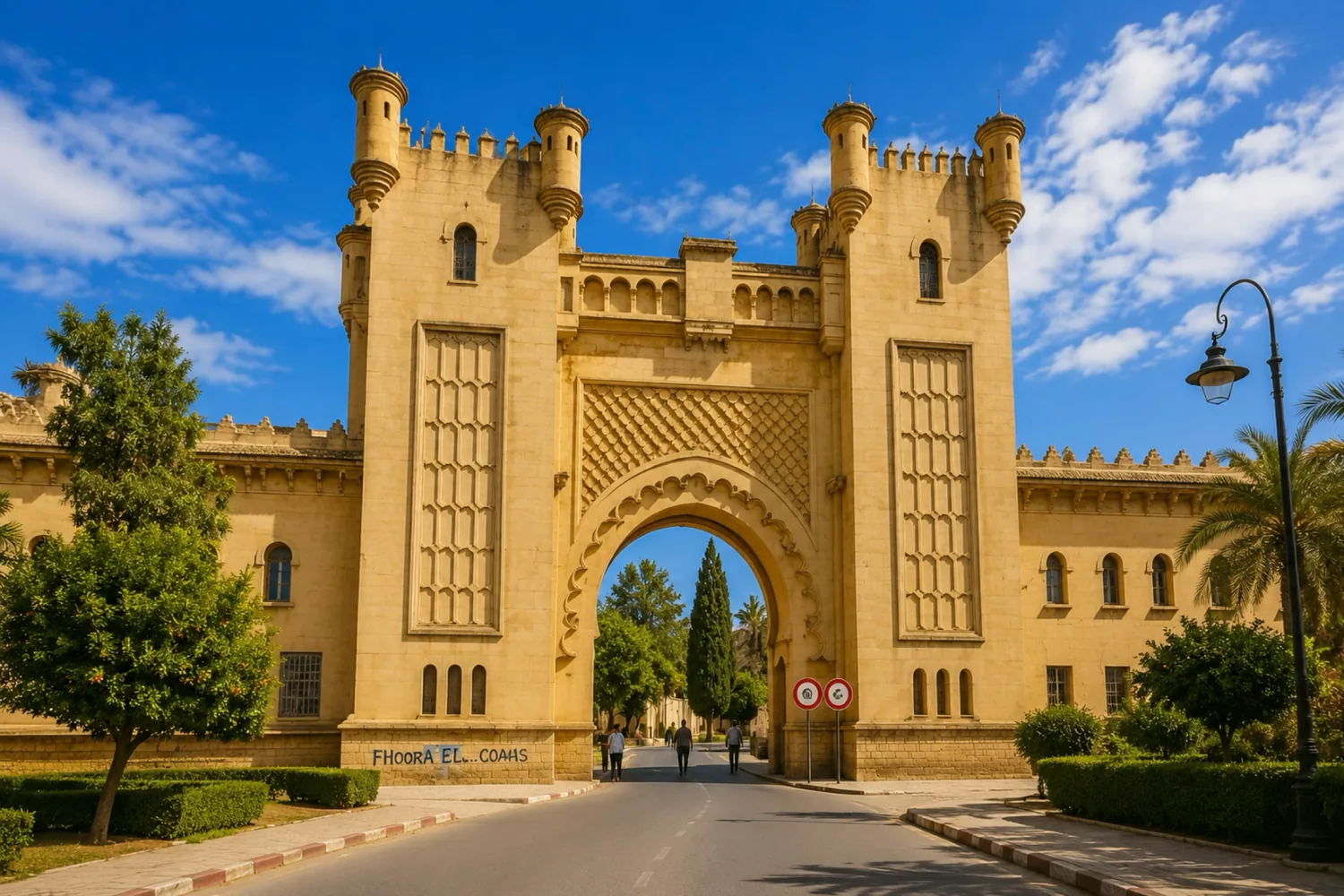
The inland landscape near Ksar el-Kebir adds another historical dimension to the Larache region, especially through the memory of Wadi al-Makhazin and the wider northern plains.
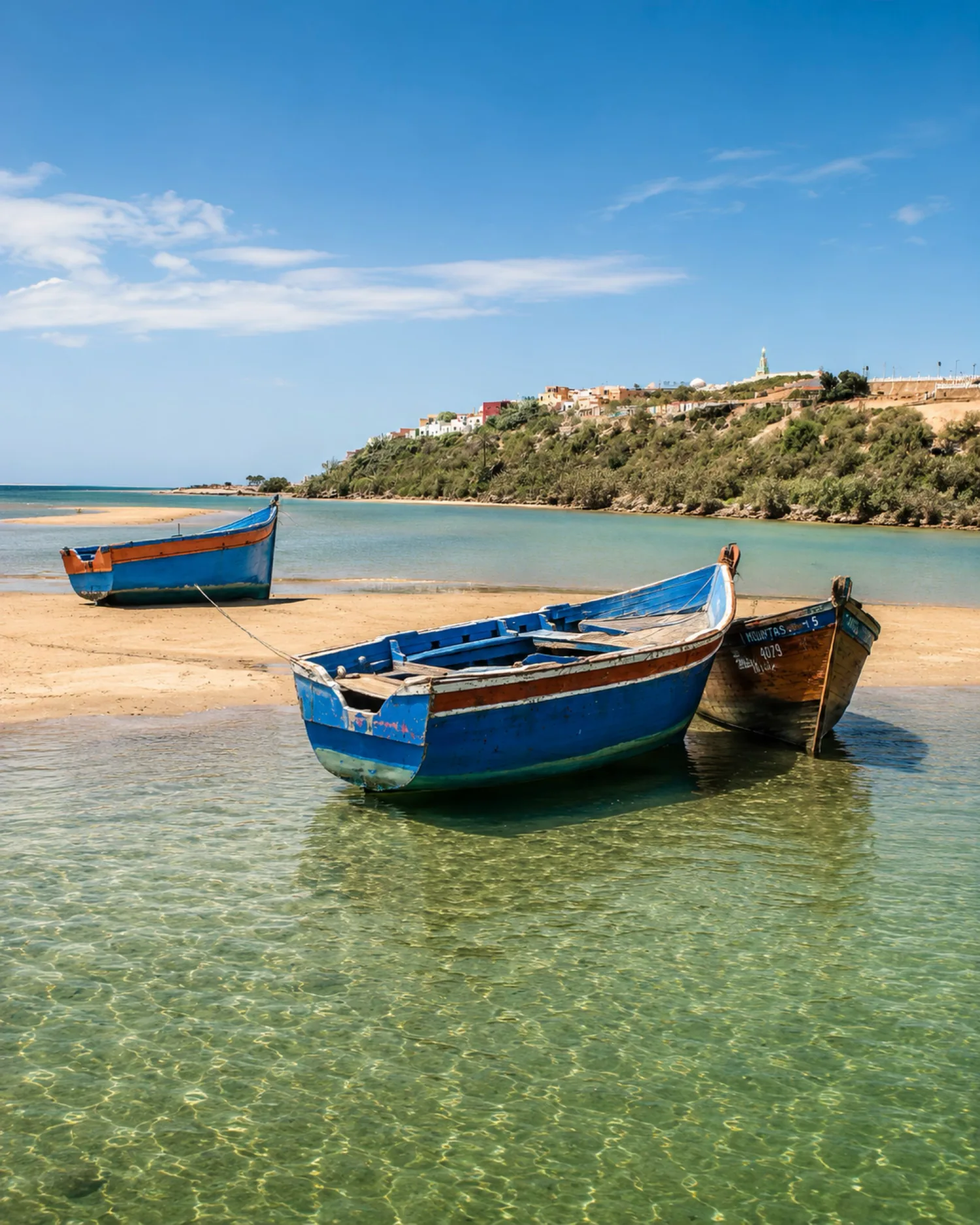
South of Larache, lagoon landscapes around Moulay Bousselham offer a softer Atlantic environment of water, birds, boats and calm coastal scenery.
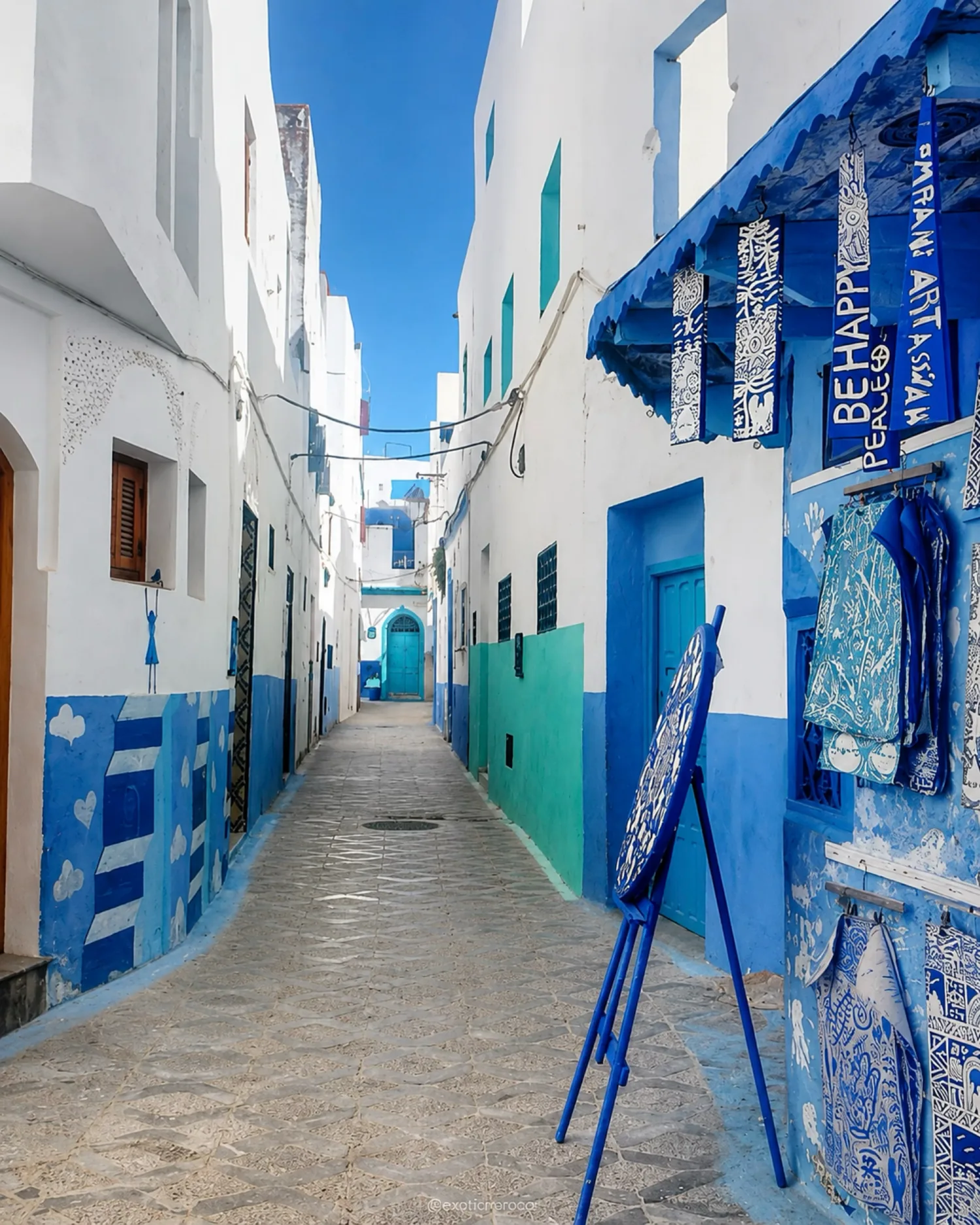
This wider coastal route connects Larache to some of Atlantic Morocco’s appealing visual landscapes, including nearby seaside settlements and white-and-blue urban atmospheres.
Practical orientation
Start with the seafront and Bab Al Bahr, then move toward the civic heart of Larache around palm-lined public spaces and historic buildings. Continue into the medina for its streets and commerce. If time allows, extend the visit to Lixus for the historical landscape that gives the city its deeper horizon.
Start at Bab Al Bahr and read Larache through its promenade and Atlantic light.
Move through palm-lined squares and Spanish-era public buildings.
Look for everyday movement, pottery, arcades and smaller lived details.
Give the archaeological landscape enough time; it changes the whole reading of the city.
Ksar el-Kebir, Moulay Bousselham and Asilah turn Larache into a northern Atlantic base.
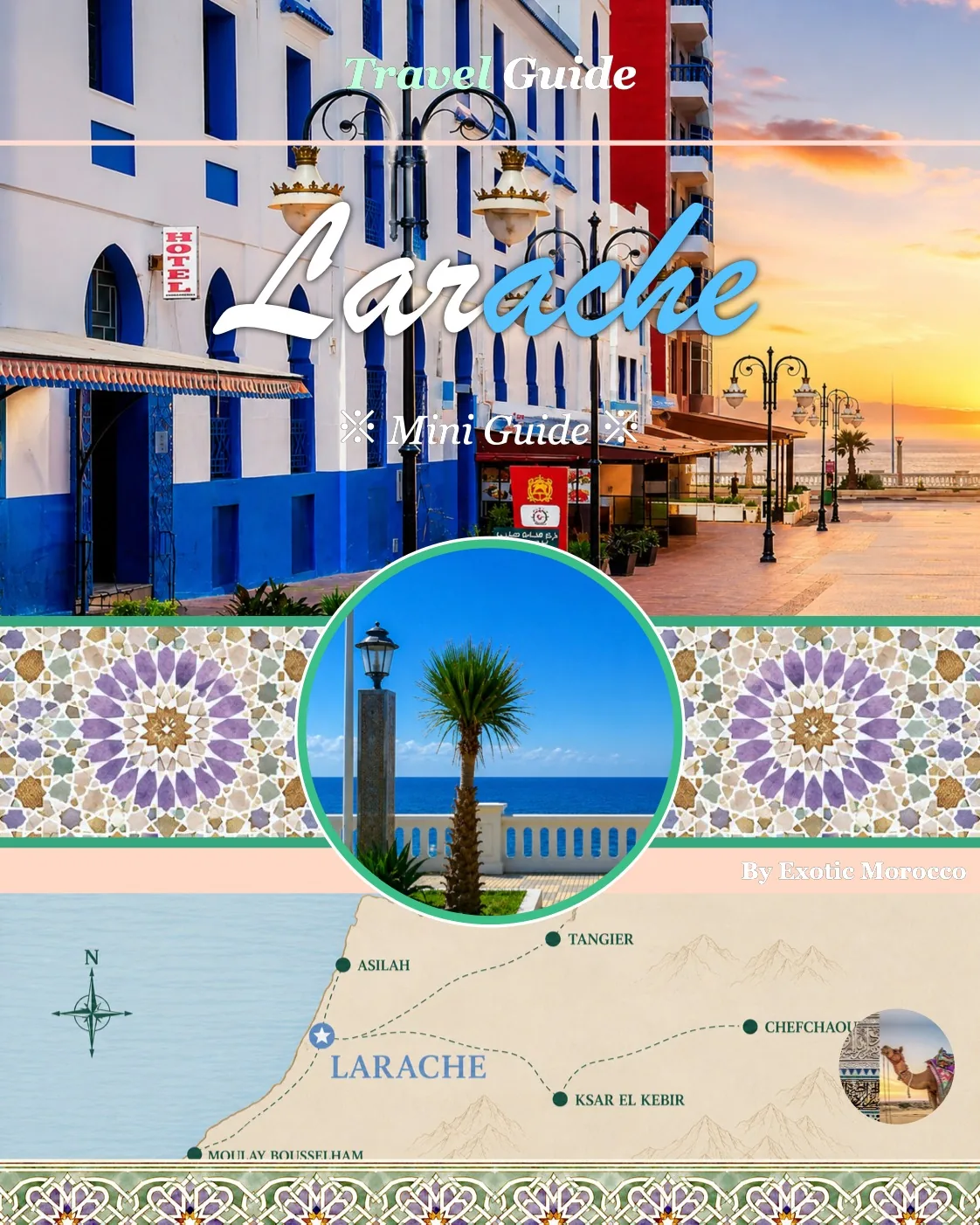
Continue with the Larache guide
For a more visual and structured introduction to the city, continue with the Larache Mini Guide — a compact overview of its atmosphere, landmarks and nearby highlights.
Continue the journey
Larache rewards attention. Between the Loukkos, the Atlantic, Lixus and the everyday beauty of its streets, it offers one of northern Morocco’s most quietly memorable urban experiences.