Ancient Tingis
A Phoenician trading settlement developed into Tingis, later a Roman colony and capital of Mauretania Tingitana. The modern city occupies this ancient strategic site above the Strait.
City of the Strait
Tangier rises from its bay through the medina to the kasbah, then opens west toward Cap Spartel and the Atlantic. Its identity joins fortified streets, café culture, diplomatic history, port movement and a sense of distance shaped by the Strait.
Why Tangier matters
Tangier is often described as Morocco’s gateway to Europe, but the city deserves to be read as a destination in its own right. The medina climbs from the port toward the kasbah; Grand Socco joins the old city to the modern centre; and the western road carries the urban story toward Cap Spartel and the Atlantic cliffs.
Its character lies in transition: enclosed lanes and open sea, Moroccan domestic life and international diplomacy, working commerce and long cultural memory. Few Moroccan cities reveal geography, politics and daily rhythm so clearly within one walkable urban frame.
Tangier’s most revealing moments occur at points of passage: a gate between square and medina, a stair between lane and kasbah, a terrace above the bay, a lighthouse at the edge of two seas.
Historical orientation
Tangier has repeatedly been reshaped by its position at the western entrance to the Strait of Gibraltar. Ancient Tingis became a Roman provincial capital; Portuguese and English occupation altered its fortifications; Moroccan rule restored the city as a diplomatic centre; and the twentieth-century International Zone added another urban and cultural layer before reintegration into independent Morocco in 1956.
A Phoenician trading settlement developed into Tingis, later a Roman colony and capital of Mauretania Tingitana. The modern city occupies this ancient strategic site above the Strait.
Portugal occupied Tangier in 1471. The city later passed to the English crown before returning to Moroccan rule in 1684, leaving fortified layers still legible around the upper city.
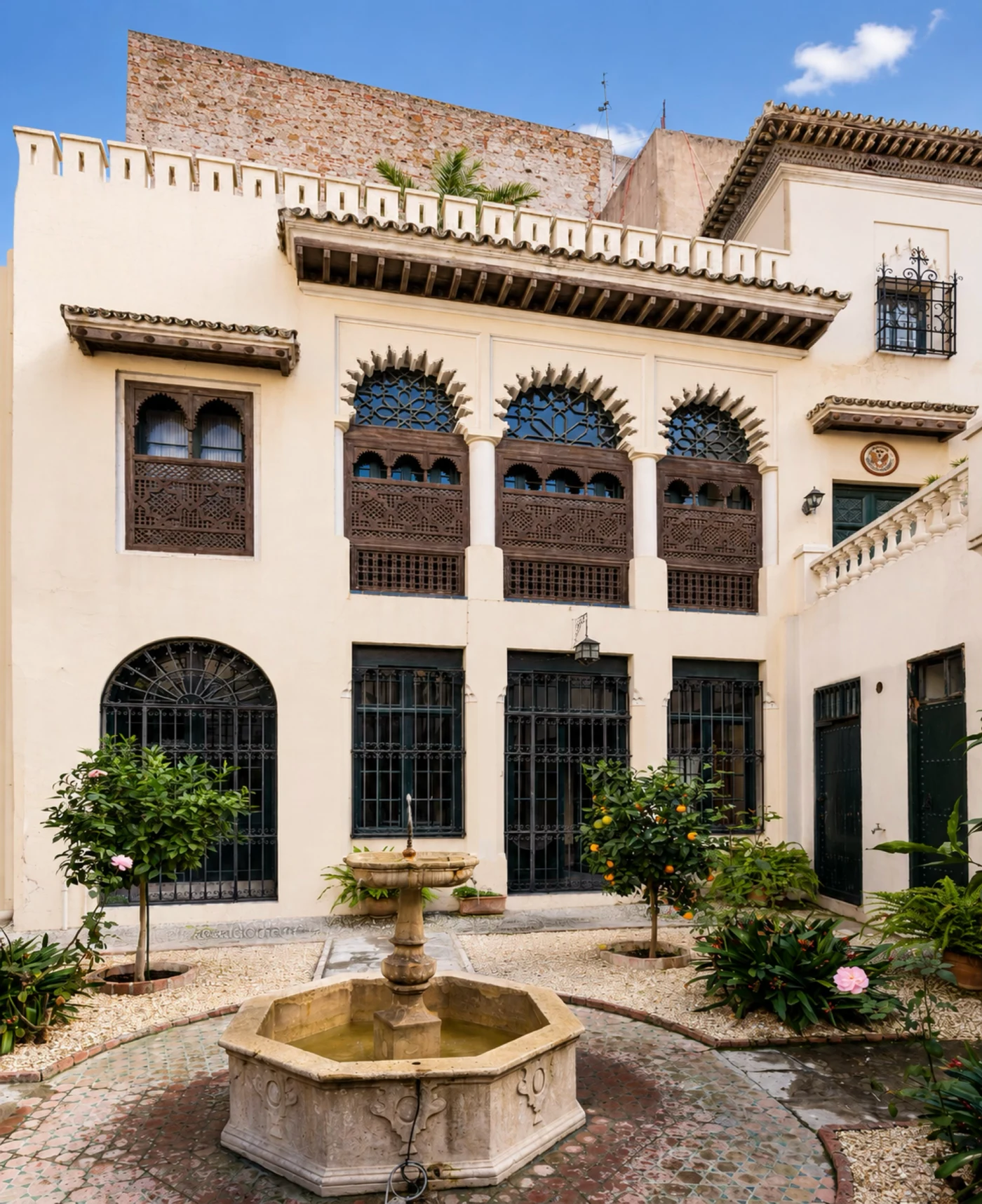
Tangier became Morocco’s principal arena for foreign representation. The American Legation, gifted in 1821, remains the clearest architectural witness to this diplomatic period.
Tangier’s special international regime intensified its multilingual, commercial and cultural life. In 1956 the city was reintegrated into independent Morocco, ending the international administration.
A visual bridge
These three views establish Tangier’s essential spatial rhythm: the fortified calm of the kasbah, terraces looking across the bay, and the close domestic scale of the white medina.
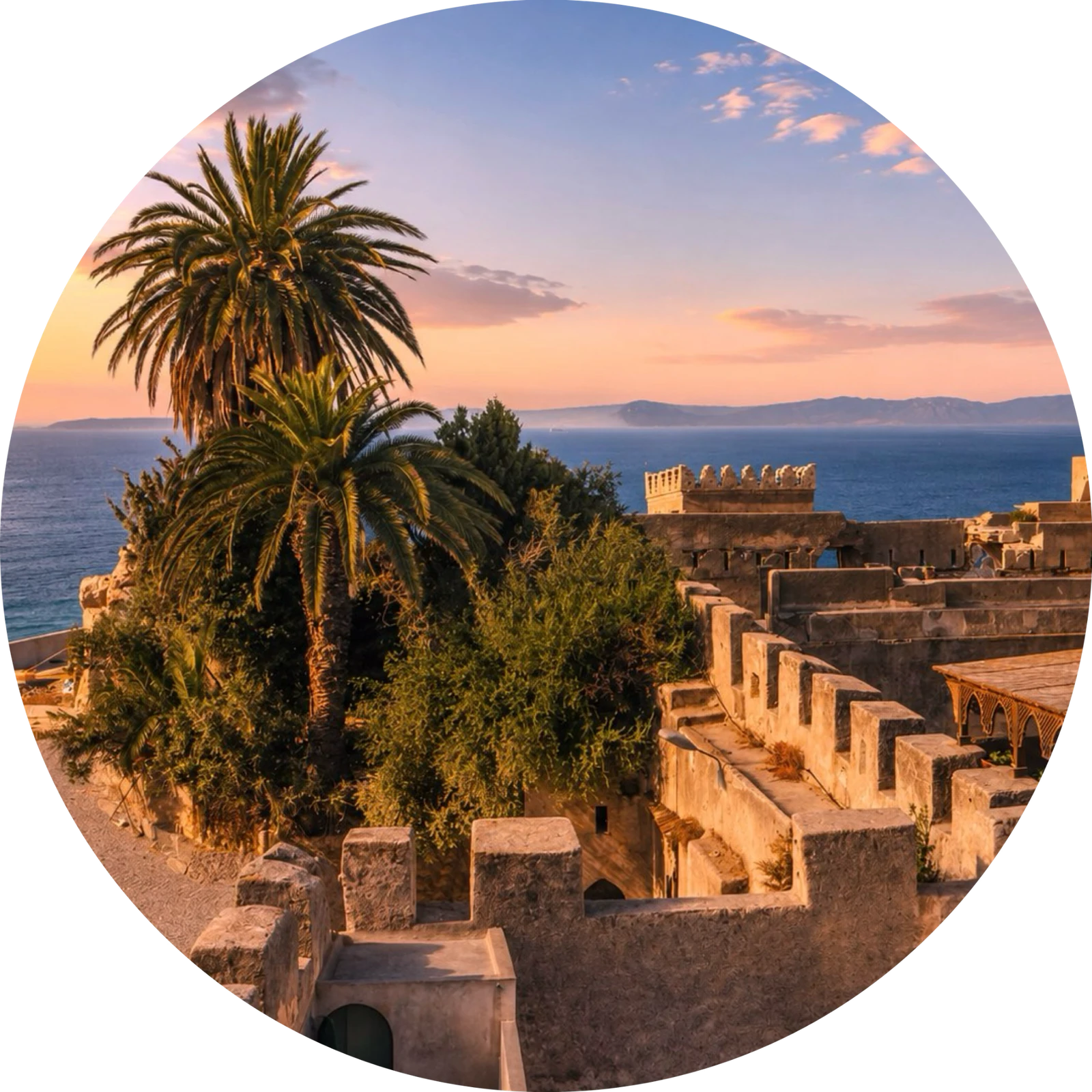
Walls, palms and the Strait define the elevated upper city.
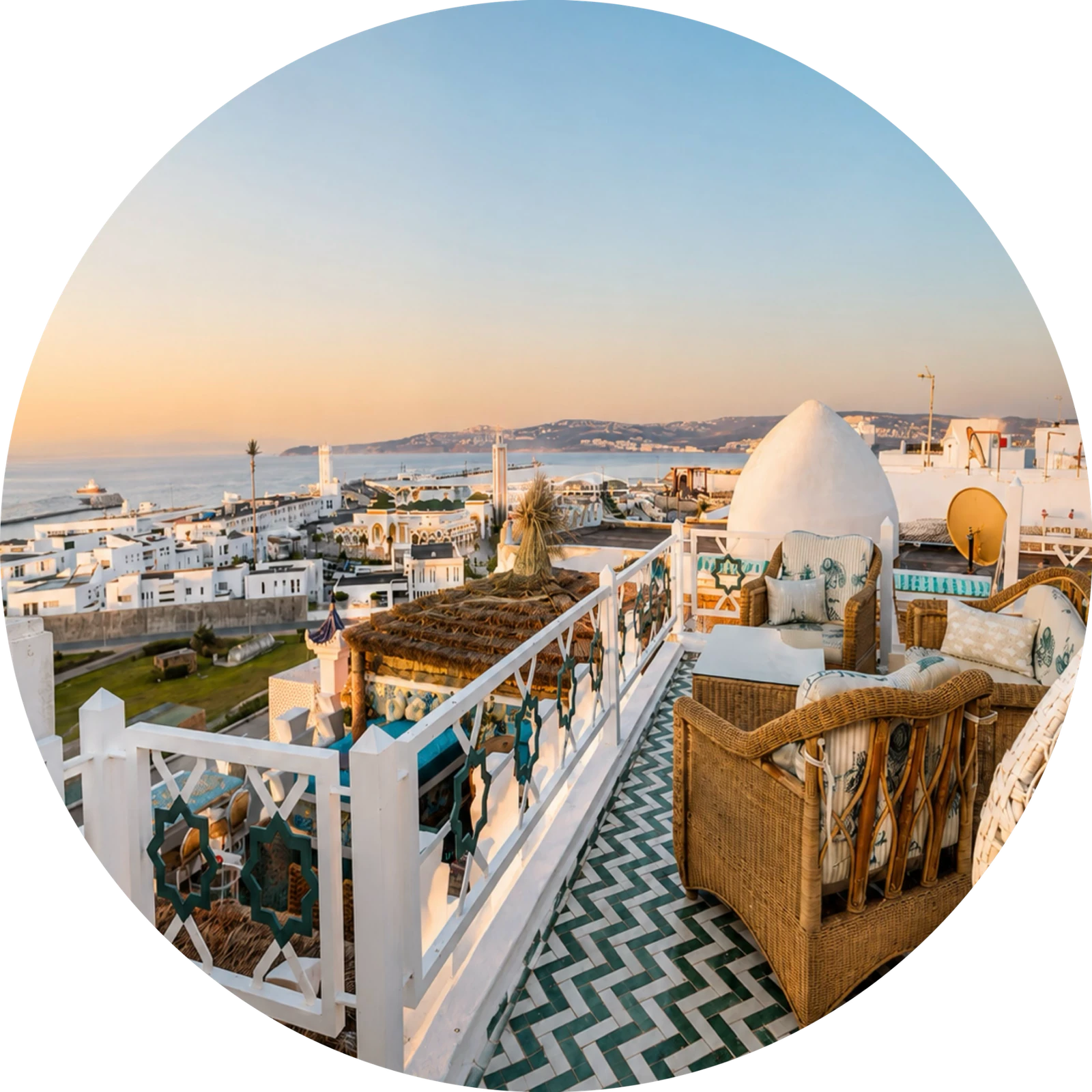
Rooftops turn the city’s slope into a sequence of sea views.
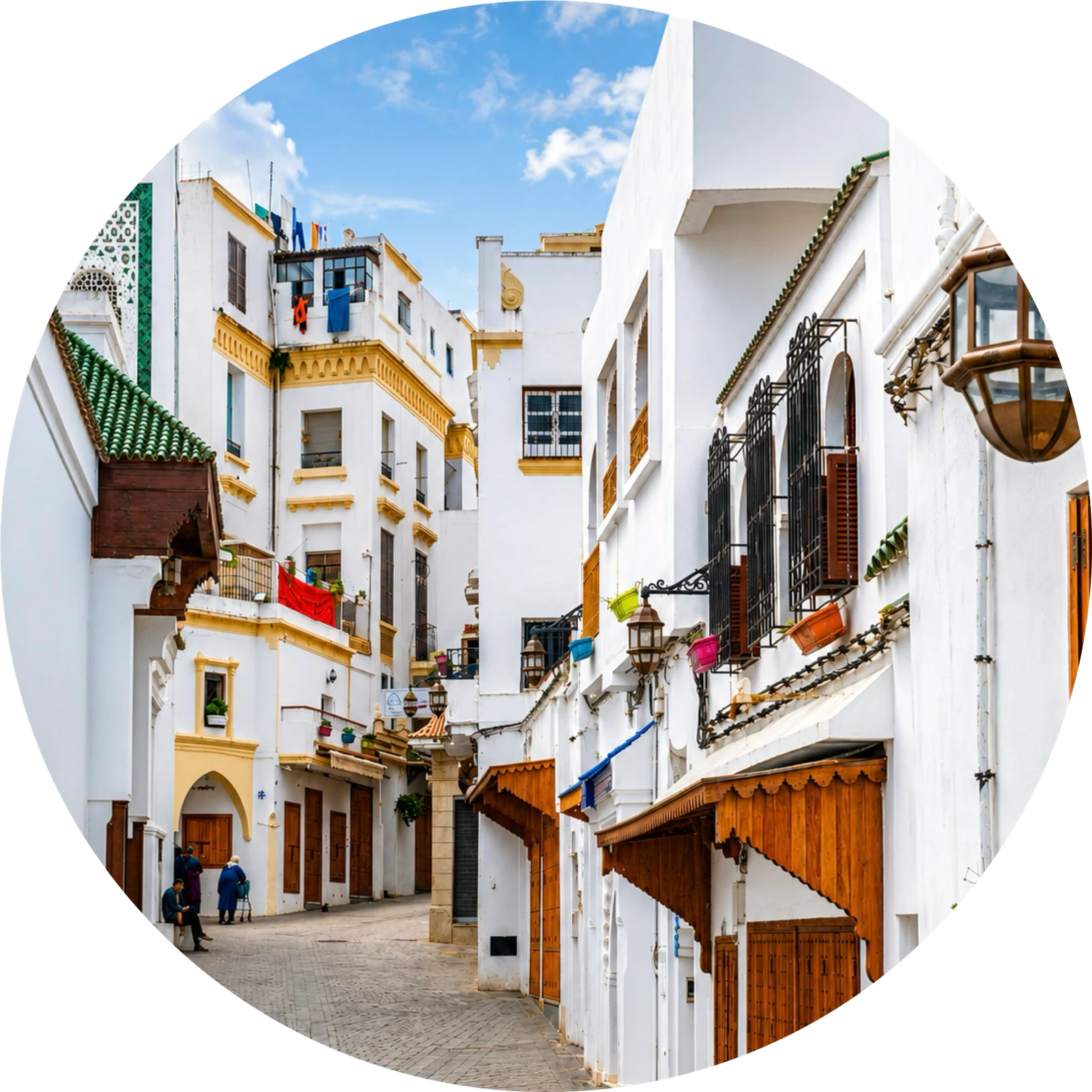
White façades, timber, ironwork and quiet turns bring Tangier back to human scale.
Tangier at a glance
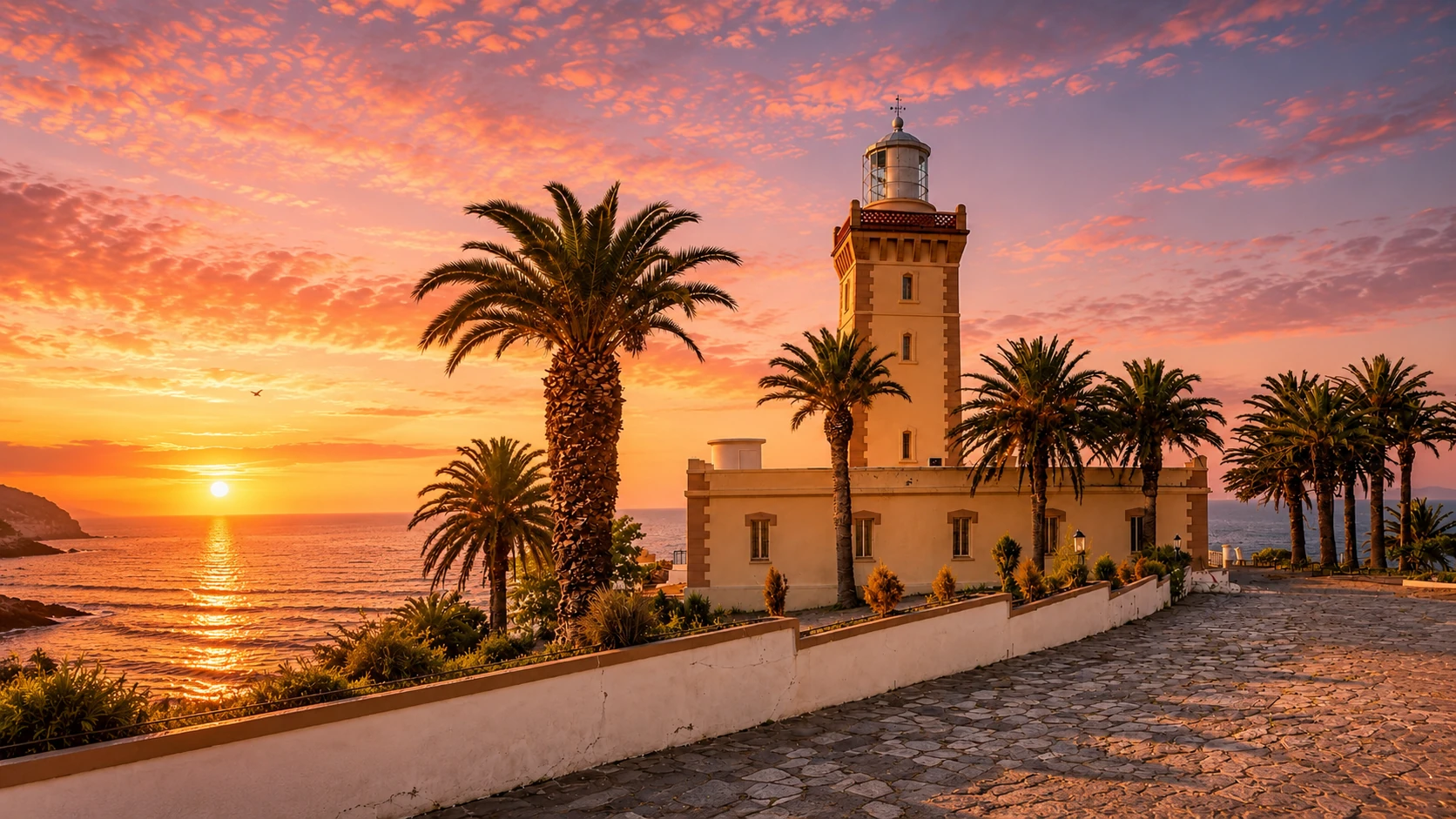
Tangier stands above a bay at the western entrance to the Strait of Gibraltar. The sea is not a backdrop: it explains the port, the city’s diplomatic history and the constant sense of movement between shores.
The historic city is read vertically. Grand Socco leads into the medina; Petit Socco anchors its commercial interior; and the kasbah occupies the higher fortified ground with views toward the Strait.
Legations, consular buildings, cafés and twentieth-century architecture record Tangier’s long role as a diplomatic and international city, without replacing its Moroccan urban core.
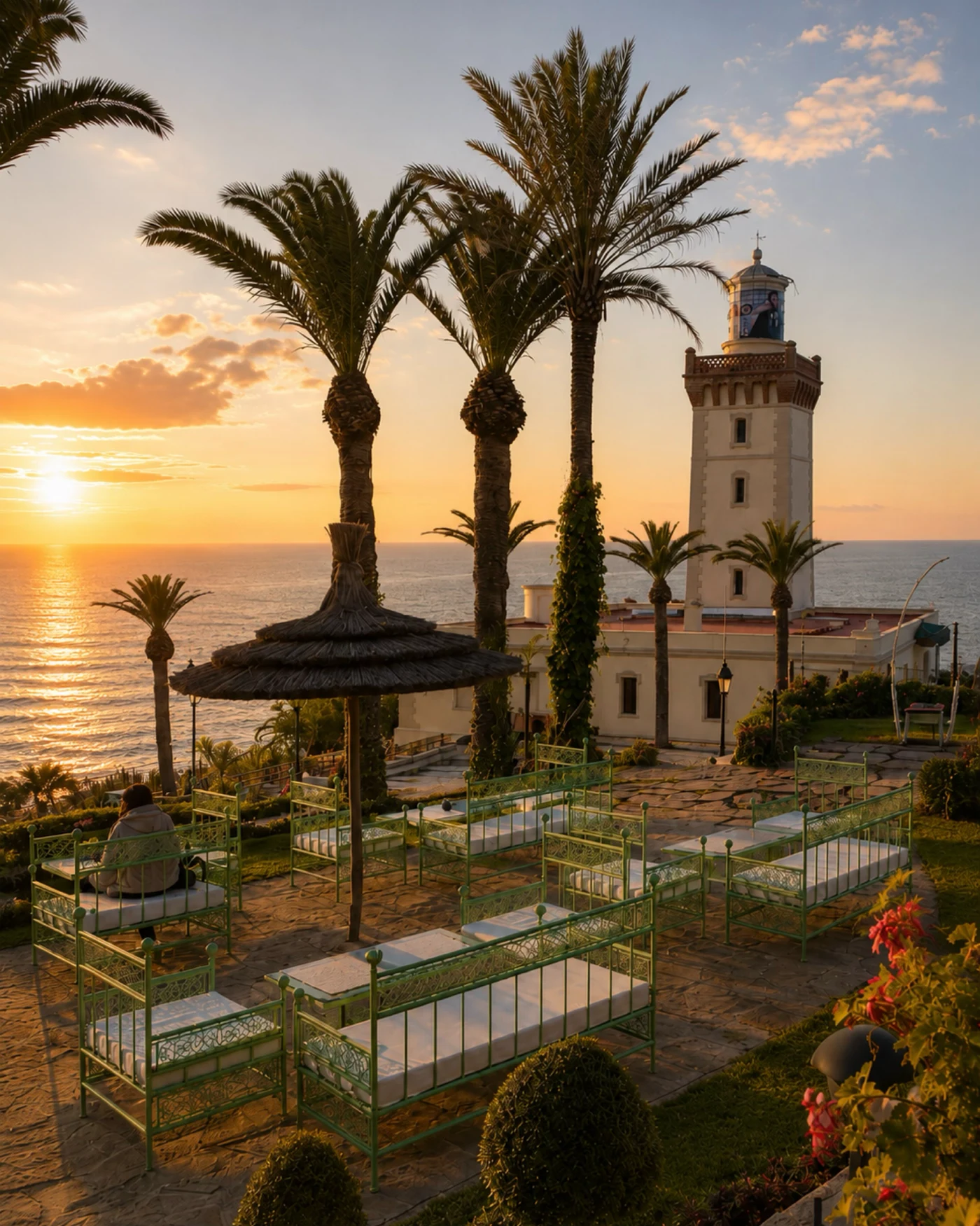
Cap Spartel, the Caves of Hercules, Rmilat and the western coastal road form a distinct landscape journey. They should be planned as a separate half-day rather than compressed into the medina walk.
A clearer reading of the city
To understand Tangier, read the inhabited medina, the fortified kasbah and its refined interiors together. They reveal a city in which ordinary movement, political authority and decorative culture occupy different heights of the same urban slope.
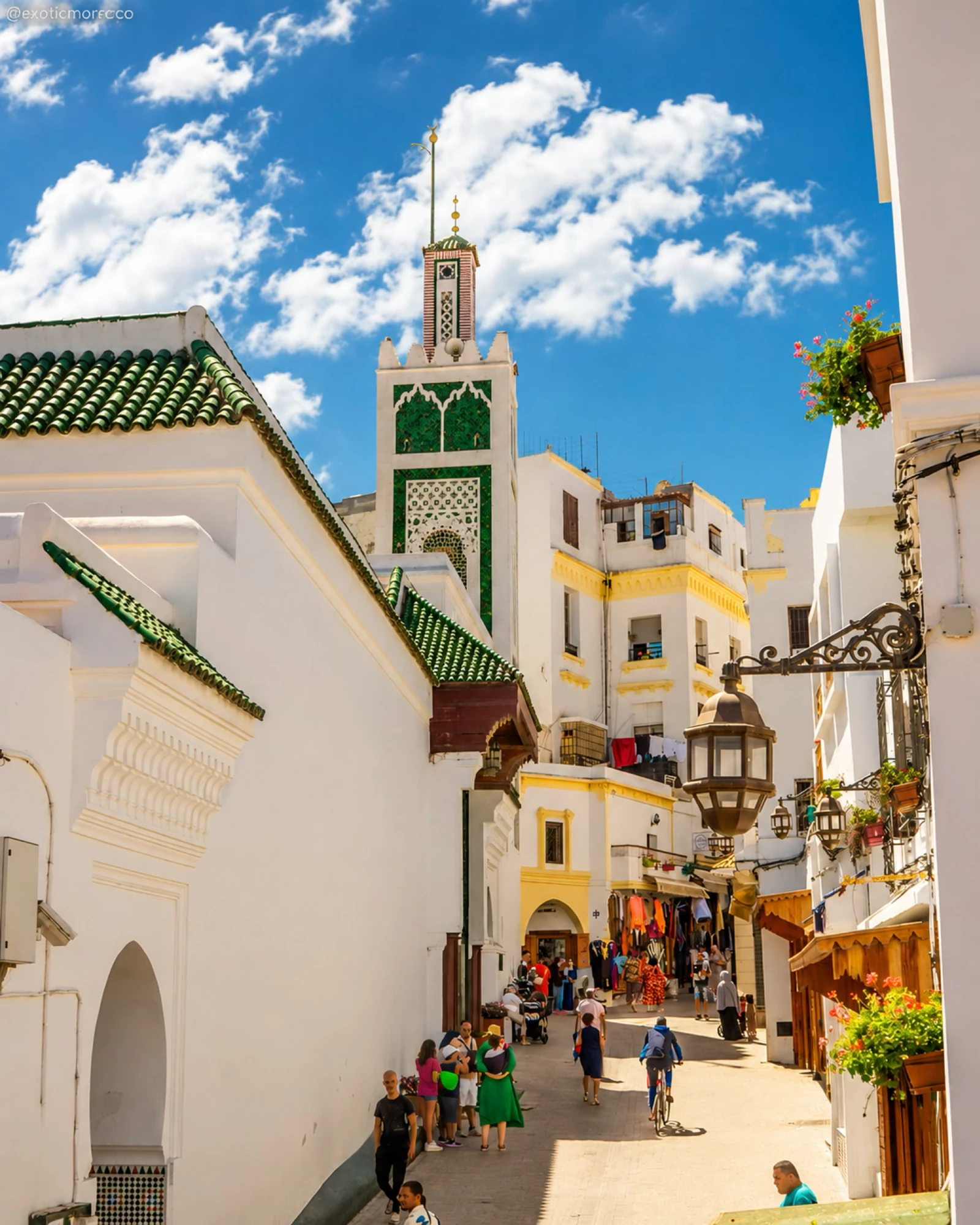
White lanes, small mosques, workshops, homes and local commerce keep the old city active. Tangier’s medina is not scenery; it is a neighbourhood structured by daily routes and repeated ascent.
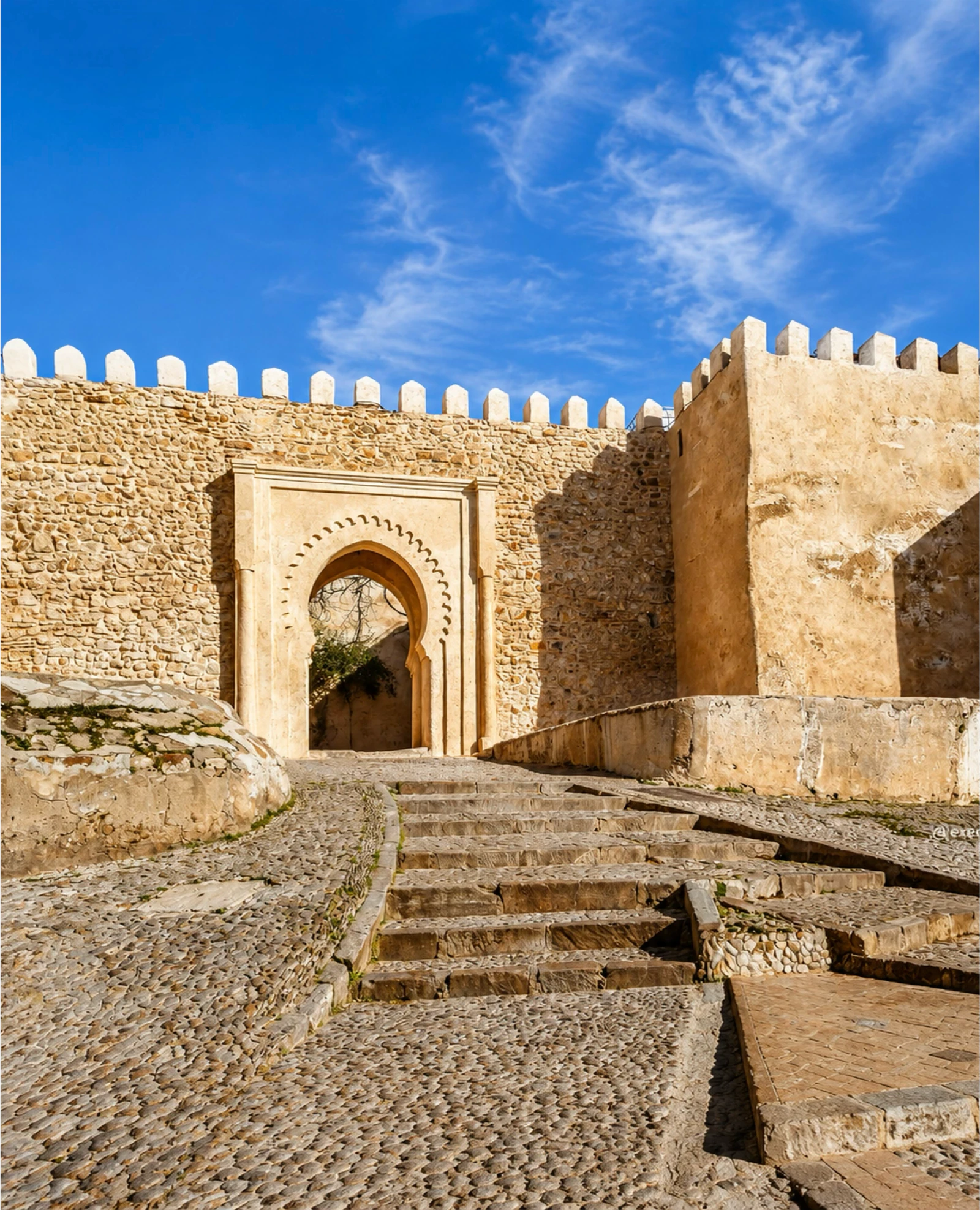
Kasbah walls, gates and steep approaches express Tangier’s defensive geography. Their scale is best understood on foot, where changing levels reveal both enclosure and sudden sea views.
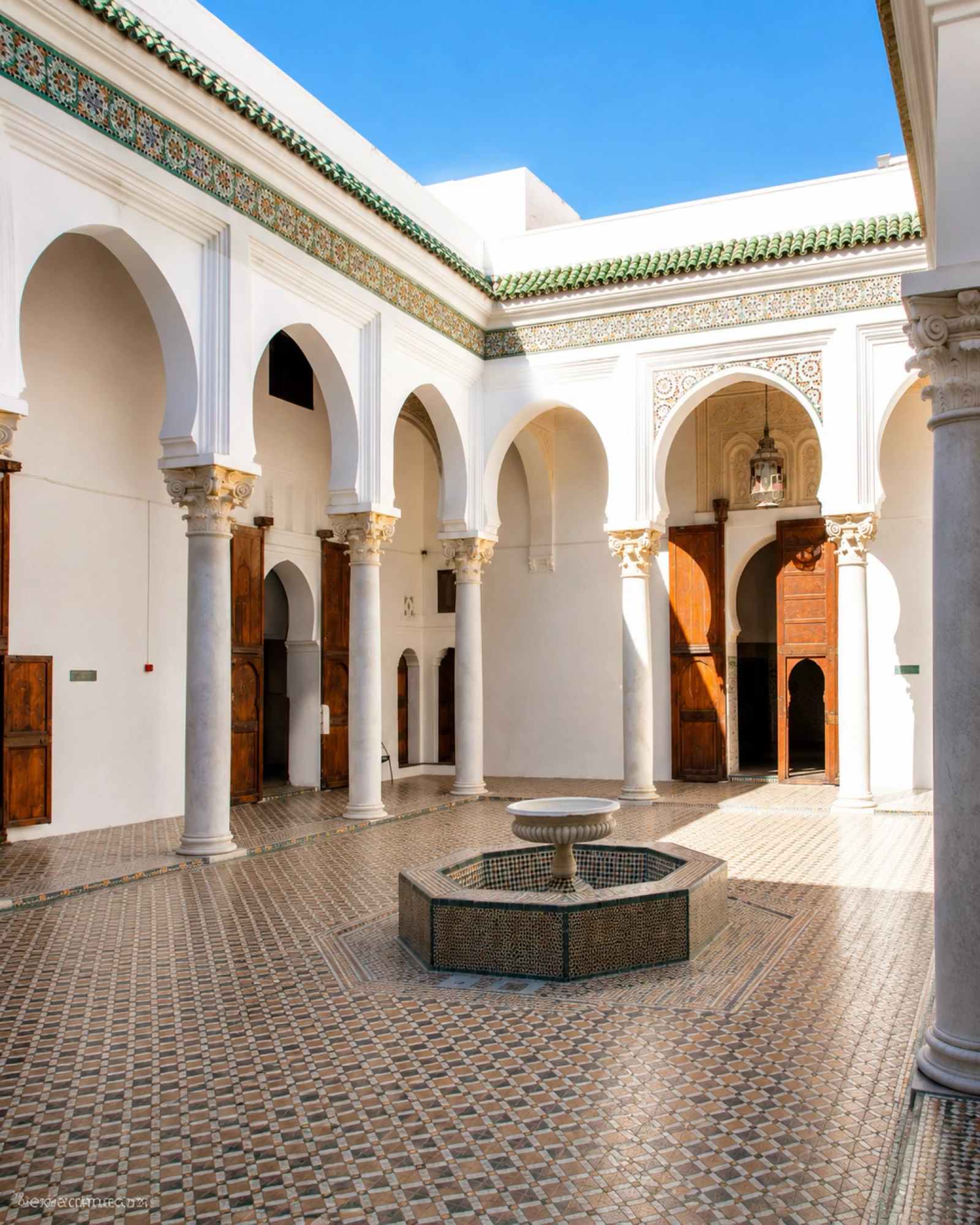
Within the kasbah, the former sultan’s palace replaces military mass with courtyards, fountains, zellige, carved wood and museum collections that connect Tangier to wider Mediterranean histories.
Landmarks & orientation
Tangier’s central landmarks form a coherent route rather than a checklist. Grand Socco marks the threshold; the medina and Petit Socco lead inward; the kasbah and Dar el Makhzen occupy the upper city; and the American Legation records the diplomatic layer embedded inside the old town.
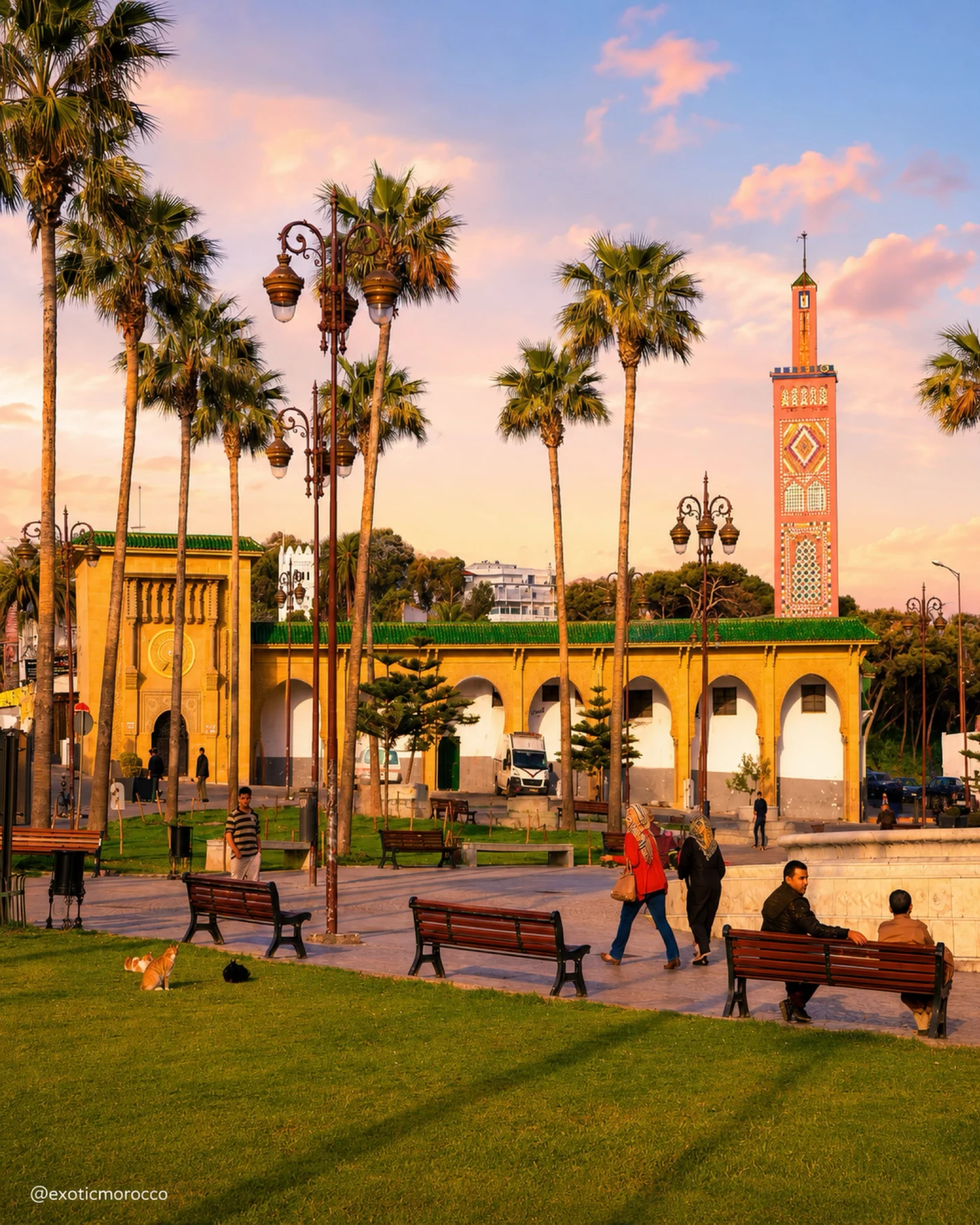
The broad palm-lined square where the modern city narrows toward the medina, making it Tangier’s clearest point of orientation.
A steep network of residential lanes, mosques, markets, workshops and café corners extending between Grand Socco, the port and the kasbah.
The fortified upper quarter, entered through historic gates and read through ramparts, narrow streets, gardens and wide views over the Strait.
The former sultan’s palace inside the fortified medina, now presenting archaeological, artistic and Mediterranean collections around refined courtyards.
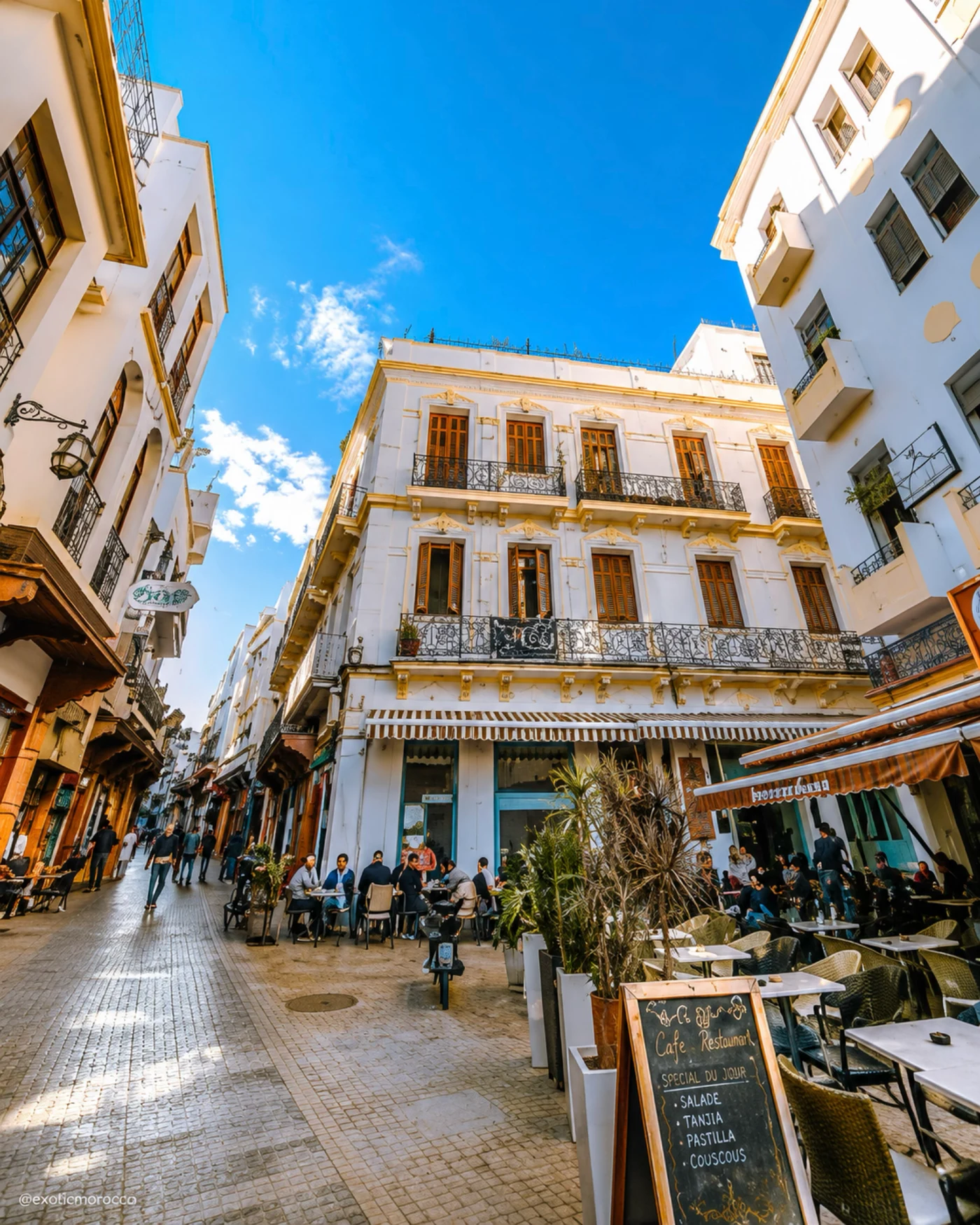
A compact square inside the medina where trade, cafés and international memory meet within the city’s everyday pedestrian flow.
Gifted by the Sultan of Morocco to the United States in 1821, the building is now a museum, research centre and cultural institution.
A medina crossroads
Petit Socco is not monumental in scale, yet it is central to Tangier’s urban memory. Set inside the medina, the square gathers commercial lanes, façades, cafés and routes between the port, Grand Socco and the kasbah. Its importance comes from use and encounter rather than architectural spectacle.
Architectural reading
Kasbah walls, gates and stepped approaches use topography as part of defence. Their authority comes from elevation, controlled entry and the contrast between enclosed stone and open sea.
In the medina, limewashed façades, green roof tiles, carved or painted wood, iron grilles and compact courtyards create a northern Moroccan domestic language shaped by Andalusian connections.
Legations, consular buildings, apartment façades, hotels and cafés add nineteenth- and twentieth-century layers to the Moroccan city, especially around the medina edge and Ville Nouvelle.
Visual atmosphere
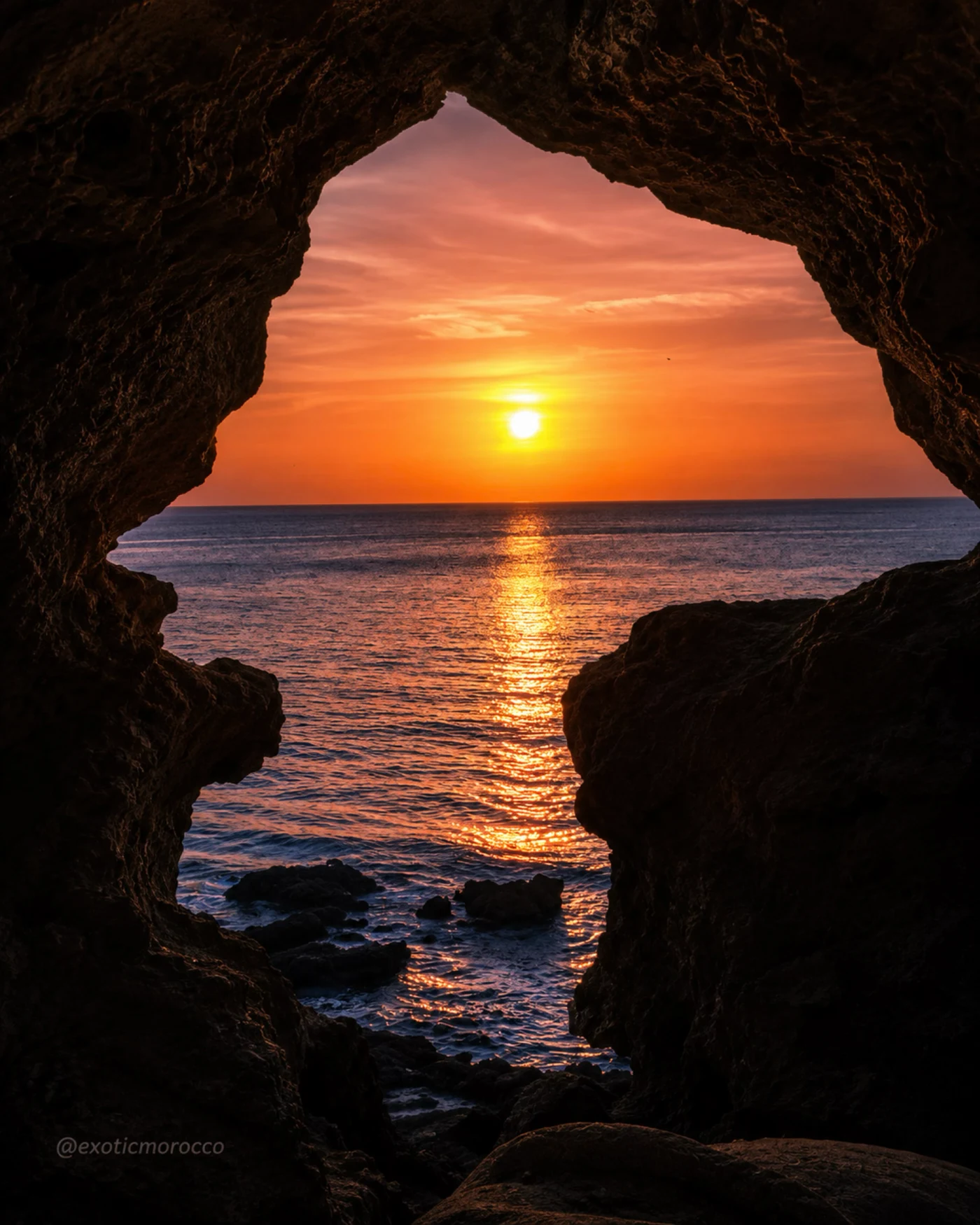
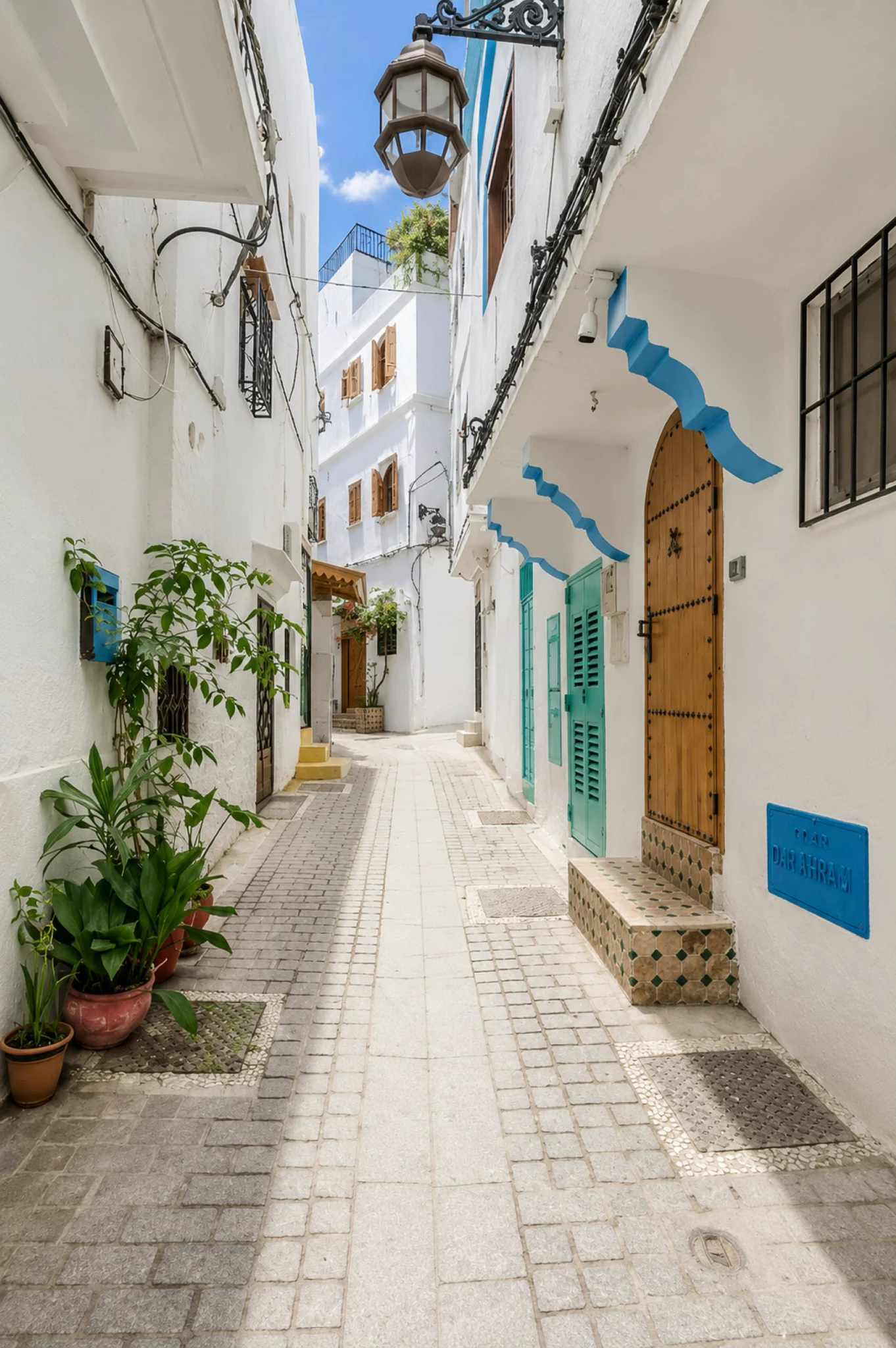
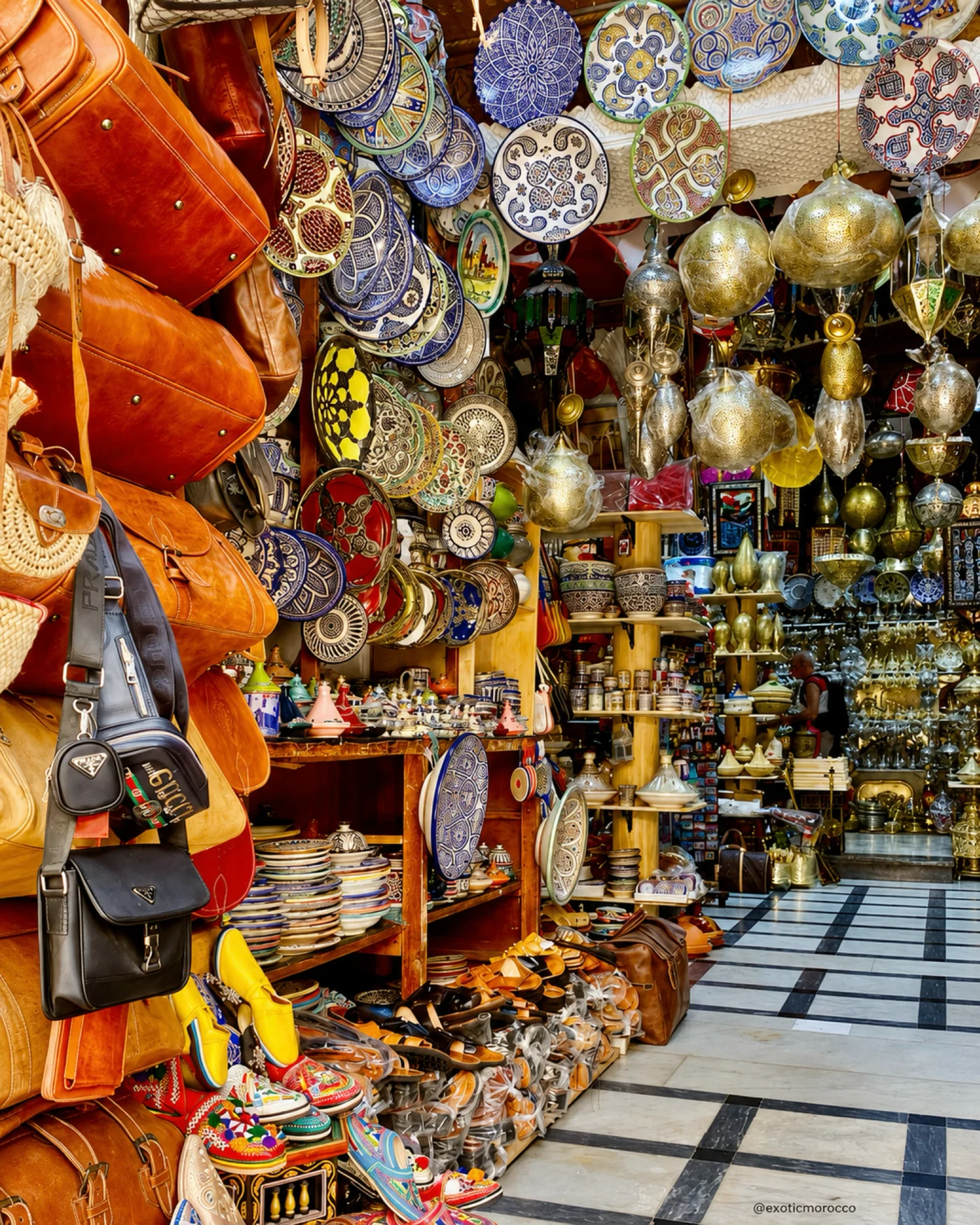
Nearby highlights
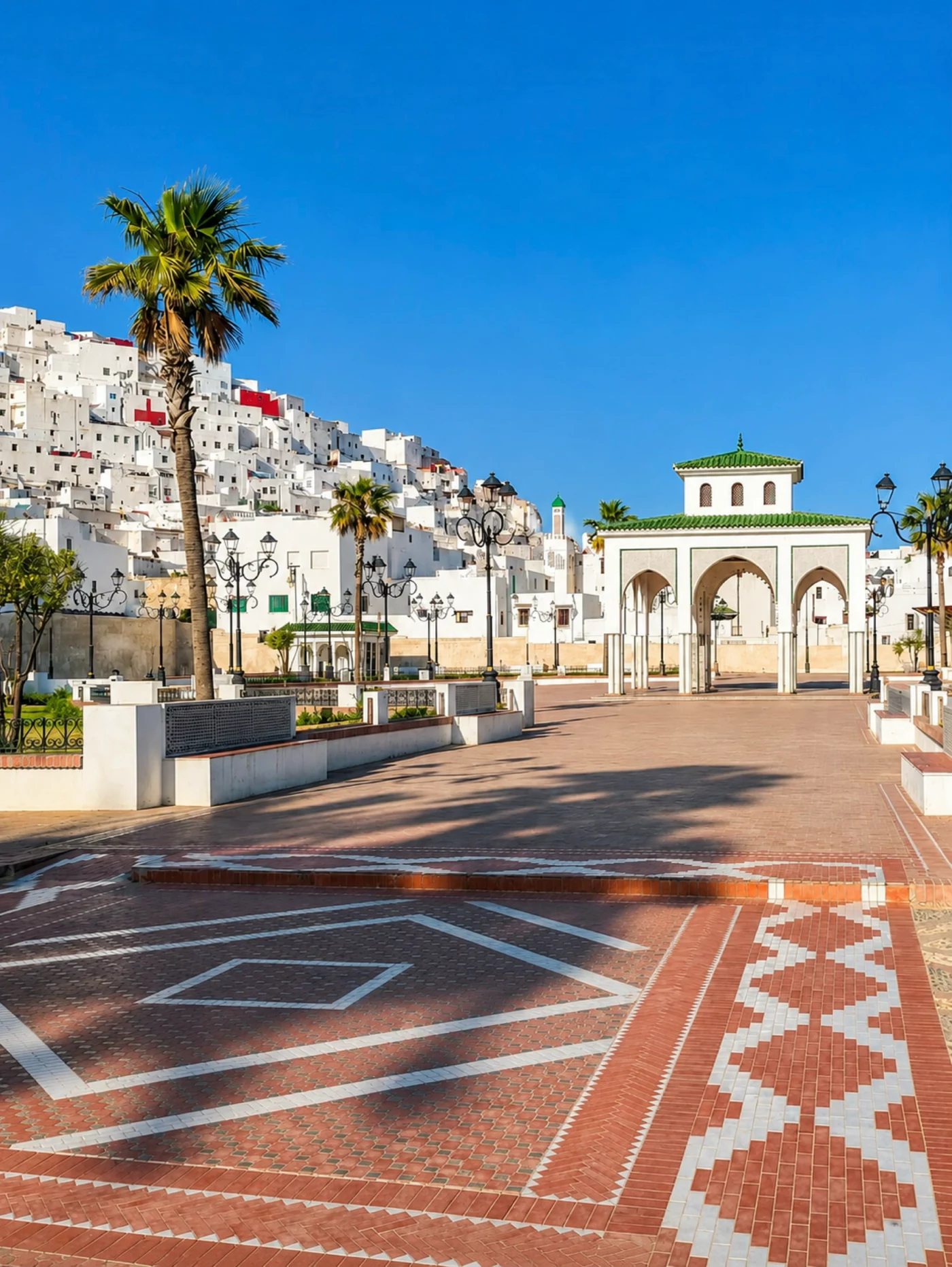
Tangier is also a practical starting point for three very different northern journeys: Asilah for an Atlantic medina and art-focused coastal atmosphere; Tétouan for a dense Andalusian urban heritage; and Chefchaouen for a Rif mountain setting and a blue-painted medina.
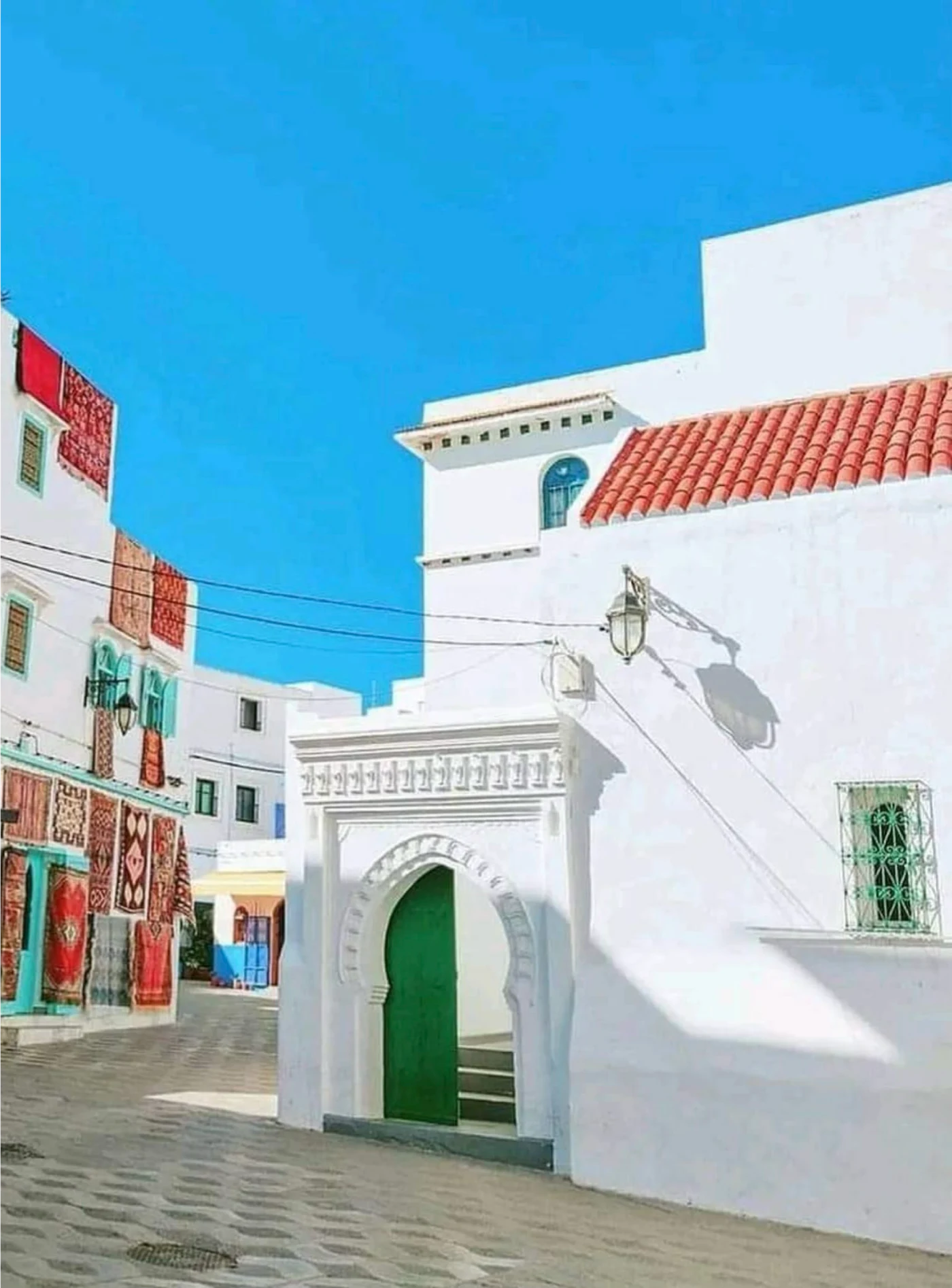
A compact Atlantic town known for its white medina, ocean-facing ramparts and contemporary mural and arts culture. It works well as a slower coastal extension south of Tangier.
Tétouan’s UNESCO-listed medina preserves a strong Andalusian character, while the Ensanche and craft institutions add further layers. Give the city a dedicated day rather than treating it as a brief stop.
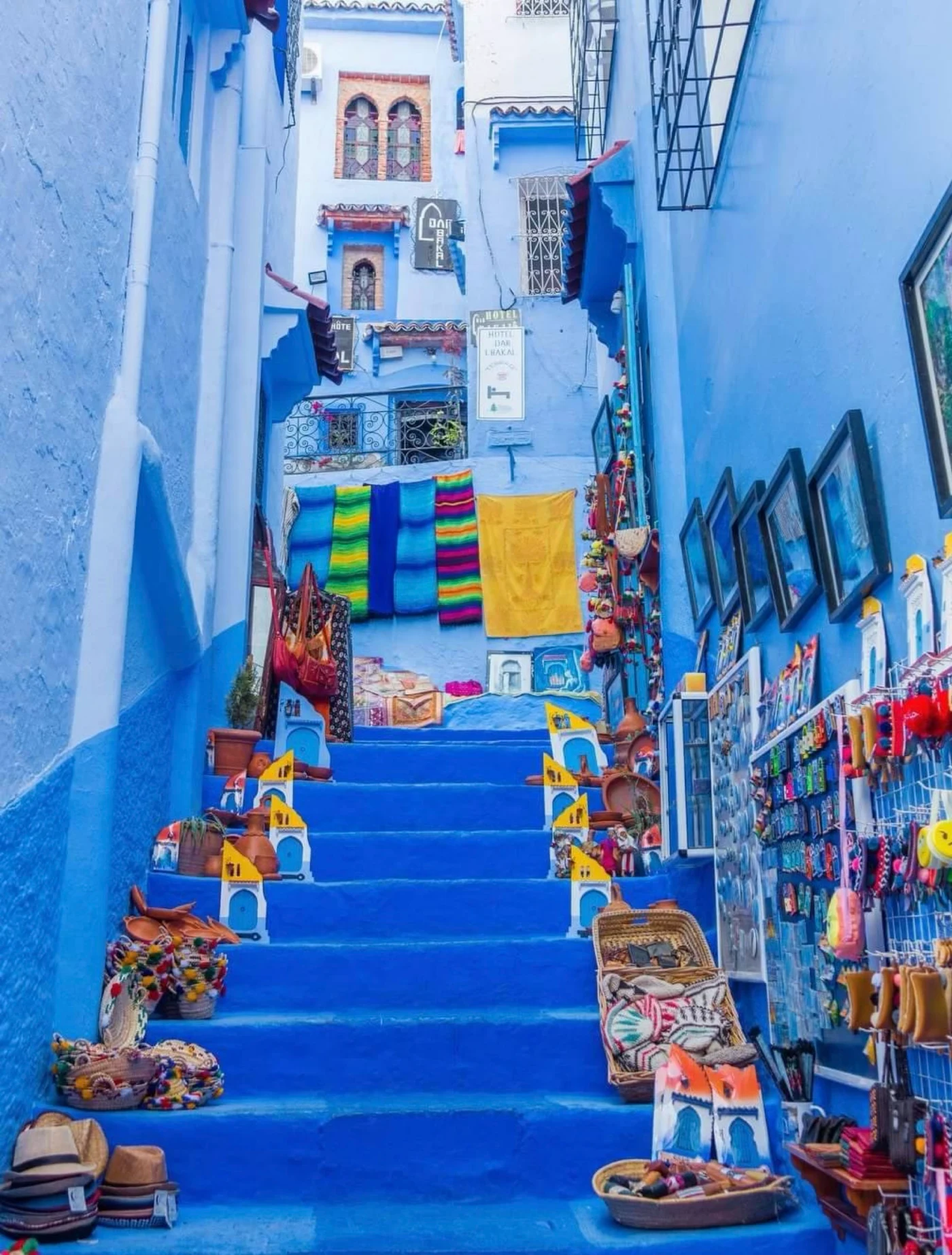
Set within the Rif Mountains, Chefchaouen offers a different urban landscape of steep blue-painted lanes, mountain views and regional craft. Travel time makes it a full-day or overnight extension.
Practical orientation
Walk from Grand Socco through the medina to the kasbah in the morning, visit one major interior after lunch, and end with a terrace or bay view. Keep the Cap Spartel–Hercules Caves circuit for a separate half-day so the city centre is not rushed.
Go deeper with Exotic Morocco
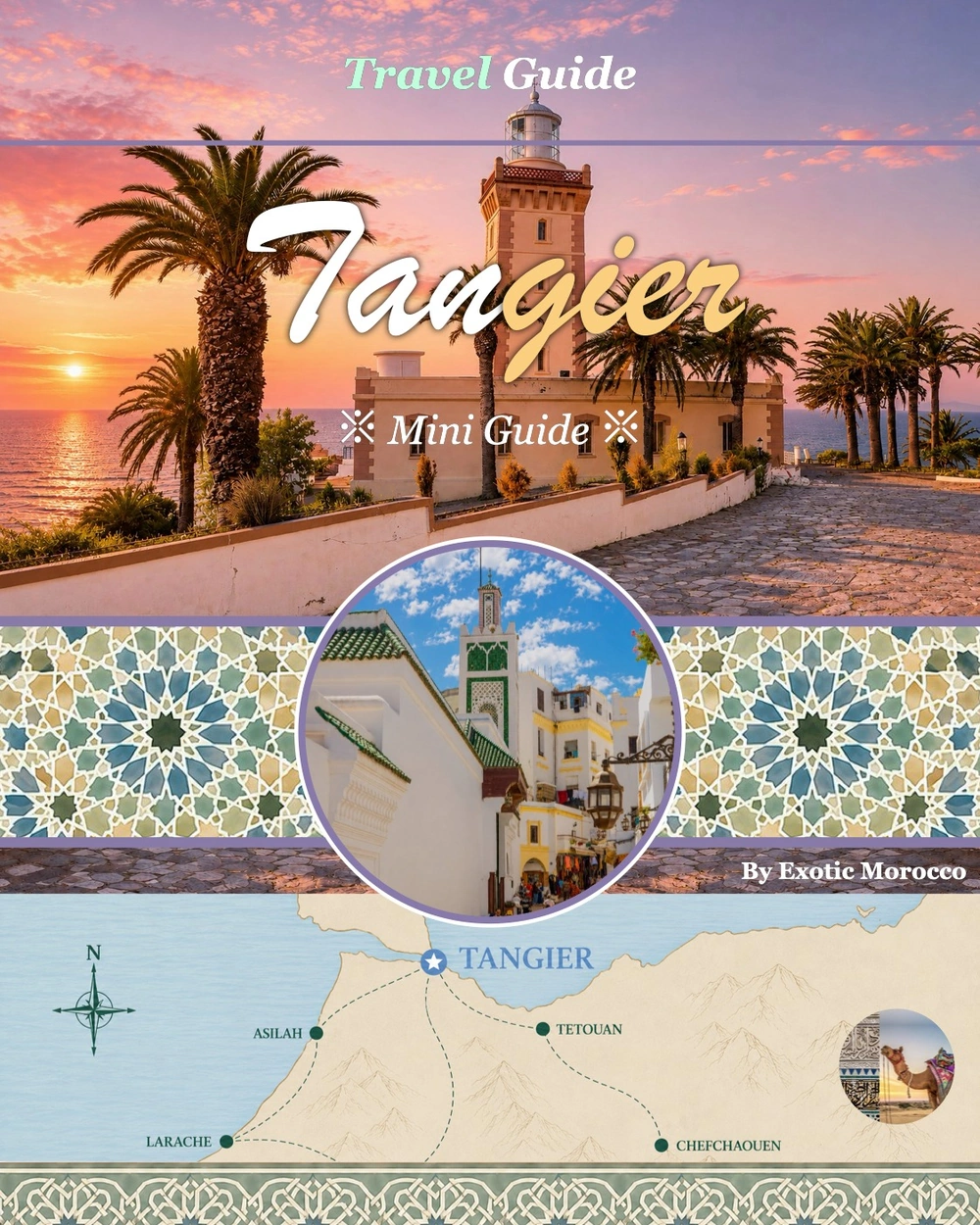
Continue with a complete visual publication that connects Tangier’s history, medina and kasbah, diplomatic institutions, café culture, architecture, practical routes, Atlantic coast and nearby northern cities into one carefully structured journey.
Move beyond arrival and departure to encounter a city of kasbah walls, medina routes, diplomatic memory, Atlantic light and northern connections.
Look beyond the gateway and encounter a city of imperial scale, lived heritage, quiet streets, refined interiors and nearby landscapes.