A point of connection
Tétouan gained importance as a link between the Iberian Peninsula and the interior of Morocco, a role shaped by its strategic northern position.
Andalusian City of Northern Morocco
Tétouan brings together a compact fortified medina, white hillside neighbourhoods, refined domestic architecture, active craft traditions and a Spanish-planned modern extension. It is a city to read through continuity: between Morocco and Andalusia, enclosure and openness, inherited form and daily life.
Why Tétouan matters
Tétouan is often reduced to a picturesque palette of white walls and green doors. Its real importance is more demanding and more rewarding: the medina preserves an unusually complete urban system shaped by Andalusian migration, while the Ensanche records a later period of planned streets, public façades and civic expansion.
Read together, these layers explain why Tétouan feels distinctive. The city is neither a frozen monument nor a decorative backdrop. Its gates, workshops, interiors, schools, markets and modern avenues continue to organise movement, memory and social life.
Tétouan’s character lies in relationships: mountain and sea, Morocco and Andalusia, fortified medina and open avenue, inherited craft and contemporary cultural life.
Historical orientation
Tétouan’s historic importance comes from its position between the Rif, the Mediterranean and the Strait of Gibraltar. UNESCO describes the city as an important connection between Morocco and Andalusia from the eighth century onward. After the Reconquista, refugees from the Iberian Peninsula rebuilt the town, giving its art, architecture and urban fabric a lasting Andalusian character.
Tétouan gained importance as a link between the Iberian Peninsula and the interior of Morocco, a role shaped by its strategic northern position.
Refugees expelled from Iberia rebuilt the city. Their influence remains visible in domestic architecture, decorative arts, planning and cultural memory.
Fortifications, residential quarters, religious buildings, workshops and commercial routes developed as the city expanded while retaining its compact structure.
UNESCO recognises the medina as an exceptionally complete fortified town and a powerful synthesis of Moroccan and Andalusian urban culture.
A visual bridge
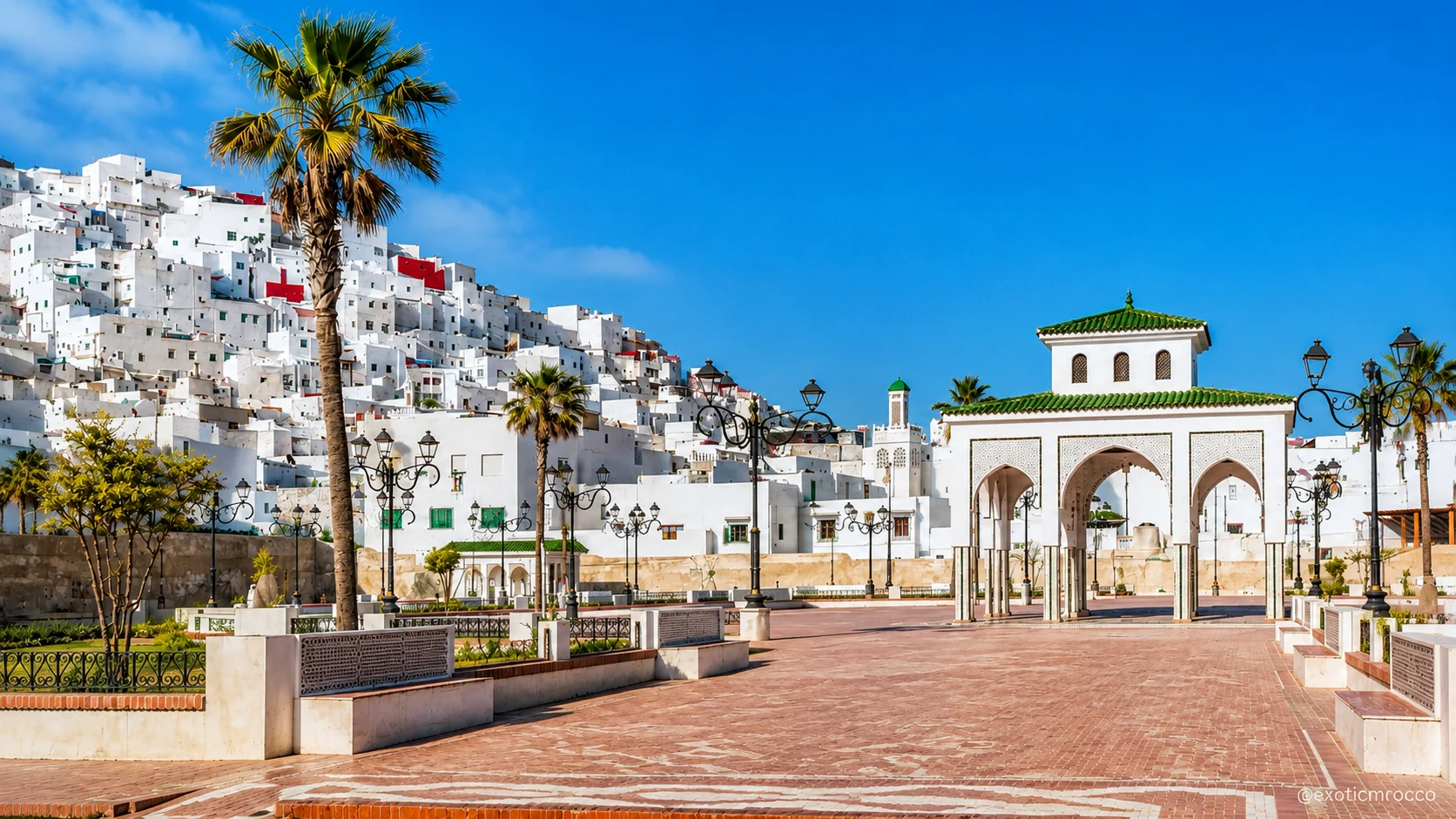
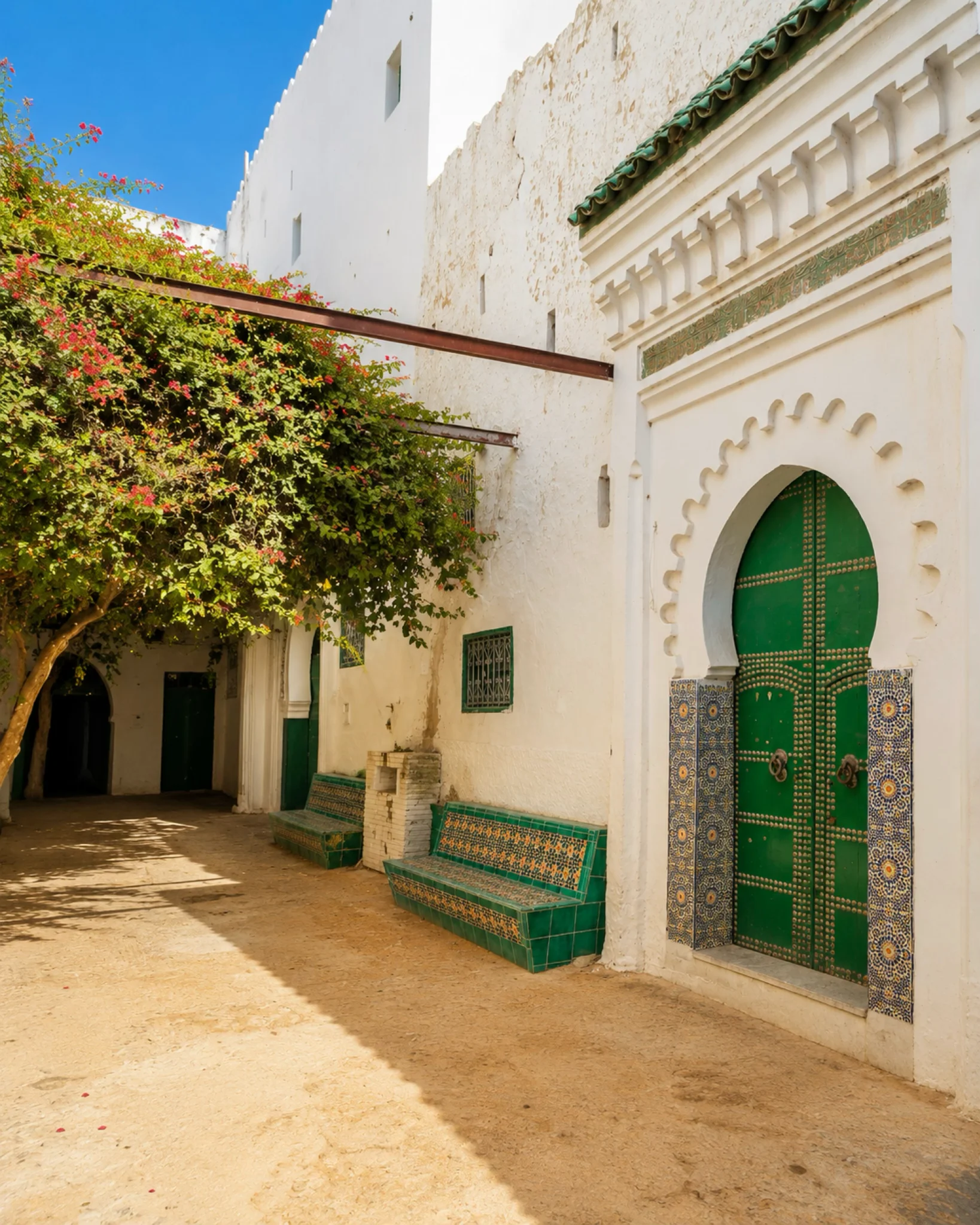
These three views connect the city’s major spatial ideas: fortified arrival, the white medina rising against Jebel Dersa, and the outward rhythm of the Ensanche.
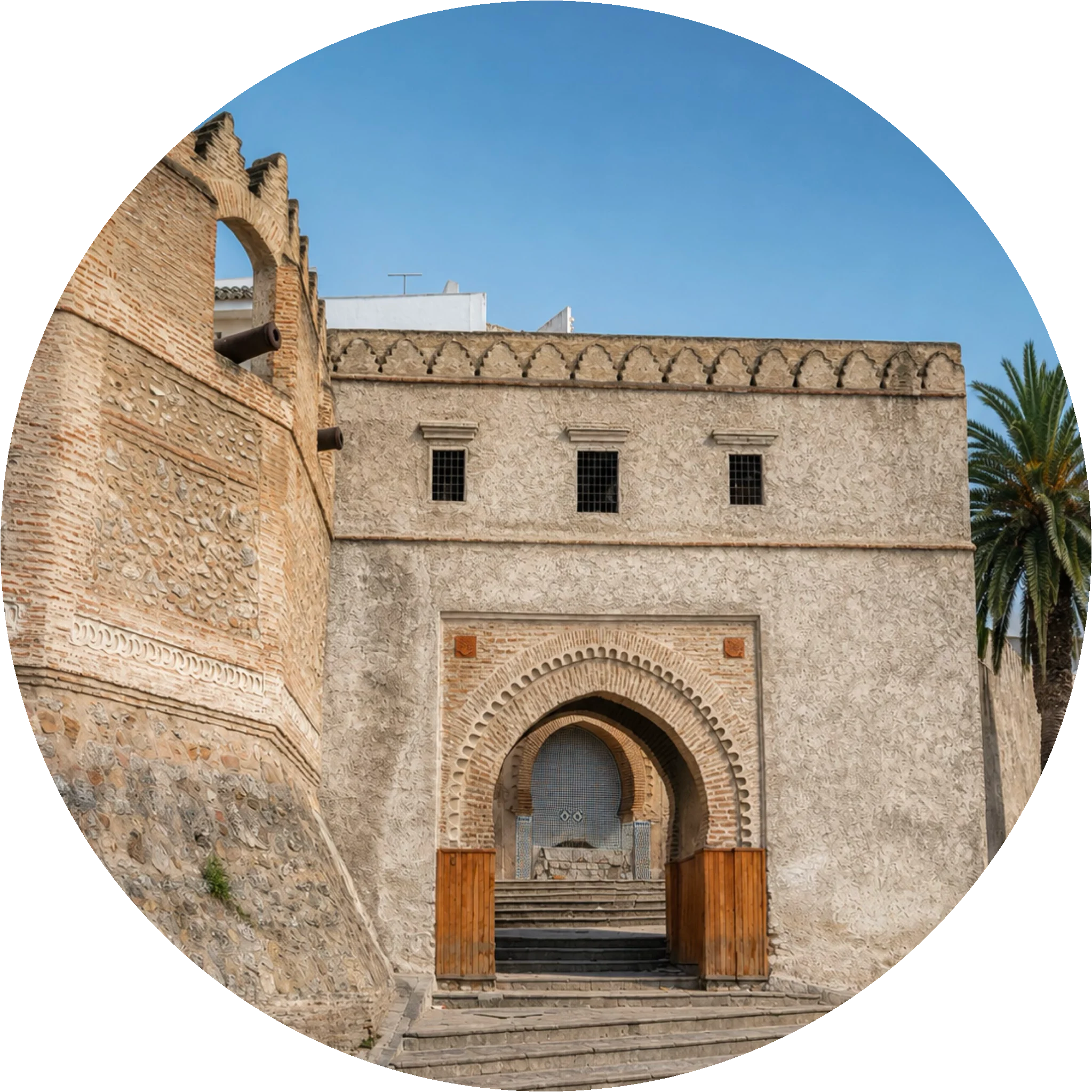
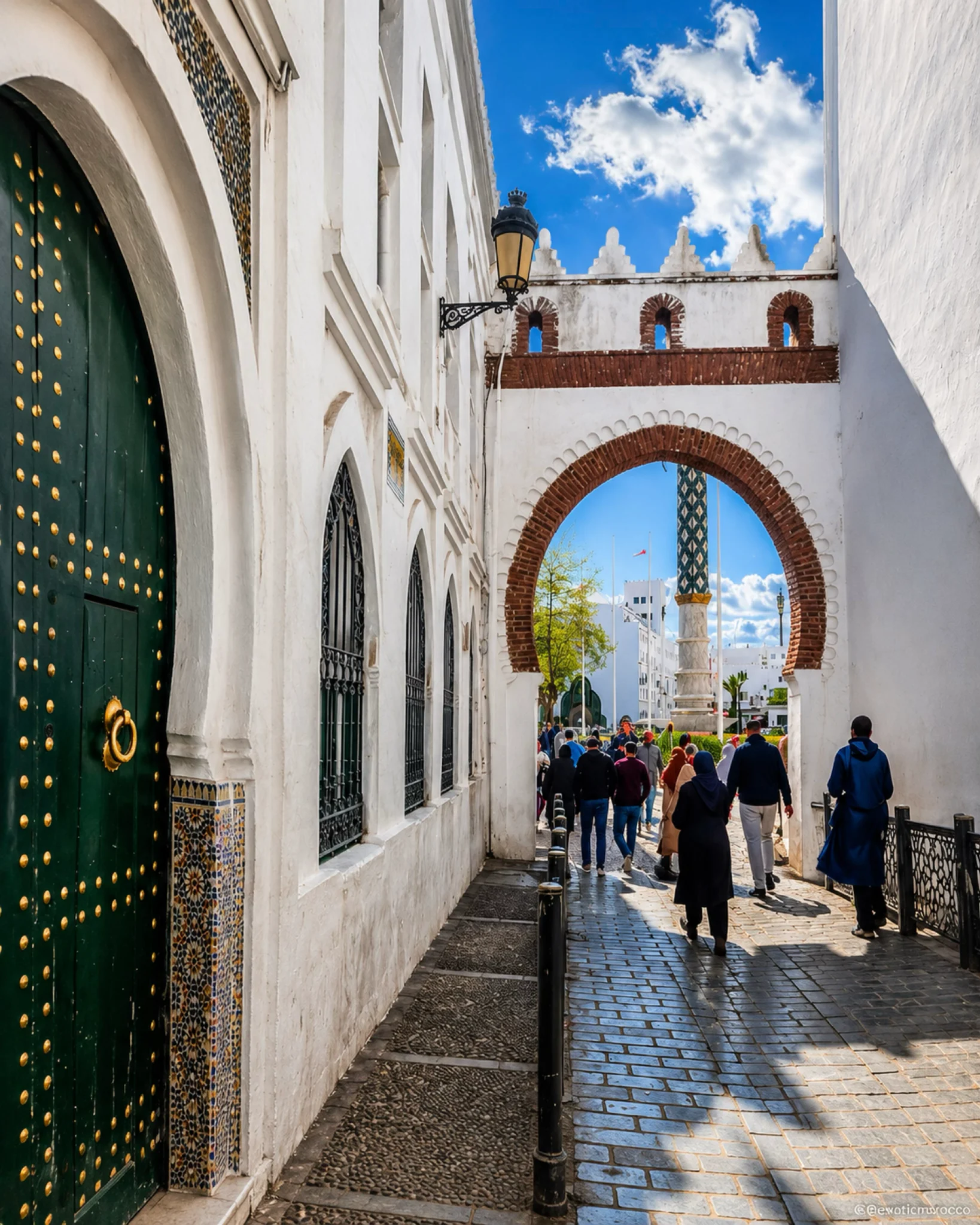
Bab El Oqla marks one of Tétouan’s historic thresholds, linking the fortified medina with the city’s architectural memory and museum culture.
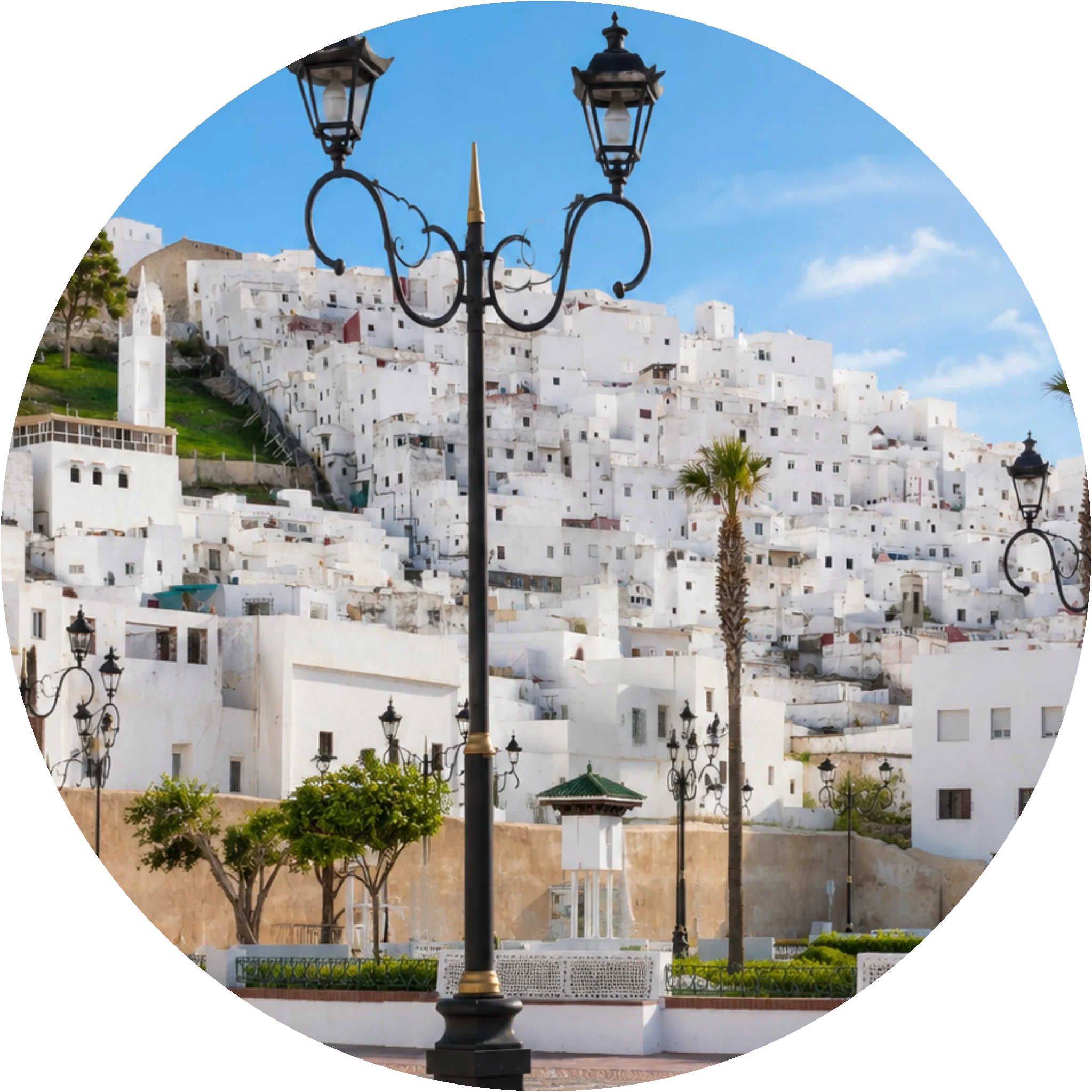
White neighbourhoods climb the lower slopes of Jebel Dersa, giving the city its characteristic profile.
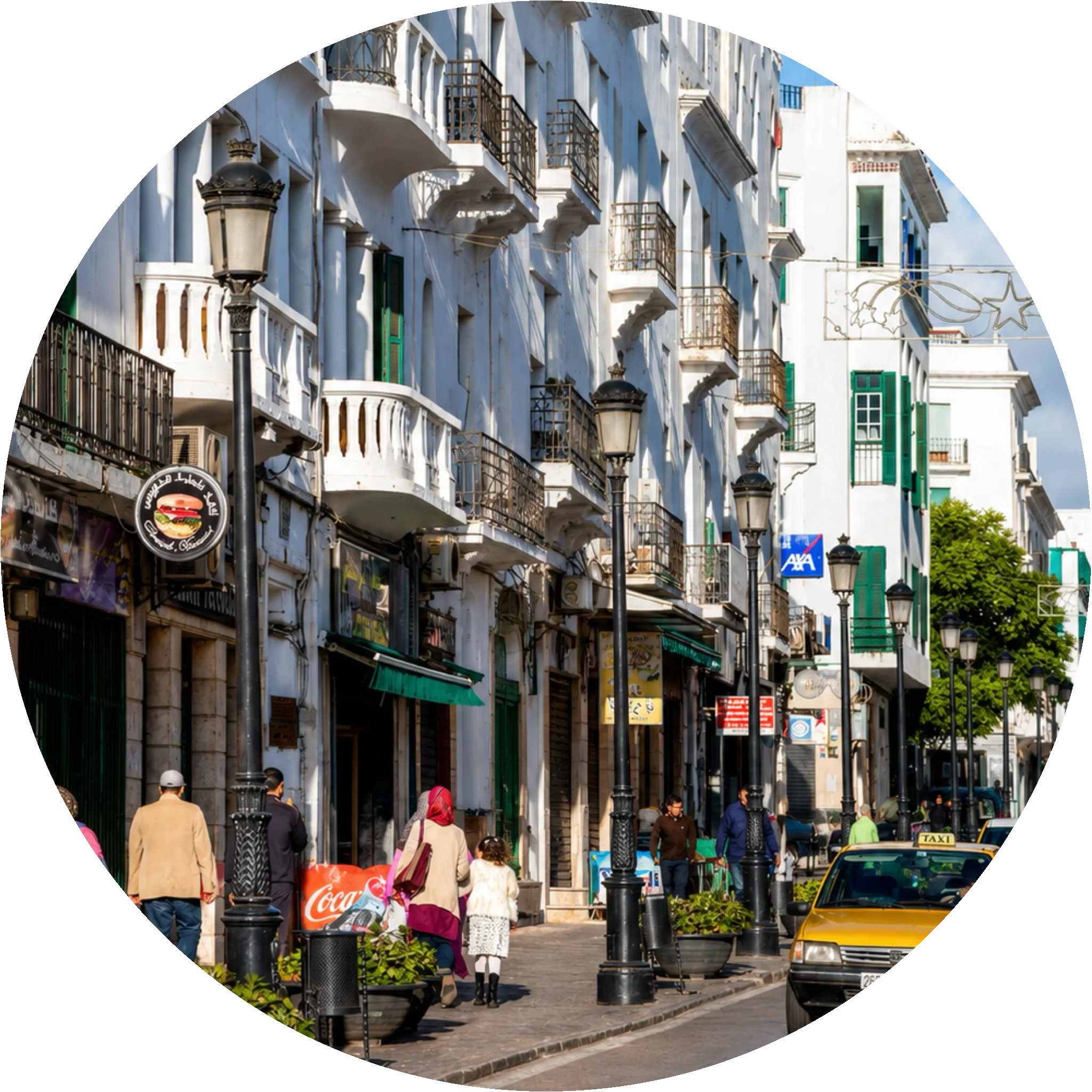
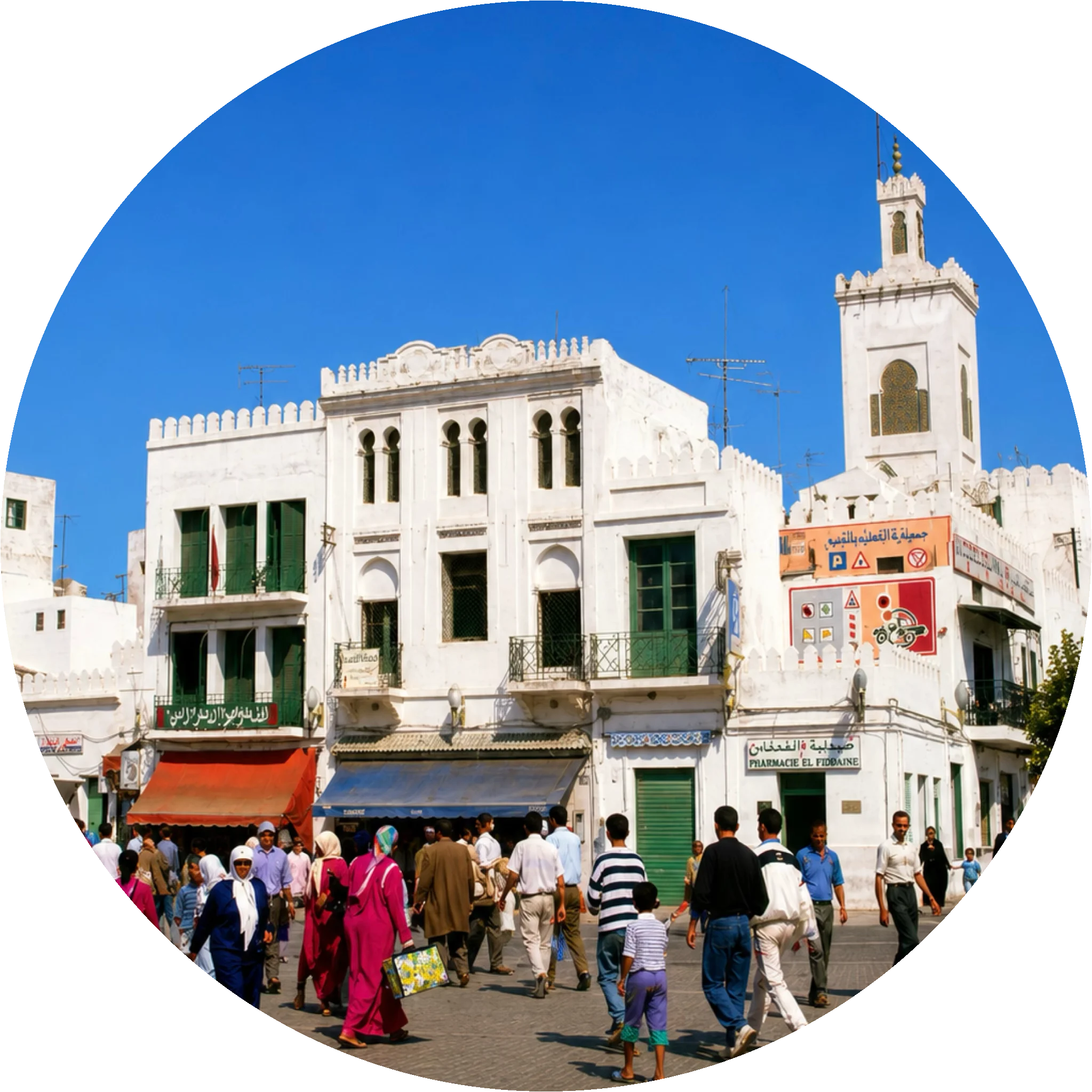
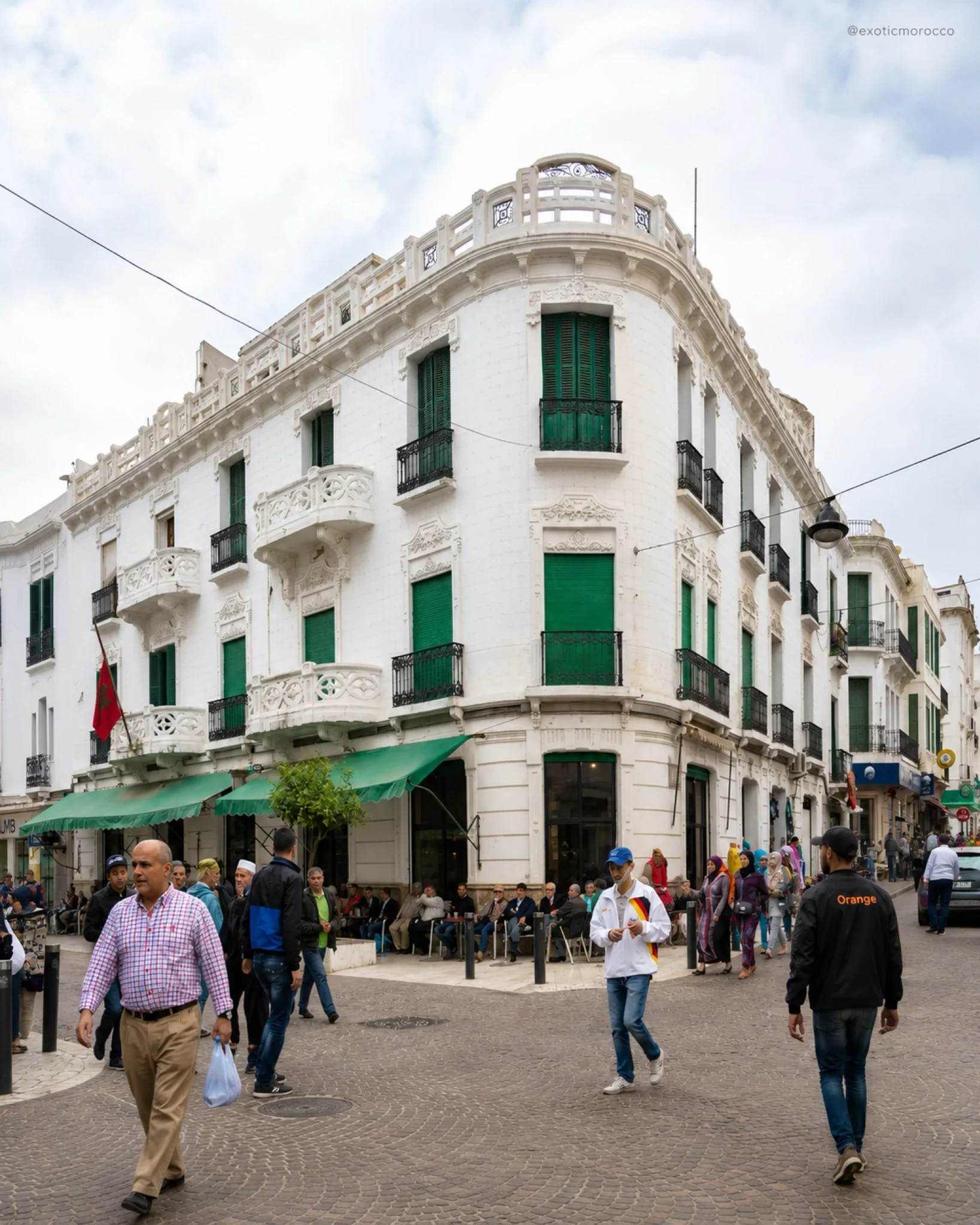
Broad streets, balconies, cafés and public façades express a later urban language without erasing the medina beside it.
Tétouan at a glance
The UNESCO property is the historic medina: a compact and exceptionally complete fortified urban ensemble whose fabric has retained a high degree of integrity.
Approximately five kilometres of historic wall surround the medina. Seven gates connect the principal streets, public buildings, markets, workshops and residential lanes.
Urban form, domestic space, carved wood, zellige, plasterwork, clothing and music reveal the depth of the city’s Andalusian inheritance within a Moroccan context.
Dar Sanaa and the city’s artistic institutions continue long traditions of training and making, while the Mediterranean coast and western Rif broaden the journey beyond the medina.
A clearer reading of the city
Tétouan becomes clearer when domestic architecture, commercial work and public movement are read together. Each reveals a different scale of the same city: intimate, productive and continuously inhabited.
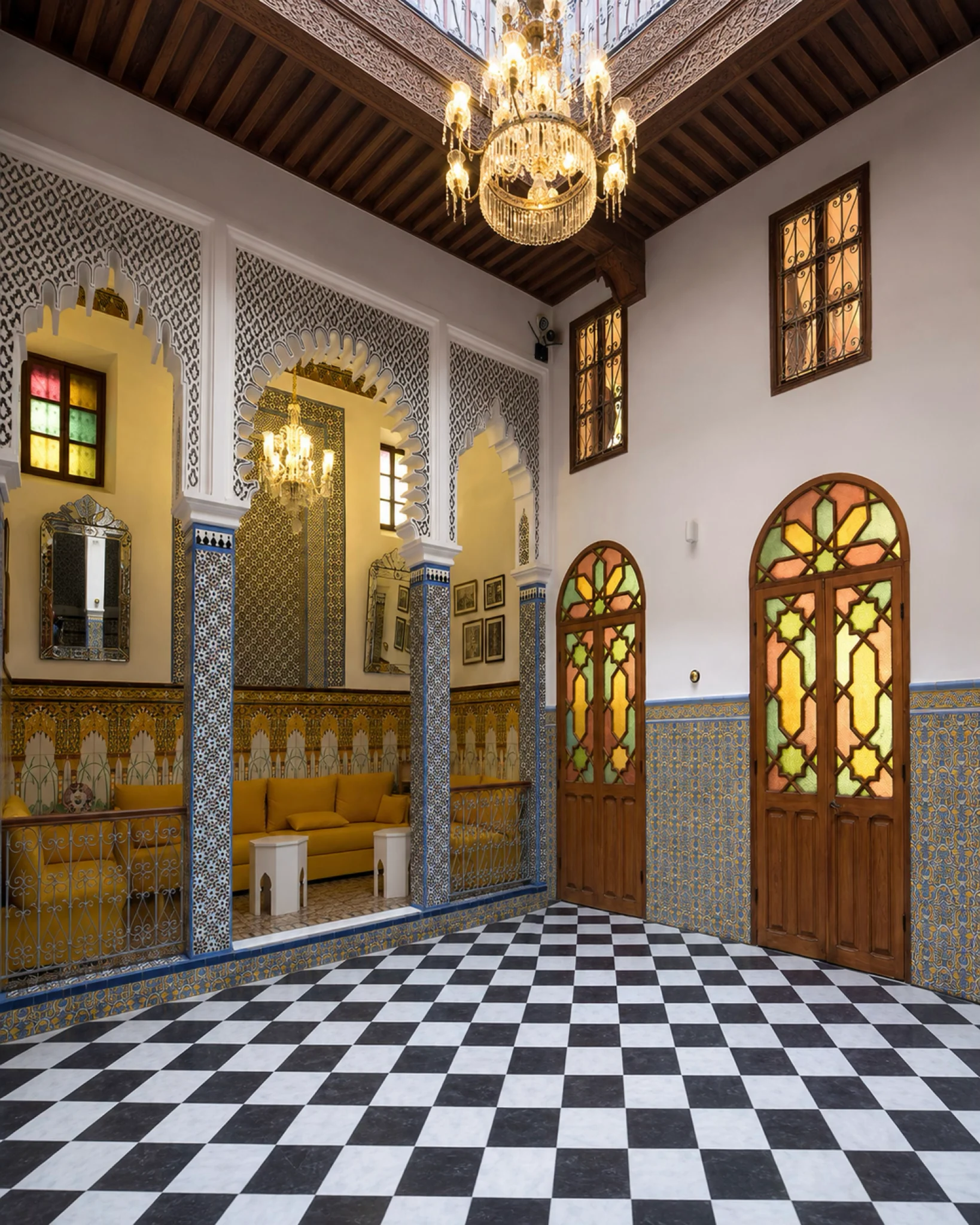
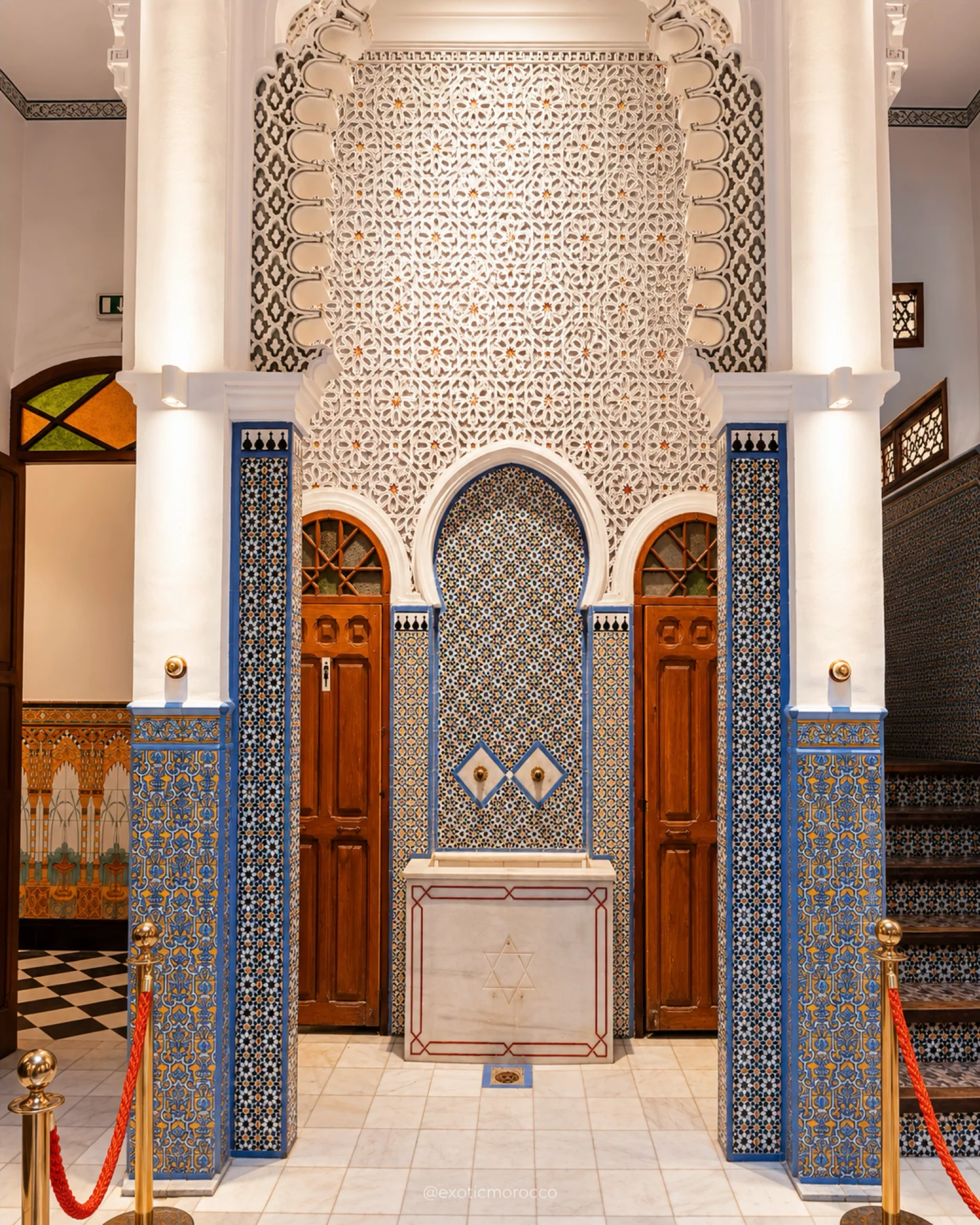
Interior courtyards, painted wood, coloured glass, tiled surfaces and carefully framed arches turn the house inward and give Tétouan its most refined architectural scale.
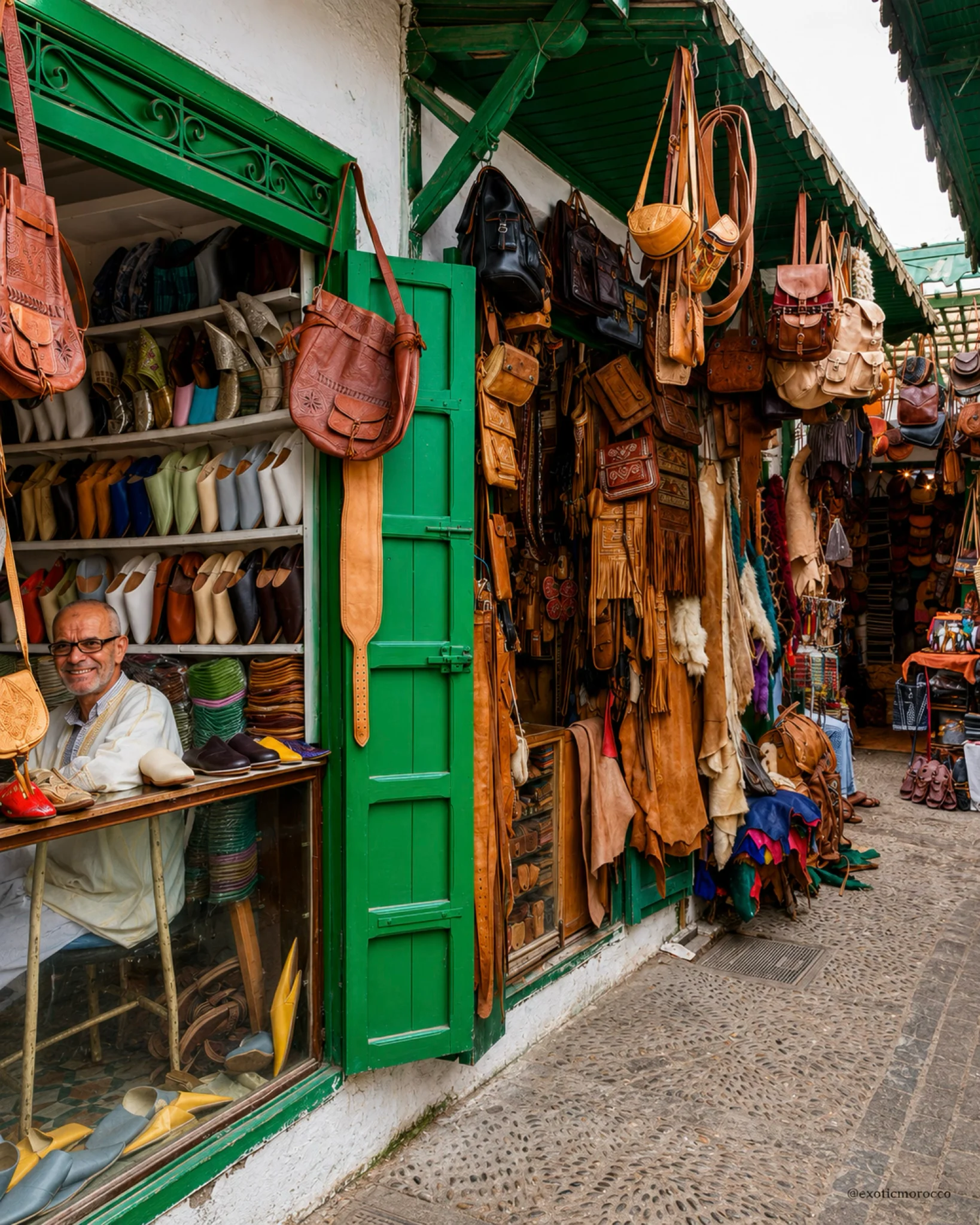
Leatherwork, embroidery, woodwork and decorative arts are not abstract heritage categories. They remain tied to shops, training, livelihoods and the medina’s everyday economy.
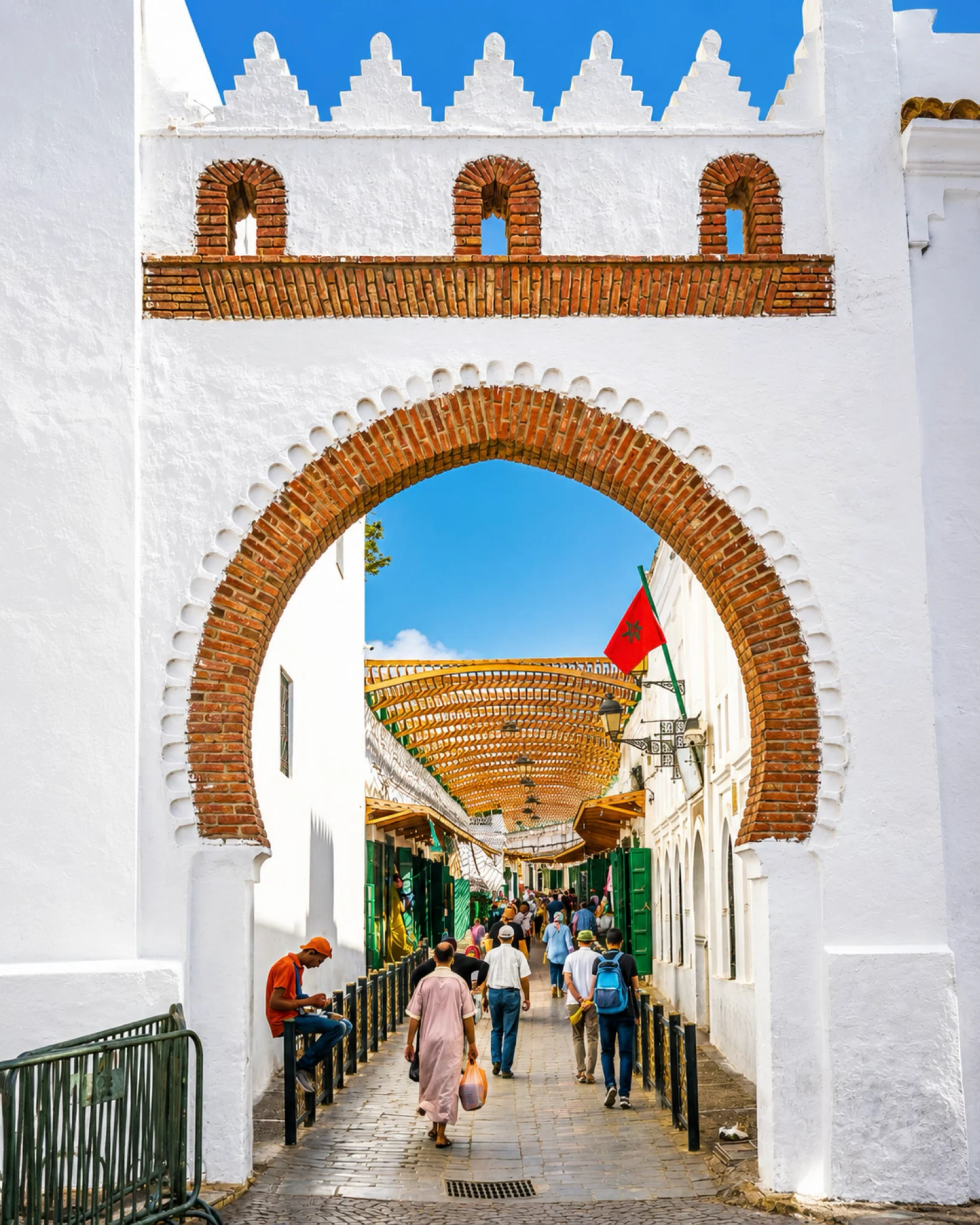
Gates, market passages and pedestrian routes keep the historic structure active. The medina is understood best through movement, not through isolated façades.
Landmarks & orientation
No single site explains Tétouan. These six places reveal the relationship between fortified medina, ceremonial space, material culture, craft education, archaeology and the planned modern city.
The historic wall, principal gates and connecting streets organise entry, trade, public life and the medina’s layered neighbourhoods.
A major civic threshold between medina and Ensanche. The palace is read from its public exterior; access and photography rules must always be respected.
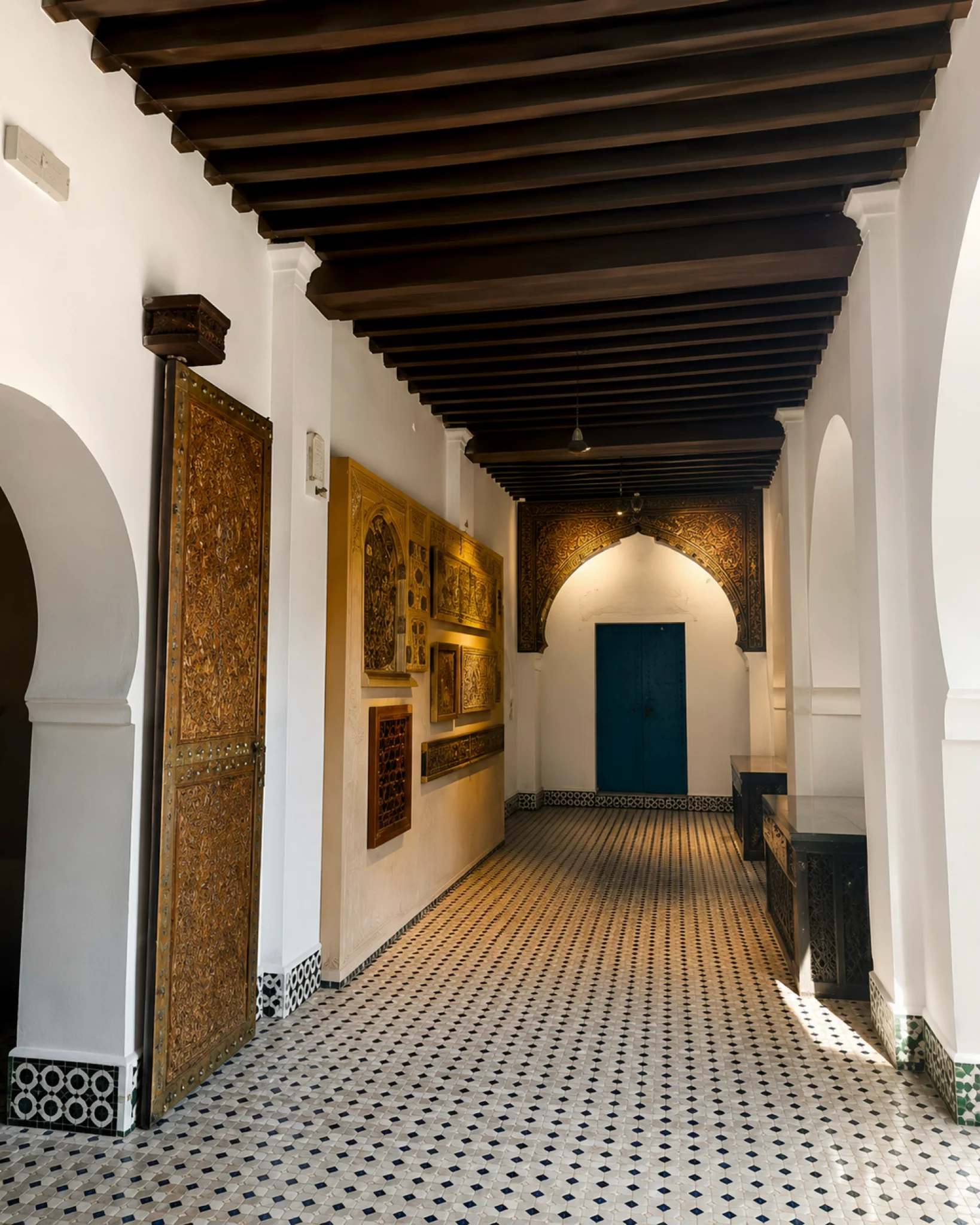
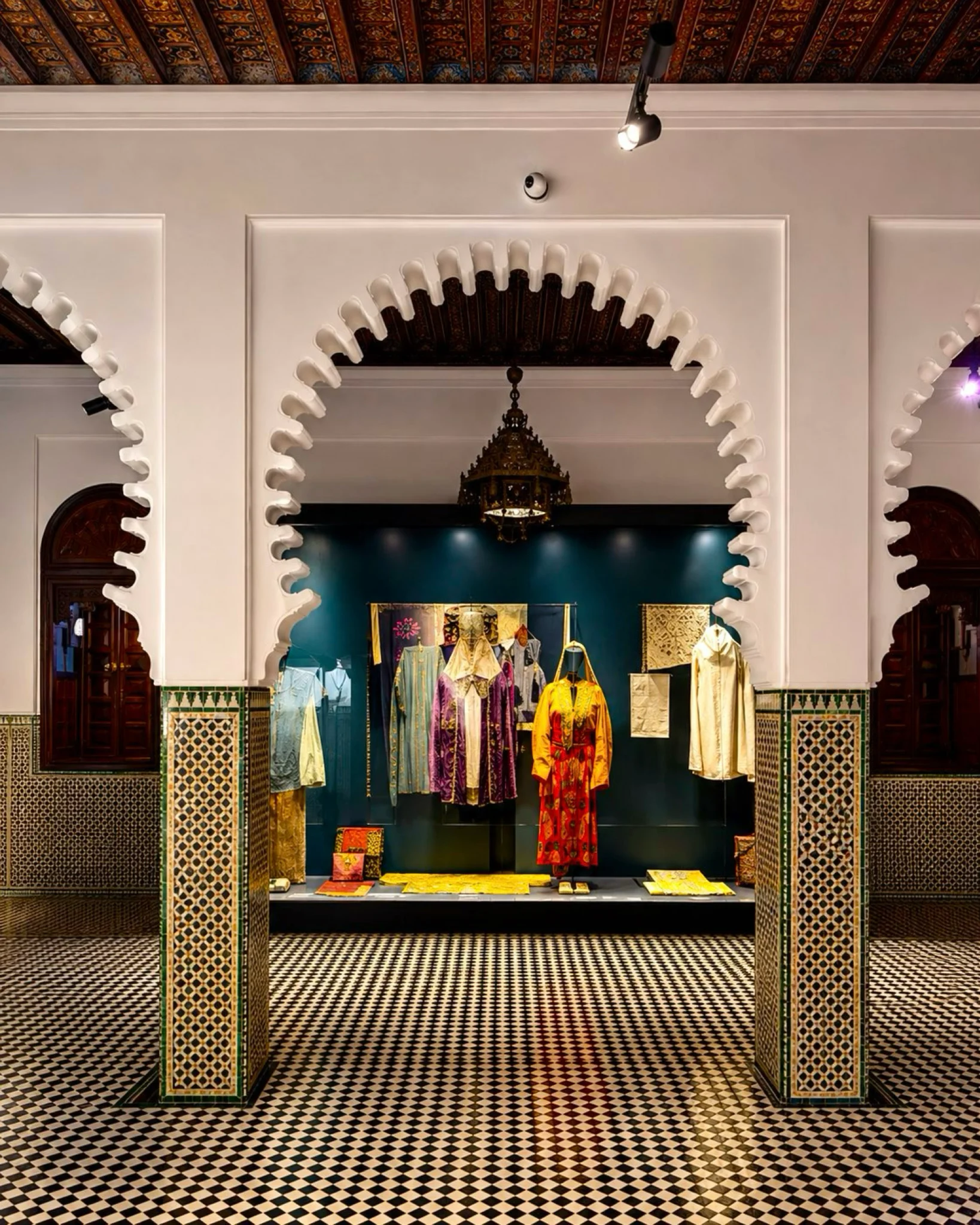
A museum within a nineteenth-century fortress, connecting architecture, ethnography, decorative arts and the diverse material history of Tétouan.
The National School of Arts and Crafts sustains training in traditional disciplines and reflects the city’s long commitment to skilled making.
Collections from northern Moroccan excavations place the city within a much longer regional history extending far beyond the Islamic medina.
Planned streets, civic buildings, balconies and commercial frontages reveal the twentieth-century urban layer beside the historic core.
A fortified museum
The museum began in 1928 and moved to its present home in 1948. That home is itself part of the story: a historic fortress commissioned under Sultan Moulay Abderrahmane around 1830–31. Architecture and collection therefore meet in the same visit.
Architectural reading
The medina adapts to Jebel Dersa through stepped lanes, compact blocks, walls and controlled gates. Topography and defence are inseparable from its urban character.
Inside houses and institutions, zellige, carved plaster, painted wood, coloured glass and shade create a language of inward refinement rather than outward display.
The Ensanche opens the city through straighter streets, continuous façades, balconies, civic buildings and commercial ground floors designed for a different urban rhythm.
Visual atmosphere
Nearby highlights
Tétouan is a strong base for three contrasting extensions: Tamuda for the archaeology of the ancient regional landscape; Martil for the immediate Mediterranean coast; and Chefchaouen for a separate journey into the western Rif.
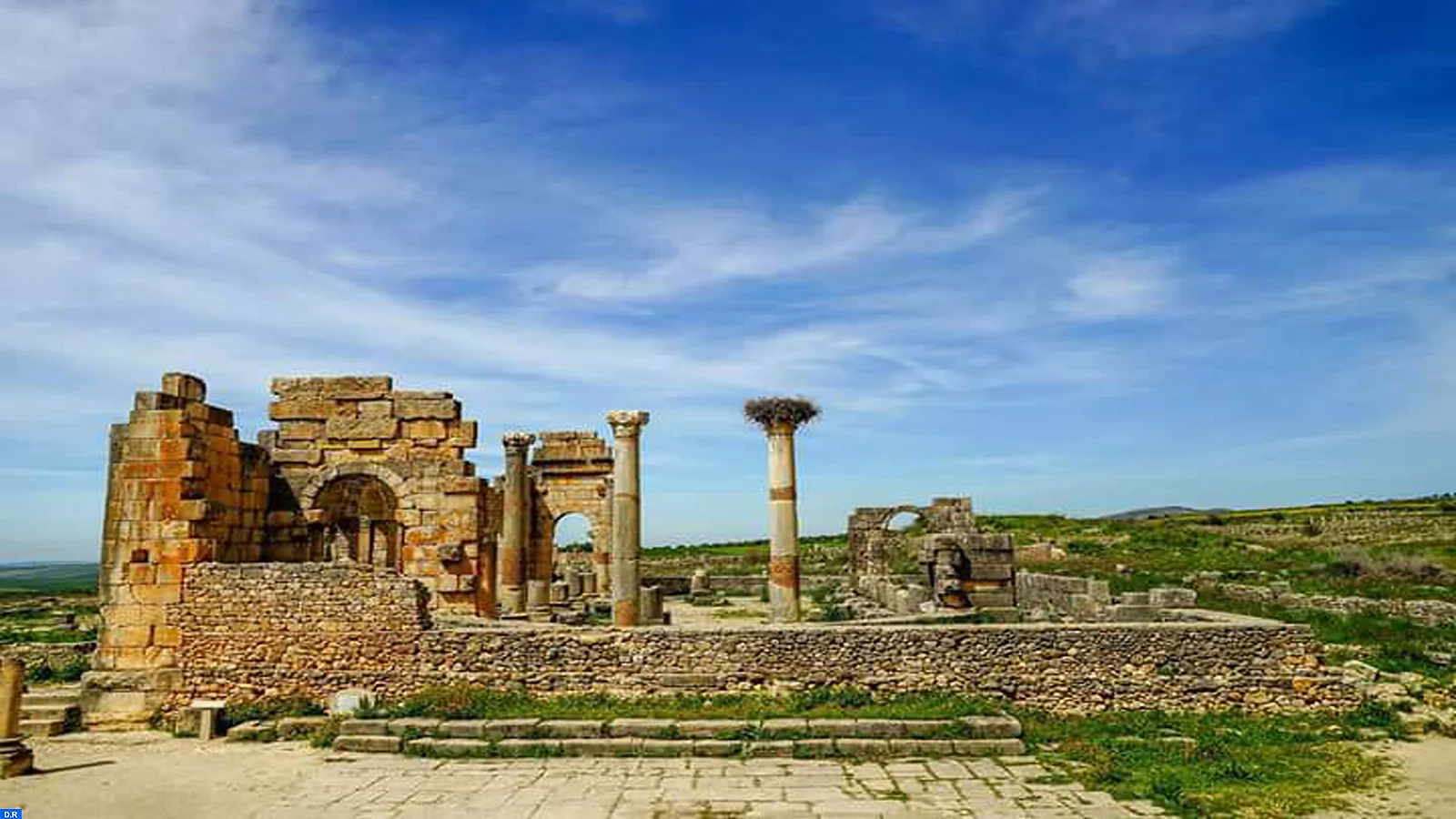
Located about five kilometres southwest of Tétouan, Tamuda adds an archaeological layer to the region through the remains of an ancient settlement and later Roman military presence.
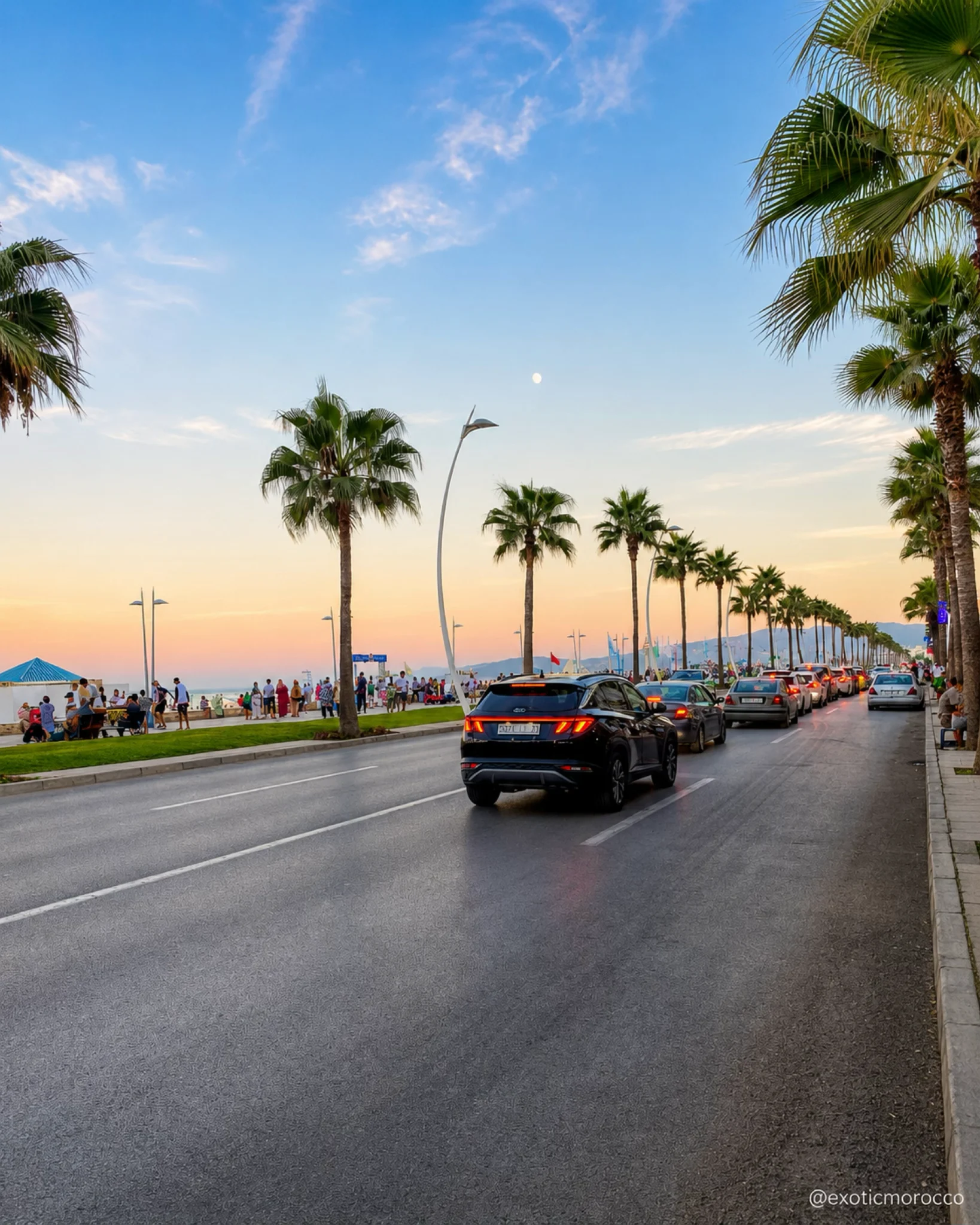
Martil offers a different rhythm of promenade, beach and evening movement. Treat it as a coastal extension rather than as part of the historic medina experience.
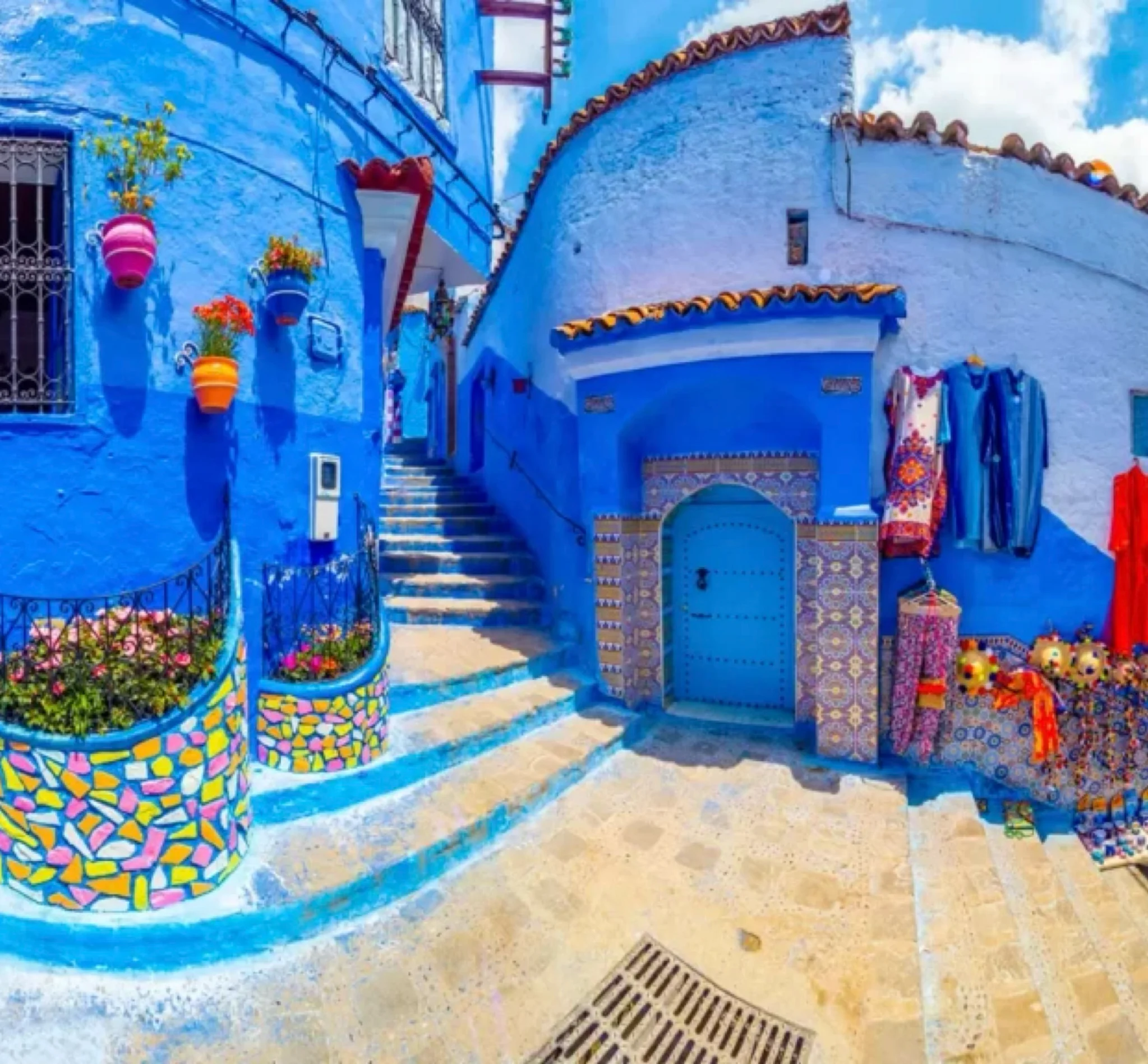
Chefchaouen belongs to another mountain setting and deserves its own pace. Its blue streets and Rif landscape work best as a distinct day trip or overnight extension.
Practical orientation
Begin with the medina’s gates and principal routes, cross towards Place Hassan II, then walk the Ensanche with attention to balconies, cafés and public façades. Return to an interior museum or craft institution for the city’s quieter material layer.
Go deeper with Exotic Morocco
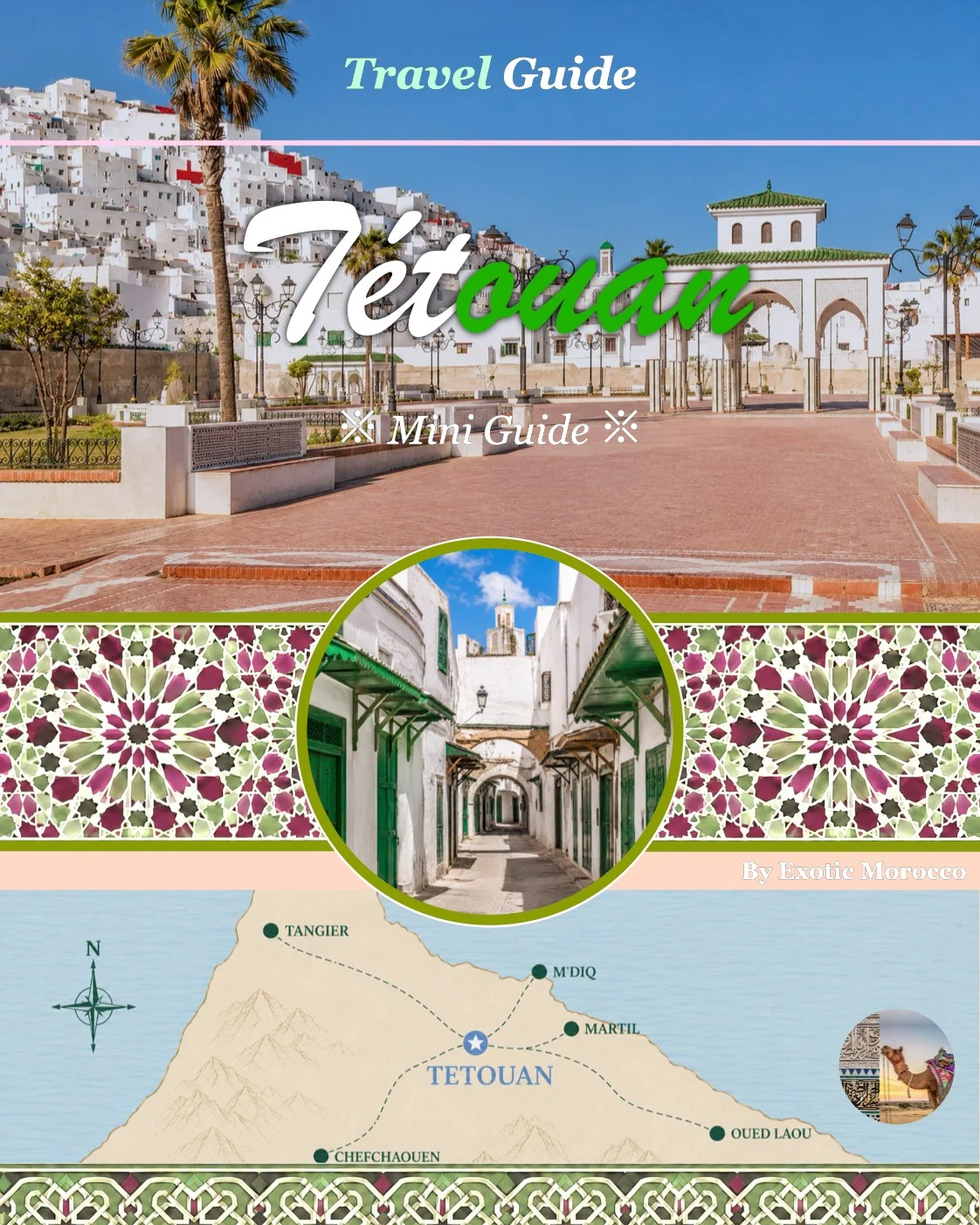
Continue with a complete visual publication designed to connect Tétouan’s history, medina, Ensanche, museums, craft traditions, practical orientation and nearby landscapes into one carefully structured journey.
Continue the journey
Look beyond colour alone and encounter a city of Andalusian memory, fortified structure, living craft, refined interiors, civic avenues and nearby Mediterranean and Rif landscapes.